
Howdy Readers 🥰

In this newsletter, you’ll find:
💸 Transactional Emails Have 50-60% Open Rates, And Most Brands Are Wasting Them On Templates Their ESP Shipped With
🎄 Pinterest and Meta push long-term content planning
🏆 Ad of the Day
If you’re new to ScaleUP then a hearty welcome to you. You’ve reached the right place along with 50k+ CEOs, CMOS, and marketers. Let’s get into it, shall we? Oh! Before you forget, if someone forwarded this newsletter to you, don't forget to subscribe to our newsletter so you never miss out!
Together with AirOps
Your best content isn’t showing up in ChatGPT. Fix it.

You’ve published the guides, built the backlinks, and kept the editorial calendar moving. But when buyers search on Perplexity or ChatGPT, your competitors get cited. You don’t.
AirOps analyzed 15M+ AI queries and built the exact playbook Ramp, Carta, and Webflow are running right now.
A clear heading structure makes you 2.8x more likely to get cited by AI engines
85% of brand mentions come from off-site sources, not your own domain
Pages not refreshed quarterly lose AI citations 3x faster than updated ones
This playbook breaks down what’s actually working today: structural patterns, refresh cadences, off-site signals, and the operating models driving real AI visibility and pipeline growth.
You’ll also get a practical 90-day action plan your team can execute this quarter.
💸 Transactional Emails have 50-60% Open Rates, and most brands are wasting them on templates their esp shipped with
Order confirmations and shipping notifications open at 50-60% on a good day. Marketing emails open at 20-25%. The transactional inventory is almost always owned by engineering or operations, which means the highest-attention surface in the entire email program is run by people who aren’t optimizing for engagement.
The default templates ship with tracking numbers, order totals, and a polite thank-you, when they could be carrying the content that actually drives a second purchase.
Inventory Every Transactional Email And Tag Each One As Plumbing Or Content
Pull every transactional email currently firing from your ESP and ecommerce platform.
Order confirmation
Payment received
Shipping confirmation
Out-for-delivery notification
Delivered notification
Return-related transactional emails
Tag each as “plumbing” (functional, no content layer) or “content” (carrying messaging beyond the transaction). For most accounts, all six are tagged as plumbing. The inventory itself is the diagnostic.
Rebuild The Order Confirmation As The Buyer’s Remorse Killer
The order confirmation arrives in the highest-doubt window of the customer relationship, the moment to handle silent objections that compound between purchase and delivery.
What belongs in a rebuilt order confirmation: testimonials from customers who had the same hesitation, a short founder note handling the specific category objection, and transactional detail subordinated to the bottom.
The customer is not opening this for the order number. They are opening it because they just spent money and want reassurance it was a good decision. Give them that reassurance and the email earns its open rate.
Rebuild The Shipping Notification As The How-To Setup
By the time the shipping notification fires, the customer’s question has changed from “did I buy the right thing” to “how do I use it when it arrives.”
The shipping email should answer that question before the package lands. When to use the product. What to pair it with. What to expect.
What success looks like at day three, day seven, day thirty. The customer who opens a package with context already in place uses the product faster and reorders faster. The customer who opens a package with no context lets it sit on the desk for a week and forgets why they bought it.
Transactional emails are the most-opened surface in your program. Treating them as plumbing leaves the most valuable inventory in the brand unmonetized.
🎄 Pinterest and Meta push long-term content planning
Pinterest and Meta announced new tools focused on long-term marketing and publishing workflows, with Pinterest urging advertisers to start holiday campaigns 31 weeks before Christmas, while Meta launched creator scheduling and bulk publishing features.

The Breakdown:
Pinterest urges early campaigns - Pinterest advised marketers to build always-on campaigns months before Q4, using the longer runway to test creatives, optimize audiences, improve data collection, and scale proven campaigns later.
Always-on ads win bigger - Pinterest said advertisers running campaigns for six months or longer see roughly 33% higher ROAS, while Performance+ catalog campaigns deliver around 20% lower average acquisition costs.
Creator Studio gets upgraded - Meta launched a new Content Planner interface inside Creator Studio, giving creators a clearer visual overview of scheduled posts, audience timing gaps, and performance opportunities.
Bulk uploads become simpler - Meta also upgraded bulk Reels uploads with easier caption management, streamlined workflows, and copyright checking tools as the company continues prioritizing original creator content across its apps.
Platforms are increasingly rewarding consistency, long-term learning, and original publishing behavior. The broader shift is away from reactive posting and toward systems built around planning, optimization, and always-on audience engagement.
🏆 Ad of the Day
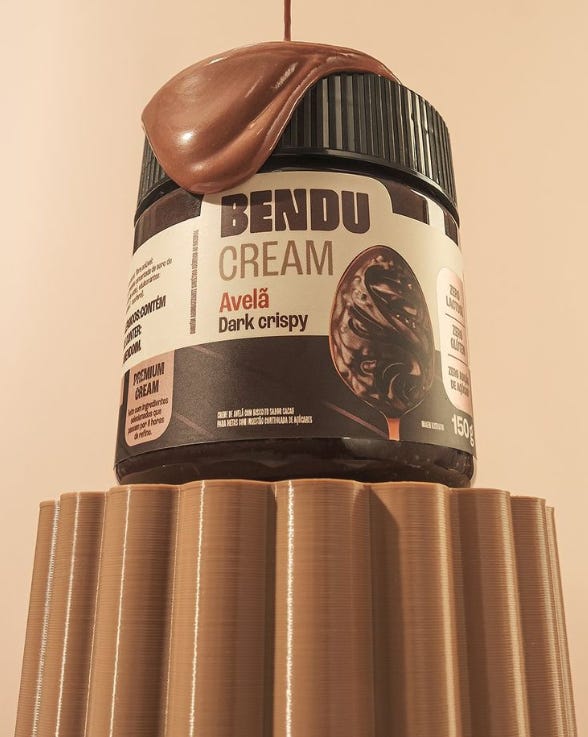
What Works:
Texture Seduction - The melting chocolate drip acts like visual ASMR. It creates imagined mouthfeel instantly, triggering sensory craving without needing lifestyle context or human models.
Scale Manipulation - The oversized jar positioning gives the product physical dominance, subconsciously increasing perceived importance, richness, and value density inside the consumer’s mind.
Sophistication Filtering - The muted tones and editorial styling naturally filter out price-sensitive buyers. This creative attracts consumers who associate aesthetic restraint with product quality.
Instead of showing product benefits, exaggerate one physical characteristic so intensely that consumers mentally simulate the experience. Texture is often more persuasive than claims.
Advertise with Us
Wanna put out your message in front of over 50,000 best marketers and decision makers?
We are concerned about everything DTC and its winning strategies. If you liked what you read, why not join the 50k+ marketers from 13k+ DTC brands who have already subscribed? Just follow this.
At ScaleUP, we care about our readers and want to provide the best possible experience. That's why we always look for ways to improve our content and connect with our audience. If you'd like to stay in touch, be sure to follow us EVERYWHERE🥰
Thanks for your support :) We'll be back again with more such content 🥳