
Howdy Readers 🥰

In this newsletter, you’ll find:
🤔The AI question most marketers never think to ask
🎧 Google and OpenAI rethink ad experiences
🏆 Ad of the Day
If you’re new to ScaleUP then a hearty welcome to you. You’ve reached the right place along with 50k+ CEOs, CMOS, and marketers. Let’s get into it, shall we? Oh! Before you forget, if someone forwarded this newsletter to you, don't forget to subscribe to our newsletter so you never miss out!
Together with AirOps
Most SEO audits check rankings. That’s the wrong instrument now.

AirOps just published State of AEO 2026, a data breakdown of what actually predicts AI Search visibility. A few numbers worth your attention:
Pages updated in the last 3 months get cited 3x more than stale ones.
Clean heading hierarchies drive 2.8x higher citation rates.
85% of brand mentions in AI answers come from third-party sources, not owned pages.
The volatility data is the real find. Brands earning both a mention and a citation are 40% more likely to resurface across answers, and most brands that drop out come back within two runs if the underlying signals hold.
Carta saw a 7x increase in AI citations. Chime tripled theirs in four weeks.
If AI visibility is becoming part of your growth target, this report gives you the benchmarks and signals to audit against your own performance.
🤔The AI question most marketers never think to ask
Ask an AI tool connected to your email account, “How did this campaign do?” and it will summarize what already happened: open rate, click rate, revenue, and a description of the results. That’s the question almost everyone defaults to, and it’s also the least useful one, because the answer can only describe the past.
A better question points in the opposite direction: not which customers already spent the most, but which customers are about to become valuable and haven’t yet.
Forward-looking segmentation ranks customers by their predicted future value rather than their purchase history. The same customer data produces completely different actions depending on whether it’s treated as a historical record or a forecast.
You don’t need AI to do this
The workflow is entirely possible without AI. It just takes longer.
Start with customers acquired in the last 90 days and flag anyone showing two or more of these signals within their first 60 days:
A second purchase has already happened.
They’ve returned to the site three or more times.
They’ve added another product to cart without checking out.
They’ve opened the same email more than twice.
Rather than building your next campaign around last month’s biggest spenders, test this group first. Tag the segment and send it something different from the standard welcome flow.
Where AI changes the workflow
Doing this manually is perfectly possible. AI simply removes the repetitive work and makes it practical to repeat continuously instead of once every few months.
Instead of building the segment yourself, the prompt becomes:
Which customers show these patterns right now, and what should the next email to them say?
Most marketers never ask that question, not because today’s tools can’t answer it, but because nobody taught them the question exists. Describing what already happened is familiar. Looking for what is about to happen requires a different way of thinking.
That’s exactly what Jimmy Kim and Chase Dimond of eCom Email Marketer, together with Bernard Meyer of Omnisend, explore in a free 56-minute session.
They walk through the prompts and workflows they actually use every day, including where AI still falls short and where human judgment still matters. You can watch the free 56-minute session - no signup required.
The difference between an average AI workflow and a genuinely valuable one usually isn’t the model. It’s whether the question is designed to explain yesterday or identify tomorrow’s opportunities before they become obvious to everyone else reading the same dashboard.
🎧 Google and OpenAI rethink ad experiences
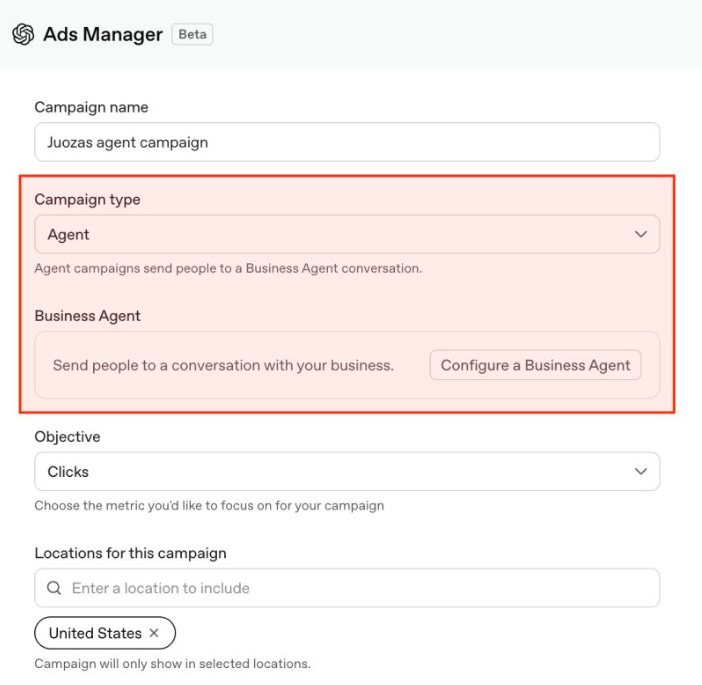
Google is making YouTube Audio Ads easier to launch, while OpenAI is testing a new ad format that replaces landing pages with AI-powered business conversations inside ChatGPT.
The Breakdown:
YouTube Audio Ads Get A Playbook - Google published its first dedicated guide for YouTube Audio Ads, bringing campaign setup, creative specifications, and best practices into one official resource for advertisers.
Built For Audio-First Reach - Audio ads target YouTube and YouTube Music listening experiences. Videos up to 15 seconds run as non-skippable ads, while 16–30 second videos become skippable.
ChatGPT Becomes The Destination - OpenAI is testing chatbot-native ads where clicking an ad opens a business AI agent that can answer questions, recommend products, and qualify leads.
Beyond The Landing Page - Businesses can build AI agents using website content, product feeds, live MCP data, and lead forms, signalling a shift from clicks to conversational customer journeys.
Digital advertising is evolving beyond driving traffic. As AI assistants become shopping and discovery tools, conversations may increasingly replace traditional landing pages as the first customer interaction.
🏆 Ad of the Day
What Works:
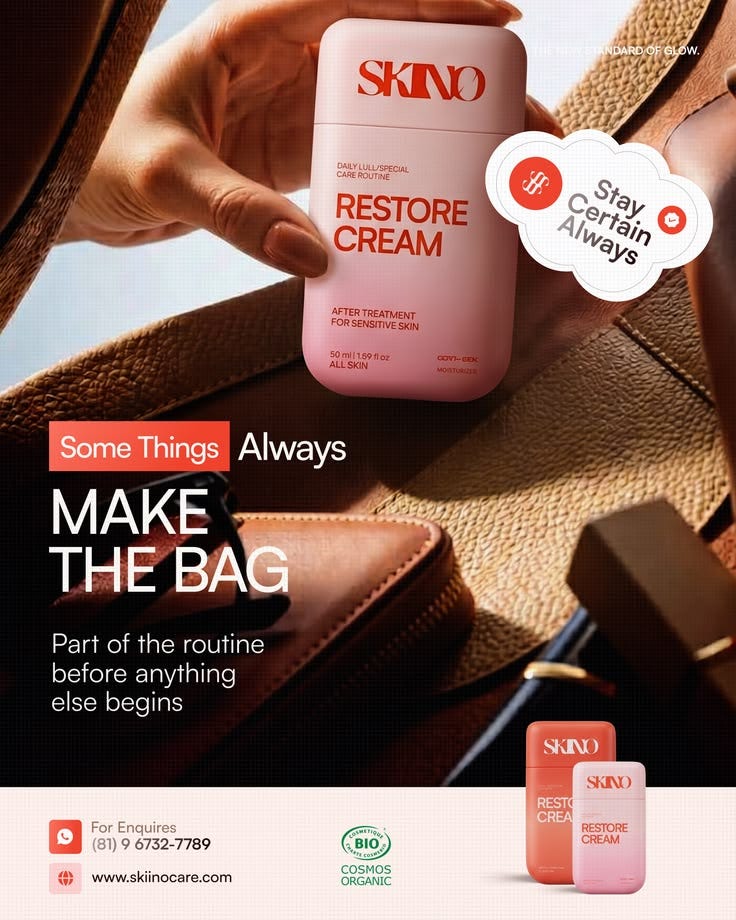
Routine Feels Essential - “Always make the bag” frames the cream as a non-negotiable daily companion, using habit-based messaging to increase relevance and position the product beyond occasional skincare use.
Context Builds Aspiration - Placing the product inside a premium handbag creates lifestyle association, helping shoppers imagine ownership while the warm editorial styling strengthens perceived quality and brand desirability.
Trust Signals Support - Sensitive-skin positioning, organic certification, and visible contact details add credibility, while repeated product placement reinforces branding recall without pulling attention away from the main message.
Place your product inside a familiar routine or personal space, then frame it as something customers always carry. This makes repeat usage feel natural and emotionally relevant.
🥳Events
🔥 What AI Looks for on G2, Capterra, and Reddit Before It Quotes You
August 5 | 2 PM ET | Virtual Event
Josh Grant, founder of StackedGTM and former VP of Growth at Webflow, breaks down how models use third-party corroboration to validate your messaging. Audit whether your pricing, feature, and comparison pages match what buyers say elsewhere, and fix the inconsistencies costing you visibility and pipeline.
Can’t make it live? Register anyway, you’ll get the recordings within 24hours.
Advertise with Us
Wanna put out your message in front of over 50,000 best marketers and decision makers?
We are concerned about everything DTC and its winning strategies. If you liked what you read, why not join the 50k+ marketers from 13k+ DTC brands who have already subscribed? Just follow this.
At ScaleUP, we care about our readers and want to provide the best possible experience. That's why we always look for ways to improve our content and connect with our audience. If you'd like to stay in touch, be sure to follow us EVERYWHERE🥰
Thanks for your support :) We'll be back again with more such content 🥳