
Howdy Readers 🥰

In this newsletter, you’ll find:
😬 Your Agentic SEO Workflow Works in the Demo. It Falls Apart on a Real Client Site.
📱 YouTube and Pinterest Both Updated How They Handle Creator and Feed Tools
🏆 Ad of the Day
If you’re new to ScaleUP then a hearty welcome to you. You’ve reached the right place along with 50k+ CEOs, CMOS, and marketers. Let’s get into it, shall we? Oh! Before you forget, if someone forwarded this newsletter to you, don't forget to subscribe to our newsletter so you never miss out!
😬 Your Agentic SEO Workflow Works in the Demo. It Falls Apart on a Real Client Site.
The demos are genuinely impressive. An agent audits 200 URLs, detects cannibalization patterns, and delivers a prioritized fix list in ten minutes. Everyone in the room wants to replicate it. Then someone runs it on a live site and half the outputs are confidently wrong.
The gap isn’t technical skill. It’s data reliability. And it breaks the same way every time.
Build around data layers, not capabilities.
Agentic workflows get built backwards. The team starts with what the agent should do and figures out data access later. That sequence produces impressive prototypes and unreliable production systems.
Flip it. Map every agent action to a specific data input first. Verify that input is live, comprehensive, and updating frequently enough to be actionable before writing a single workflow step.
Separate inputs by refresh rate.
Not all data ages the same way, and agents making decisions on stale inputs produce stale outputs regardless of how sophisticated the logic is:
Daily inputs: Ranking positions, crawl errors, indexing changes. Tactical decisions need current data or the agent flags the wrong pages with complete confidence.
Weekly inputs: Backlink profiles, content performance trends. Acceptable latency for strategic decisions that don’t require real-time accuracy.
On-demand inputs: Keyword gap snapshots, AI Overview eligibility. Pull these fresh at the start of every workflow run without exception.
Build validation checkpoints before every execution.
Production systems verify before they act. After every major agent action, cross-reference the output against a second data source. An agent flagging content decay should confirm the drop in Search Console before acting on position tracking data alone. One conflicting signal should pause the workflow and route to human review automatically.
Agents that execute without verification produce errors that compound. By the time someone notices, the damage is already downstream.
Modularize everything.
Monolithic workflows break unpredictably and are nearly impossible to debug cleanly. Keyword gap analysis, content decay detection, and cannibalization flagging should each exist as separate modules with independent inputs and outputs. When something breaks, and something always breaks, the fix stays contained to one module without destabilizing the rest.
*SEMrush’s MCP server connects directly to Claude Code, Cursor, and ChatGPT, giving agents live access to Keyword Gap, Organic Rankings, Position Tracking, and AI Visibility data without manual exports. Included in all SEMrush One and SEO Toolkit subscriptions, no setup required. You can try it for free for 7 days.
Ship one module before building the full system.
Don’t construct the complete workflow before validating the data layer underneath it. Start with one function, run it against a real site, and verify every output manually before scaling to the next module.
Production failures almost always trace back to someone skipping this step. The agent is only as reliable as what gets built underneath it.
One module. Full validation. Then scale what holds.
📱 YouTube and Pinterest Both Updated How They Handle Creator and Feed Tools
Both platforms rolled out updates this week. YouTube, whose Media Kit has been available to Partner Program creators since October, is now adding richer audience data to help creators pitch brands more effectively. Pinterest, meanwhile, shared how it keeps its feed from going stale.
The Breakdown:
YouTube Upgrades Its Media Kit - YouTube added Family Status and Household Income as new audience metrics inside its Media Kit, giving brand partners more specific data to evaluate a creator before committing to a deal.
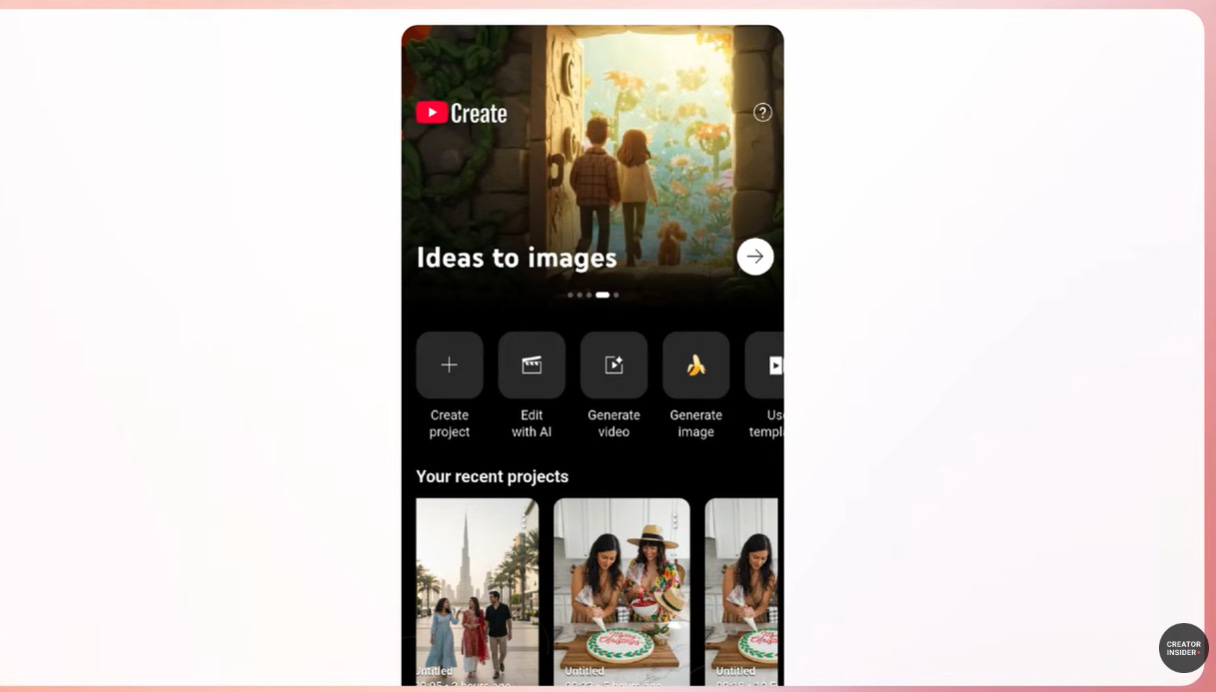
YouTube Create Gets AI Image Generation - Google’s Nano Banana model is now live inside YouTube Create, letting creators generate visuals using text prompts and up to three reference images. The Reimagine feature for Shorts also got wider access.
Pinterest Avoids Repetitive Feeds - Pinterest confirmed that showing users only interest-matched content reduces session length and return visits over time. Repetitive feeds also dilute intent signals, making the overall recommendation system less accurate.
Pinterest Widened Its Recommendation Signals - Pinterest now factors in visual embeddings, co-engagement patterns, and actions from other users — not just individual behavior. The broader signal set led to measurable engagement improvements across the platform.
Richer creator data on YouTube means more informed sponsorship decisions on both sides. On Pinterest, the algorithm actively penalizes repetition; diversifying content formats is no longer optional, it is how the feed works.
🏆 Ad of the Day
What Works:
The Hidden Conversion Mechanism
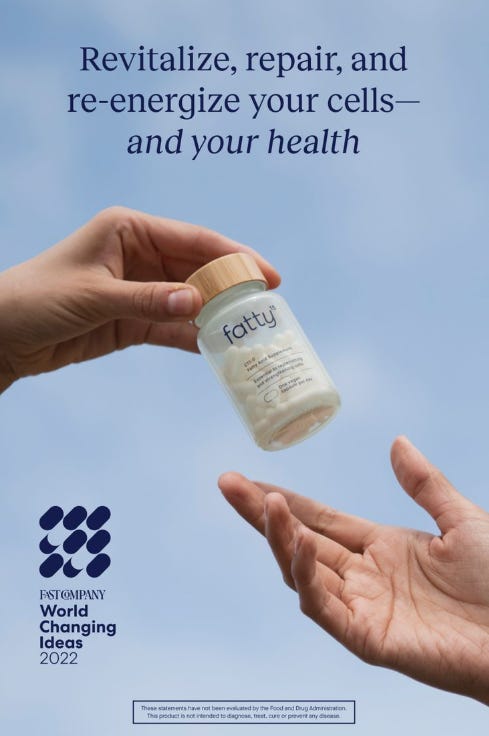
This ad elevates the product from a supplement to a biological upgrade narrative. “Revitalize, repair, re-energize your cells” zooms the benefit down to a cellular level, making the impact feel deeper, more fundamental, almost invisible but powerful.
The floating handoff creates a transfer moment, like you’re being given access to something valuable, not sold to. It feels curated, not commercial.
The award badge anchors it in intellectual credibility, not influencer hype.
Steal This: Shift your benefit from surface outcomes to deeper system-level change, then visually present it like access, not a transaction.
*When you purchase through links in this article, we may earn an affiliate commission from Semrush.
Advertise with Us
Wanna put out your message in front of over 50,000 best marketers and decision makers?
We are concerned about everything DTC and its winning strategies. If you liked what you read, why not join the 50k+ marketers from 13k+ DTC brands who have already subscribed? Just follow this.
At ScaleUP, we care about our readers and want to provide the best possible experience. That's why we always look for ways to improve our content and connect with our audience. If you'd like to stay in touch, be sure to follow us EVERYWHERE🥰
Thanks for your support :) We'll be back again with more such content 🥳