
Howdy Readers 🥰

In this newsletter, you’ll find:
🔑 Your segment reporting just lost its key
🛍️ Social platforms are cutting steps between ads and conversions
🏆 Ad of the day
If you’re new to ScaleUP then a hearty welcome to you. You’ve reached the right place along with 50k+ CEOs, CMOS, and marketers. Let’s get into it, shall we? Oh! Before you forget, if someone forwarded this newsletter to you, don't forget to subscribe to our newsletter so you never miss out!
Together with Insense
The 3-Step Playbook for Winning BFCM Before October

By October, CPMs can already be 20–60% higher. Brands that win BFCM build their creator roster in September, while costs are lower and there’s still time to find proven winners.
Here’s the playbook:
Seed now so creators know the product before November. Seed in Aug-Sep and flag organic winners early, since 81% of BFCM collaborations involve repeat creators.
Source modular UGC with flexible hooks and raw footage. Refresh fatigued ads without funding another shoot.
Run proven creators across organic and paid. Put winning content behind the creator’s handle to carry existing trust into each impression.
Bonus: Connect Ads Manager to Insense’s performance dashboard to identify the creators driving performance, then rehire them before availability tightens.
Insense helps DTC brands scaling beyond $2M build repeat creator rosters and is trusted by Il Makiage, Quince, Huda Beauty, and Monster Energy.
🔑 Your segment reporting just lost its key
Google confirmed that campaign-level language targeting disappears from Search and AI Max for Search campaigns in late September, with Performance Max affected on Google Search inventory.
An English query can now serve a French ad, or vice versa, based on what Google’s systems infer a user understands, not on which language setting a campaign was built around.
The setting quietly did double duty for most teams. It targeted the audience, and as a side effect gave you a clean way to segment reporting by language, since campaigns split along that line by default. Losing it doesn’t just change how ads match. It breaks the reporting structure a lot of international accounts were quietly built on.
Rebuild your language segmentation before the campaign structure that gave it to you disappears
If your reporting relies on campaign name or ID to infer which language an impression served in, that inference stops being reliable the moment language matching moves to inference on Google’s side.
Move the language signal into the asset layer instead. Tag creative assets and landing pages with a language identifier in your own tracking parameters, independent of campaign structure, so a report can answer “which language performed” without depending on a campaign split that no longer maps cleanly to language.
Build the query-language-versus-serve-language check
The gap worth watching isn’t average performance. It’s the mismatch rate, an English query getting served a Spanish asset, or the reverse, and what that does to conversion.
Pull impression-level data where available and compare inferred query language against served asset language for your highest-spend segments.
Where mismatches concentrate, that’s worth a manual override request or a dedicated landing page for that crossover audience, since Google’s own signal says it’s a real, recurring pattern rather than noise.
Get the workaround live before the reporting gap does
Teams running this manually in a spreadsheet find it works but doesn’t scale past a handful of markets before someone’s job becomes maintaining language tags by hand every week.
Automating the tag-and-reconcile step, so language segmentation persists regardless of what campaign structure Google settles into next, is exactly the kind of workflow a platform like AirOps is built to run continuously rather than as a one-time audit.
Losing a control this abruptly is also the resourcing story AirOps surveyed 300+ CMOs and VPs about directly: rising targets now affect 75.4% of marketing leaders, and most are absorbing changes like this one without any added headcount to handle it. You can get the Marketing Leaders Reality Index.
The control is going away regardless of how anyone feels about it. The reporting built on top of it doesn’t have to go with it.
🛍️ Social platforms are cutting steps between ads and conversions
YouTube, X, and Google are all rolling out tools designed around the same goal: keep more of the journey from discovery to purchase or lead capture inside the platform.
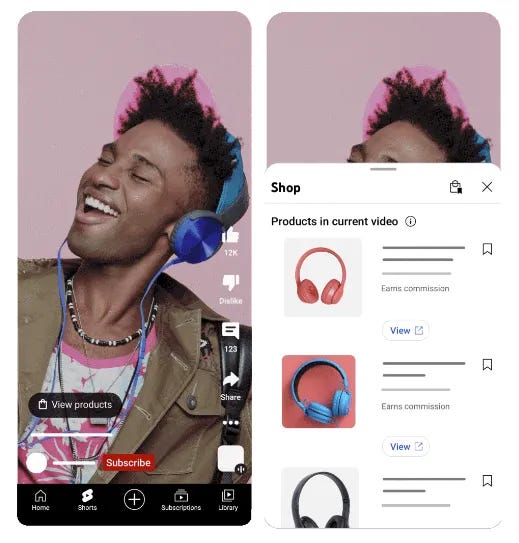
The Breakdown:
YouTube connects creators directly to Amazon - Eligible U.S. creators can tag Amazon products inside videos, Shorts, and livestreams and earn commissions. YouTube says Shopping tags generated over 110% more product clicks than description links alone in a July experiment.
Amazon tagging can happen automatically: Creators who connect their YouTube and Amazon Influencer accounts can access eligible products and enable auto-tagging, turning existing and future content into more direct shopping surfaces.
X brings lead capture back into the feed - Its revived Lead Gen Ads open native forms with one tap, letting people book demos, join waitlists, request quotes, or submit details without visiting an external landing page.
Google adds messaging to Demand Gen - Google is testing YouTube ads that let high-intent prospects start conversations with brands directly through messaging apps. Demand Gen is also adding personalized travel offers and expanding AI video creation.
The landing page is increasingly becoming optional. YouTube is moving product discovery closer to Amazon checkout, X is capturing customer details natively, and Google is letting prospects move from video ads directly into conversations. For advertisers, the conversion journey is getting shorter and increasingly controlled by the platforms themselves.
🏆 Ad of the Day
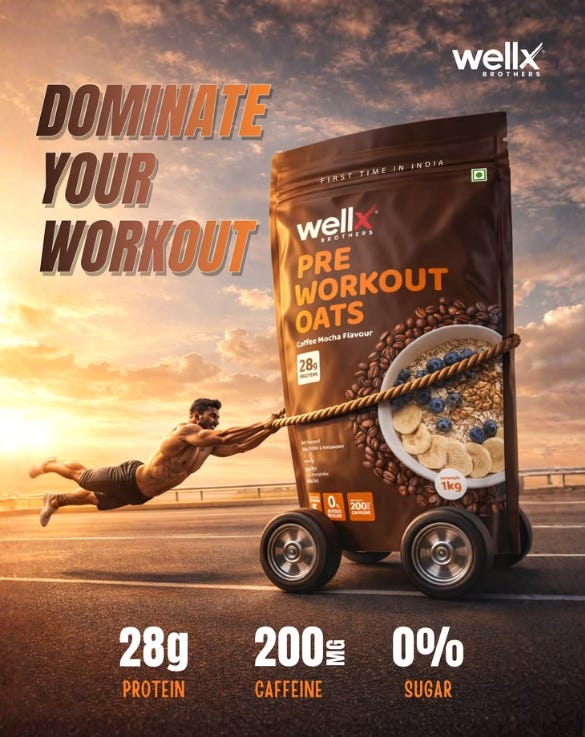
What Works:
Visual Metaphor Hits - Turning the pack into something the athlete literally pulls makes “pre-workout fuel” instantly visual, creating a strong pattern interrupt and giving the benefit real physical weight
Proof Scans Fast - The 28g protein, 200mg caffeine and 0% sugar callouts make the performance proposition easy to process, giving high-intent shoppers three concrete reasons to believe quickly.
Energy Matches Category - The sunset road, muscular athlete and oversized pack create an intense performance aesthetic that fits gym culture well, strengthening message-market fit and perceived product potency.
Take the core performance claim and turn it into an exaggerated action scene. The more literally the product “powers” the user, the more memorable the benefit becomes.
Advertise with Us
Wanna put out your message in front of over 50,000 best marketers and decision makers?
We are concerned about everything DTC and its winning strategies. If you liked what you read, why not join the 50k+ marketers from 13k+ DTC brands who have already subscribed? Just follow this.
At ScaleUP, we care about our readers and want to provide the best possible experience. That's why we always look for ways to improve our content and connect with our audience. If you'd like to stay in touch, be sure to follow us EVERYWHERE🥰
Thanks for your support :) We'll be back again with more such content 🥳