
Howdy Readers 🥰

In this newsletter, you’ll find:
👨💻Your First Customer Is Google
⚠️ Google Highlights Hidden Data + Crawl Killers
🏆 Ad of the Day
If you’re new to ScaleUP then a hearty welcome to you, you’ve reached the right place along with 50k+ CEOs, CMOS, and marketers. Let’s get into it, shall we? Oh! Before you forget, if someone forwarded this newsletter to you, don't forget to subscribe to our newsletter so you never miss out!
⚠️ Your First Customer Is Google
Most Google Ads accounts don’t struggle because of bids, keywords, or creative fatigue.
They struggle because Google learned the wrong version of the business.
Not the customer you think you serve. Not the outcome you care about most. But the one your data quietly trained it to optimize for.
In 2026, Smart Bidding is not reacting to performance in the short term. It’s building a probabilistic model of who your business is for, what outcomes you tolerate, and how much uncertainty you’re willing to accept. Once that model hardens, every auction reinforces it.
That’s why performance decay often feels irrational. Nothing is “broken,” but efficiency keeps slipping.
Conversion tracking is no longer reporting. It’s instruction.
Once Smart Bidding is live, every conversion event becomes a teaching signal.
A flat “Purchase” or “Lead” event tells Google one thing only: binary success. It removes nuance about intent, velocity, and deal quality. That works when volume is high and cycles are short. It breaks down everywhere else.
What works better in practice:
Keep a Tier 1 conversion that represents the real business outcome.
Add 1–2 mid-funnel intent signals that predict that outcome.
Weight them intentionally so Google can learn earlier without confusing value.
In one ecommerce account, adding “Started Checkout” as a low-weight conversion gave the system earlier intent visibility. Bids shifted toward higher-quality auctions, and CAC dropped 17 percent without changing creative or spend.
Signal pollution is the silent killer of automated performance.
Google does not distinguish between “helpful” and “harmful” data. It just learns.
Pollution creeps in when:
Soft actions are promoted to primary conversions.
High- and low-intent traffic live in the same campaign.
Creative attracts curiosity clicks instead of buyers.
Budgets imply tolerance for volume over quality.
The result isn’t chaos. It’s drift. Lead quality slips. AOV drops. Search terms widen. In-platform metrics still look fine, but the P&L disagrees.
The fix is subtraction, not addition. Remove signals that don’t correlate to revenue. Isolate intent. Refresh first-party data so the model learns from who you want now, not who converted last year.
In 2026, advantage comes from signal discipline.
Automation is table stakes. Signal hygiene is leverage.
Brands that win don’t outbid competitors. They out-teach them. They give Google a clearer picture of what success actually looks like, earlier in the journey, with fewer contradictions.
That’s when automation stops drifting and starts compounding.
⚠️ Google Highlights Hidden Data + Crawl Killers
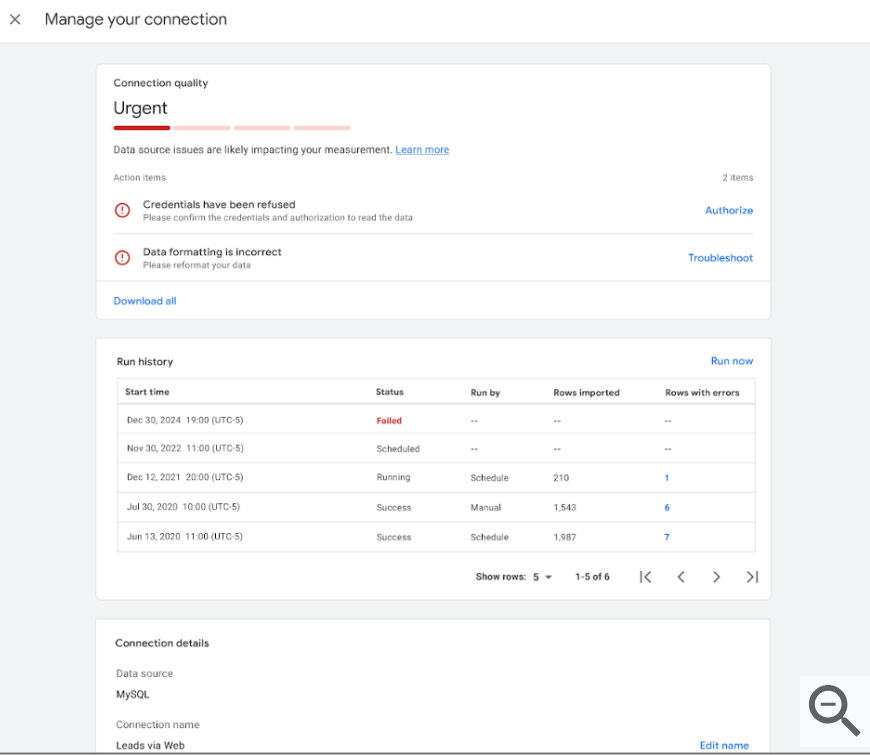
Google just revealed two silent problems hurting marketers and websites, and one stat says it all: 75% of crawling issues come from just two URL mistakes. At the same time, broken data connections inside Google Ads can quietly wreck measurement.
The Breakdown:
1) Fix broken data connections - Google Ads’ new diagnostics tool shows exactly where data imports fail. It flags issues early, so measurement doesn’t silently break. Status labels clearly show how serious the problem is.
2) Know what “urgent” really means - An urgent status means data has stopped flowing, often for over 48 hours. Common causes include rejected credentials, missing permissions, or deleted data sources. Fixing these restores accurate reporting fast.
3) Most crawl waste is self-inflicted - Google says faceted navigation alone causes 50% of crawling issues. Filters for size, color, or price can create infinite URLs that bots can’t escape. Action parameters add another 25% of crawl waste.
4) Clean URLs protect performance - Bad URLs overload servers and confuse search engines about canonical pages. Simple fixes reduce crawl traps and speed up indexing. Clean structure keeps both bots and users happy.
Both updates point to the same risk: invisible technical debt. Broken data connections corrupt measurement, while messy URLs create bot traps that slow servers, hurt page speed, and confuse canonical signals. Regular audits of tracking and URL structure protect performance across ads, SEO, and site health.
🏆 Ad of the Day

What Works:
The Line Creates Instant Upgrading - “Not just a tinted moisturizer” is a power move. It tells you this isn’t basic makeup, it’s something more elevated, like skincare plus polish in one step.
The Face-First Visual Matters - They lead with real skin texture up close. That signals confidence and makes the product feel believable, like it enhances rather than covers.
This Is a Routine Shortcut Ad - It’s positioned as the one product that replaces two. Moisturizer plus tint plus SPF equals fewer decisions, which is exactly what busy buyers want.
When your product lives in a crowded category, don’t compete on “better.” Compete on “more than.” Make it feel like an upgrade, not an option.
Advertise with Us
Wanna put out your message in front of over 50,000 best marketers and decision makers?
We are concerned about everything DTC and its winning strategies. If you liked what you read, why not join the 50k+ marketers from 13k+ DTC brands who have already subscribed? Just follow this.
At ScaleUP, we care about our readers and want to provide the best possible experience. That's why we always look for ways to improve our content and connect with our audience. If you'd like to stay in touch, be sure to follow us EVERYWHERE🥰
Thanks for your support :) We'll be back again with more such content 🥳
Brilliant breakdown on signal hygiene. Most people obsess over creative fatigue when the real issue is they've been training the algorithm on pollutted data for months. Ran into this when mid-funnel actions were weighted the same as purchases, algorithm just optimized for whichever came first and deal quality tanked. Signal disipline is genuinely underrated.