
Howdy Readers 🥰
In this newsletter, you’ll find:
💪The reason your content isn’t getting cited by AI has nothing to do with your content.
💬 Facebook Launches a Standalone Conversations App While TikTok Shop Keeps Growing for Small Brands
🏆 Ad of the Day
If you’re new to ScaleUP then a hearty welcome to you. You’ve reached the right place along with 50k+ CEOs, CMOS, and marketers. Let’s get into it, shall we? Oh! Before you forget, if someone forwarded this newsletter to you, don't forget to subscribe to our newsletter so you never miss out!
Together with AirOps
Stop running AI like it’s 2023

Most growth teams using AI are still doing the same work, just faster. The prompts exist, but the system holding them together doesn’t.
On June 11, growth leaders from Chime, Bitly, and Udemy are showing exactly how they moved past one-off prompts into agentic Playbooks that run, improve, and maintain themselves.
You’ll walk away with:
The exact path from one-off prompts to agentic Playbooks that run on autopilot
How to build oversight into your workflow without slowing execution down
What to say to leadership to get AI initiatives approved fast
Tyler Roehmholdt (Director of SEO Strategy, Bitly), Nicholas King (Sr. SEO and Digital Experience Manager, Udemy), and Bridget Nelson (AI Search Strategist, Chime) are walking through what they’ve built and what’s moving the needle right now.
If you’re still patching AI into your workflow manually, this is the session that changes that.
Can’t make it live? Register anyway and get the recording in your inbox within 24 hours.
💪The reason your content isn’t getting cited by AI has nothing to do with your content.
Google just confirmed that AI search features are governed by the same crawl and indexing systems as traditional search. If an AI crawler can’t access your site, no amount of content optimization moves the needle.
Most sites are blocking at least one AI crawler right now. Not intentionally. Through CDN configurations and WAF rules set up years ago that nobody has revisited since AI crawlers became citation sources.
Here’s how to find it and fix it.
1. Audit your robots.txt for AI crawler user agents
Standard SEO audits check Googlebot. Almost none check the four AI crawler user agents that determine your AI visibility ceiling:
ChatGPT-User
OAI-SearchBot
Perplexity-User
Claude-SearchBot
Open your robots.txt and search for each string. A disallow rule on any of them is a hard cap on that platform’s citation visibility, regardless of content quality, entity signals, or anything else you’ve optimized.
Find a block? Remove it and resubmit through Google Search Console. Then go deeper.
2. Check server logs for AI crawler rejections
Robots.txt is only one layer. CDN and WAF configurations block AI crawlers at the infrastructure level, returning 403 or 429 responses that never surface in standard SEO reporting.
Pull your server logs. Filter for requests from each AI crawler user agent. Look for:
403, infrastructure actively rejecting the crawler
429, rate-limiting it to the point of ineffectiveness
This is where the real problem lives. A robots.txt block is visible. An infrastructure block is invisible until you specifically look for it.
Once your pages are confirmed crawlable, track whether citation rates respond. *SEMrush’s AI Visibility Toolkit shows your visibility across ChatGPT and Google AI Mode so you can connect crawler fixes to actual citation movement. You can try it free for 7 days.
3. Set a quarterly AI crawler audit
CDN and WAF rules change with infrastructure updates. A routine deployment can silently reintroduce blocking without triggering a single SEO alert.
Every quarter: recheck server logs for AI crawler response codes across every site you manage. Under 30 minutes. Catches the problem most likely to silently undo citation progress already built.
Google confirmed the foundation. Crawler access is the foundation. Everything else only works if this layer is clean.
💬 Facebook Launches a Standalone Conversations App While TikTok Shop Keeps Growing for Small Brands
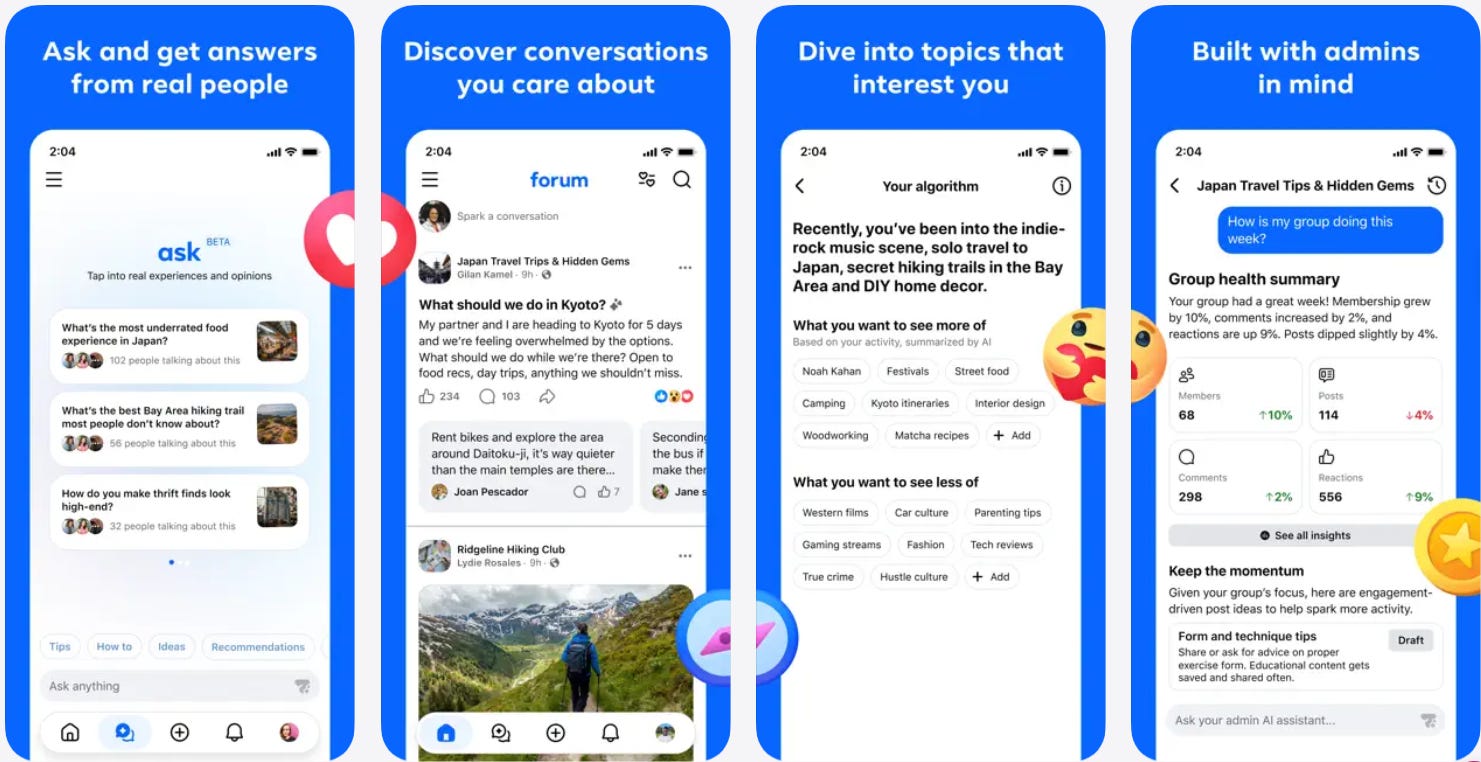
Meta launched Forum, a new app built entirely around Facebook Group conversations with AI search across all your groups. TikTok Shop reported US small business sales grew 66% in 2025, now surpassing Etsy, Wayfair, and eBay at $14B.
The Breakdown:
Forum Strips the Feed to Conversations Only - Facebook’s standalone app shows nothing but group discussions with built-in AI search that pulls answers from every group you belong to at once, surfacing buried knowledge, tutorials, and recommendations instantly.
Real Names Add What Reddit Lacks - Forum uses Facebook’s real identity system, adding accountability that anonymous platforms can’t match. If it finds its footing, active Facebook Groups could become where customers discover you before they ever search Google.
TikTok Shop Is a Real Commerce Platform Now - $14B in US sales surpassing Etsy, Wayfair, and eBay. 215,000+ small businesses selling with sales up 66%. People come for entertainment and leave with things in their cart.
Creators Who Feel Real Are the Engine - 7 in 10 buyers purchased because a creator told them to. Smaller brands are making gains simply by showing up genuinely on camera, with countdown bidding and shoppable photos expanding the selling surface further.
Forum could turn Facebook Groups into a discovery layer competing with Reddit and Google for niche queries. TikTok Shop is proving that creator-driven commerce works at scale for small brands that just show up authentically. Both show that the platforms people use for conversation and entertainment are becoming where they buy.
🏆 Ad of the Day

What Works:
Identity Fusion - The activewear styling signals “healthy,” while the dessert packaging signals “fun.” That combination targets consumers tired of choosing between discipline and pleasure.
Shelf Aesthetics - The bold color-blocked packaging is optimized for visual memorability in both feeds and retail shelves. It behaves more like beauty branding than nutrition branding.
Sophistication Targeting - The ad avoids heavy protein macros or scientific claims because the audience already understands wellness basics. The creative sells belonging, not education.
If your category feels restrictive or functional, inject visual pleasure and retail-style aesthetics into the creative. Consumers adopt habits faster when products feel culturally desirable, not medically responsible.
*When you purchase through links in this article, we may earn an affiliate commission from Semrush.
Advertise with Us
Wanna put out your message in front of over 50,000 best marketers and decision makers?
We are concerned about everything DTC and its winning strategies. If you liked what you read, why not join the 50k+ marketers from 13k+ DTC brands who have already subscribed? Just follow this.
At ScaleUP, we care about our readers and want to provide the best possible experience. That's why we always look for ways to improve our content and connect with our audience. If you'd like to stay in touch, be sure to follow us EVERYWHERE🥰
Thanks for your support :) We'll be back again with more such content 🥳