
Howdy Readers 🥰
In this newsletter, you’ll find:
🫣Your Checkout Isn’t Losing Sales. It’s Losing Trust.
📱 Instagram and Google Ads Both Tested New Features This Week
🏆 Ad of the Day
If you’re new to ScaleUP then a hearty welcome to you. You’ve reached the right place along with 50k+ CEOs, CMOS, and marketers. Let’s get into it, shall we? Oh! Before you forget, if someone forwarded this newsletter to you, don't forget to subscribe to our newsletter so you never miss out!
Together with Pounce
Your performance agency. Rebuilt as software.

Pounce runs the performance marketing function end-to-end. Creative analysis. Brief generation. Competitor intel. Performance optimization. All delivered by AI agents that work the way a strong performance team works, not the way a dashboard works.
The intelligence inside Pounce already powers enterprise platforms like Supercell, Wildlife Studios, DeNA, Playtika, and Scopely.
On the April 2026 Mobile Gaming Video Ads Understanding Benchmark, Pounce scored 98.5%. The best frontier model scored 76.9%.
Generic AI gets it wrong 1 in 4 times. Pounce gets it wrong 1 in 50. That gap is what makes it trustworthy enough to run without you watching it.
You’re paying agency markup for work that’s already being done faster, cheaper, and more accurately by software.
Get started for free with Pounce today!
🫣Your Checkout Isn’t Losing Sales. It’s Losing Trust.
Every friction point in your checkout isn’t just costing you a conversion. It’s making your customer retroactively question the product they’re about to receive.
A vague error message, a shipping estimate that contradicts the product page, a font that doesn’t match your store. None of these read as “UX problem” to the customer. They read as “this brand might not have its act together.” And a brand that doesn’t have its act together makes a product that might not work as promised.
Checkout inconsistency is a product quality signal.
Fix operational inconsistencies first
Not all checkout friction is equal. Treating it as such is where most optimization budgets get wasted.
Operational inconsistencies are the ones that damage product confidence. A shipping cost that contradicts your product page. A discount code that doesn’t apply after being promoted in an ad. A delivery timeline your confirmation email contradicts.
These don’t just cause abandonment. They trigger a specific response: if this brand can’t keep a simple promise at checkout, what promise are they making about the product itself?
Cosmetic inconsistencies slow completion. They don’t damage trust. Audit for operational breaks first.
Neutralize price anxiety at the product page, not checkout
The moment a customer hits an unexpected cost at checkout isn’t when price anxiety starts. It’s when it peaks.
The fix isn’t earlier transparency for its own sake. It’s placement. Shipping cost surfaced on the product page reads as helpful information. The same cost revealed at checkout reads as a hidden fee, even when the amount is identical.
Surface your total landed cost on the product page. Abandonment falls not because the cost changed, but because the surprise did.
Use the thank-you page before remorse sets in
Buyer’s remorse has a specific onset window. It begins roughly 20 to 30 minutes after purchase and peaks within 24 hours. The thank-you page is the only touchpoint you control inside that window.
A generic order confirmation accelerates remorse. It gives the customer nothing to feel good about. A page that validates the decision with a specific customer result, a human founder message, or a usage tip that makes the product feel real extends that window and directly cuts refund rates.
Tools like Checkout Index show you exactly where your store is leaking trust before you start guessing. No install, no demo call, just a score in 60 seconds.
Your checkout is either building or dismantling the trust your entire funnel worked to create. The operational breaks are costing you more than conversions. They’re costing you credibility.
📱 Instagram and Google Ads Both Tested New Features This Week
Instagram quietly surfaced a feature that lets users rewrite someone else’s Reels text, while Google Ads began testing a way to preview negative keyword impact before applying changes.
The Breakdown:
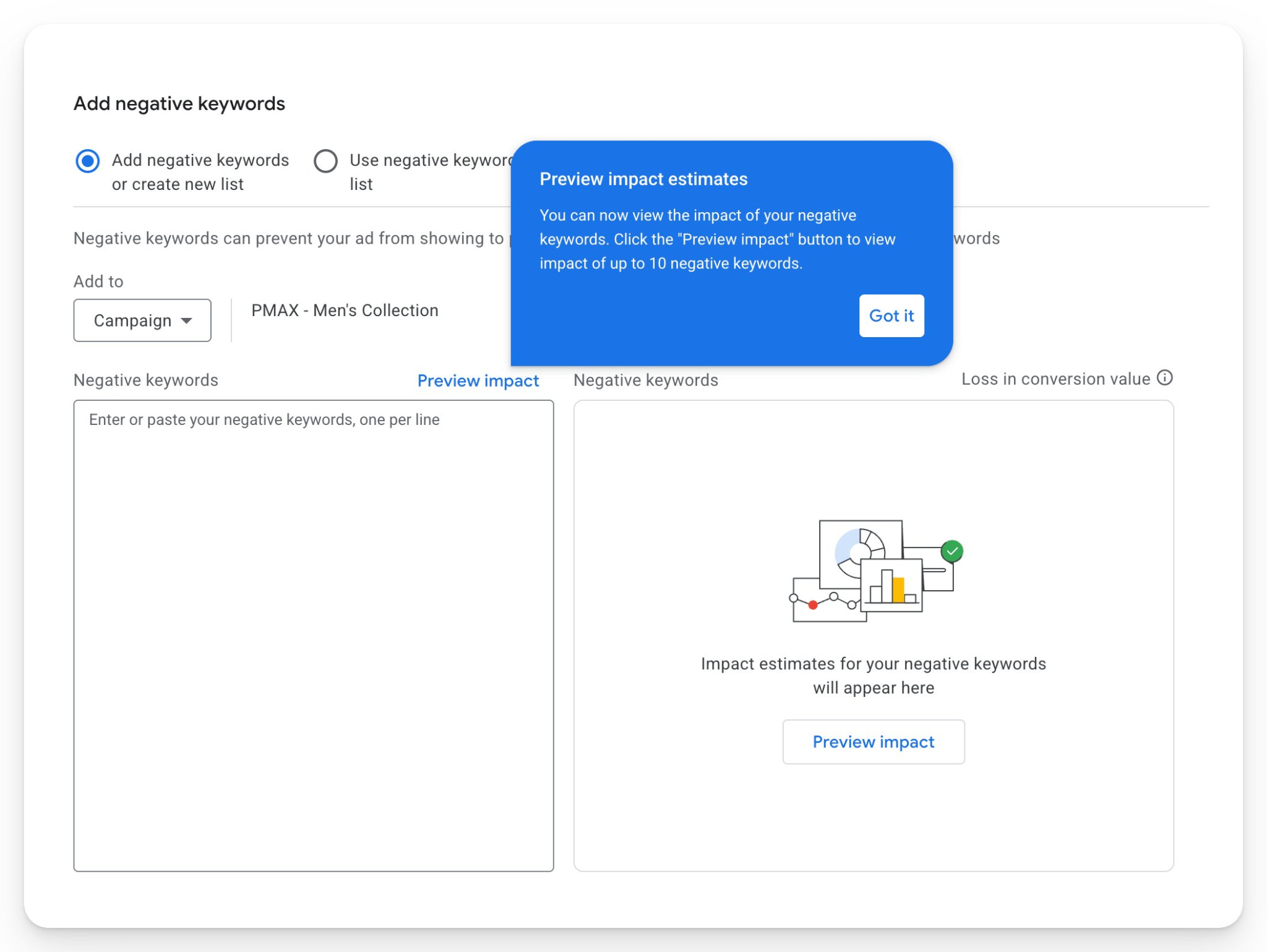
Google Ads Can Now Preview Negative Keywords - Google Ads is testing Preview Impact Estimates, letting advertisers see the projected effect of adding up to 10 negative keywords before making any changes to live campaigns.
Instagram Tests a Reels Text Swap Feature - A Help Center article briefly showed a Swap feature letting users replace text on someone else’s Reel with their own. Instagram has since removed the article, and a full release is unconfirmed.
It Conflicts With Instagram’s Own Rules - Instagram just announced penalties for aggregator accounts reposting without meaningful creative input. Swap appears to run directly counter to that update, though penalties are account-level, not post-level.
The Originality Rules Are Still Murky - Users can still repost others’ content if they add a unique spin and credit the creator. Instagram is using automation to detect violations but how it defines original versus derivative remains unclear.
Instagram’s Swap feature and its originality push feel contradictory; the platform may be figuring this out in public. Google’s negative keyword preview is a smaller update but a genuinely useful one for advertisers wanting to test changes without committing.
🏆 Ad of the Day
What Works:
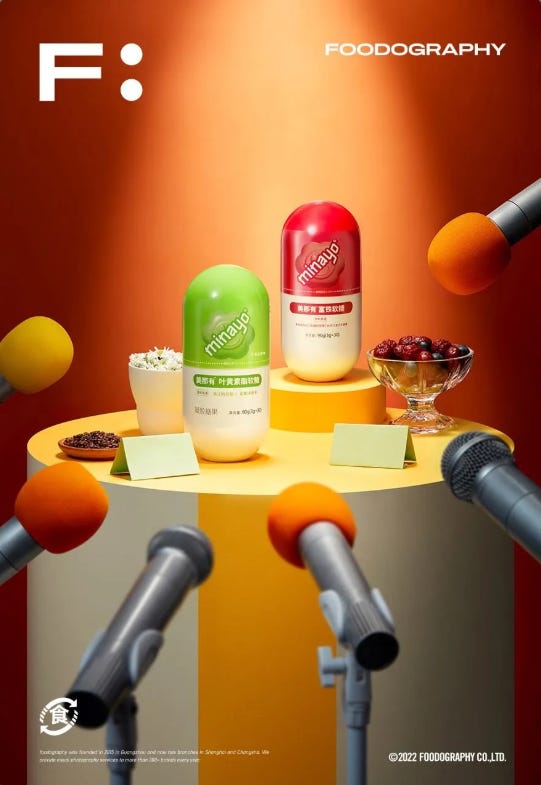
1. Stage lighting as an authority signal. The spotlight hits the products from above like a keynote reveal. Your brain reads “important announcement” before your eyes read the label.
2. Ingredient props do the science-free health signaling. Seeds, berries, and botanicals arranged around the bottles communicate “natural and functional” without triggering supplement skepticism that clinical copy would.
3. Capsule-shaped packaging photographed straight on rewards recognition. The pill bottle silhouette primes pharmaceutical trust. The gummy softness of the product inside then relieves the “medicine” anxiety. Two opposing cues, one purchase trigger.
Borrow staging from high-status cultural formats, press conferences, award shows, gallery exhibitions, and photograph your product inside them. Status by association is free and scales better than discount messaging.
Advertise with Us
Wanna put out your message in front of over 50,000 best marketers and decision makers?
We are concerned about everything DTC and its winning strategies. If you liked what you read, why not join the 50k+ marketers from 13k+ DTC brands who have already subscribed? Just follow this.
At ScaleUP, we care about our readers and want to provide the best possible experience. That's why we always look for ways to improve our content and connect with our audience. If you'd like to stay in touch, be sure to follow us EVERYWHERE🥰
Thanks for your support :) We'll be back again with more such content 🥳