
Howdy Readers 🥰
In this newsletter, you’ll find:
🔍Your AI visibility is a lie
🤖 AI is changing what happens before the click
🏆 Ad of the day
If you’re new to ScaleUP then a hearty welcome to you. You’ve reached the right place along with 50k+ CEOs, CMOS, and marketers. Let’s get into it, shall we? Oh! Before you forget, if someone forwarded this newsletter to you, don't forget to subscribe to our newsletter so you never miss out!
🔍Your AI visibility is a lie
Most ChatGPT answers never touch a search. Independent tracking puts the share of US ChatGPT answers carrying an actual web citation at under 7% this year, meaning most responses come from the model’s own training, with no live retrieval and nothing to cite.
That fact breaks a specific category of AI visibility tool. Several platforms teams use to track “AI search visibility” work by forcing a search behind the scenes, submitting a prompt in a mode that triggers retrieval, then reporting whichever citations come back.
The report looks legitimate. It just doesn’t reflect what a real user typing that question into ChatGPT normally sees, since most of the time no search happens at all.
A team optimizing against that data is optimizing against an artifact of how the tool queries the model, not actual brand visibility.
Ask your current tool exactly how it generates its data
Before trusting another monthly AI visibility report, get a direct answer to one question: does this platform force search mode to generate citation data, or sample how the model actually responds by default.
Vendors that force search aren’t being dishonest, that’s often the only reliable way to get a citation to measure, but the report needs to say so plainly. If yours doesn’t disclose the methodology, that’s itself the answer.
Separate presence in forced-search results from presence in real answers
These are two different numbers, and a tool reporting only one is telling you half the story, possibly the less useful half.
Where your platform allows it, compare your citation rate under forced search against your mention rate in the model’s default, no-search response to the same prompts. A brand that shows up well under forced search but never gets named in a default answer has a different problem than a brand invisible in both, and the fix differs completely.
Rebuild the client conversation around what’s actually verifiable
Reporting an isolated visibility score to a client or leadership invites a follow-up question no tool can answer with precision. A trend line, tracked consistently against a disclosed methodology, survives that scrutiny.
Getting citation and mention data across ChatGPT, Google AI Mode, and Gemini from a source that’s explicit about how each number was generated, rather than guessing at a single vendor’s black-box methodology, is the baseline *Semrush One is built to give you. You can see how it works here.
A visibility score is only as honest as the search it took to produce it, and most reports never say which kind they ran.
🤖 AI is changing what happens before the click
Google is redesigning how people search, advertisers manage AI-generated copy, and creators produce video. Meanwhile, OpenAI is turning product discovery into a dedicated ChatGPT experience.
The Breakdown:
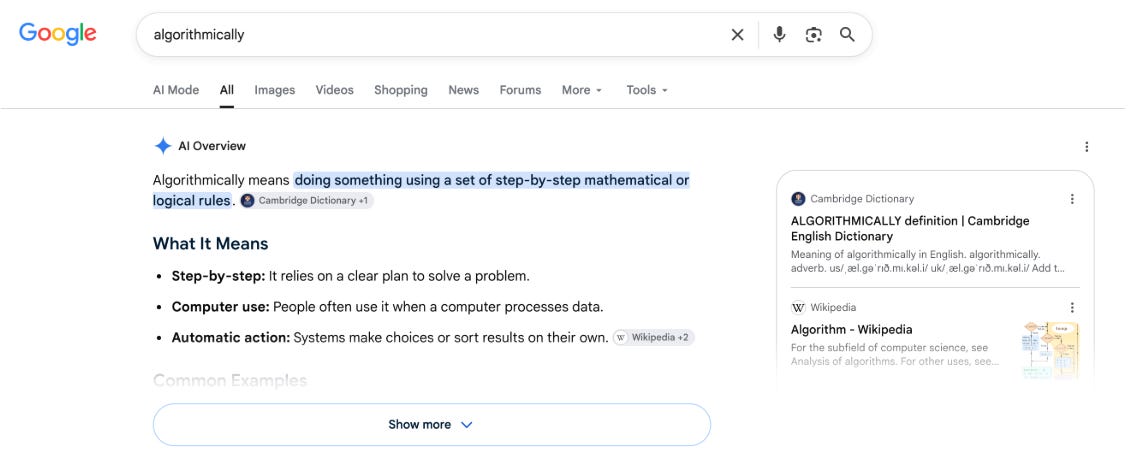
Google Search gives AI more space: Some AI Overviews now expand automatically with an “Ask anything” box, pushing organic links lower and moving users closer to an AI Mode-style search experience.
Advertisers can finally inspect AI-written titles: Google Ads is testing a report showing generated versus original product titles, plus impressions, clicks, CTR, cost, CPC, and controls for keeping copy on-brand.
Gemini makes video drafts cheaper: Omni 1.1 Flash creates 360p drafts up to 60% faster at one-third of 720p’s cost, letting creators test concepts before upscaling winners to 4K.
ChatGPT makes shopping a destination - OpenAI pinned Shopping to the sidebar with dedicated landing and search pages, giving product discovery a permanent place rather than leaving it inside general conversations.
Search, advertising, video creation, and shopping are all moving toward AI-native experiences. Google and OpenAI are reducing the steps between discovery and action, while giving marketers new ways to understand, control, and optimize how AI shapes those interactions.
🏆 Ad of the day
What Works:
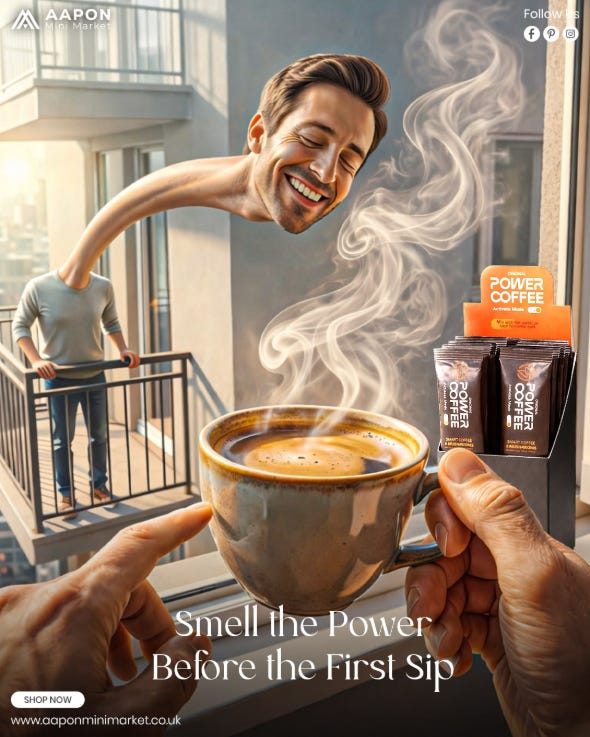
Surreal Hook Stops - The exaggerated stretched neck creates an immediate pattern interrupt, turning the aroma benefit into a visual gag that dramatically improves thumb-stop potential in crowded feeds.
Benefit Becomes Visual - “Smell the power before the first sip” is reinforced by the rising steam, making the product promise easy to understand while connecting aroma directly to anticipation.
Product Stays Visible - The coffee cup dominates the foreground while the Power Coffee packs sit beside it, preserving product communication and branding recall despite the attention-grabbing surreal concept.
Take one sensory product benefit and exaggerate it visually. Making smell, taste or energy physically impossible to ignore can turn ordinary product claims into memorable creative.
*When you purchase through links in this article, we may earn an affiliate commission from Semrush.
Advertise with Us
Wanna put out your message in front of over 50,000 best marketers and decision makers?
We are concerned about everything DTC and its winning strategies. If you liked what you read, why not join the 50k+ marketers from 13k+ DTC brands who have already subscribed? Just follow this.
At ScaleUP, we care about our readers and want to provide the best possible experience. That's why we always look for ways to improve our content and connect with our audience. If you'd like to stay in touch, be sure to follow us EVERYWHERE🥰
Thanks for your support :) We'll be back again with more such content 🥳
The forced-search versus default split is the right cut, and I think it still understates the problem. There is no single default answer to sample. The same prompt returns different text across sessions depending on routing and personalisation, so a mention rate is a distribution rather than a number, and one sample per prompt per month is noise presented as a trend line. The honest version of the report carries a sample size and a spread.
The other half is what you measure once you trust the sampling. Ahrefs compared 863,000 keywords against 4 million AI Overview citations this March: only 38% of cited pages ranked in Google's top 10, down from 76% in July 2025. Whatever earns a citation has decoupled from what earns a ranking. So brand mention counts tell you the score and almost nothing about the move. The unit that survives is the claim: which specific sentence got lifted, from which page, and attributed to whom. That is trackable in origin logs and it is the only thing you can actually go and change.