
Howdy Readers 🥰

In this newsletter, you’ll find:
👀 You Built Attention, Not Leverage
🤳 Platforms Are Getting More Granular About What Works and What Breaks
🏆 Ad of the Day
If you’re new to ScaleUP then a hearty welcome to you, you’ve reached the right place along with 50k+ CEOs, CMOS, and marketers. Let’s get into it, shall we? Oh! Before you forget, if someone forwarded this newsletter to you, don't forget to subscribe to our newsletter so you never miss out!
👀 You Built Attention, Not Leverage
A strange thing happens the moment a creator tries to sell.
Engagement dips. Conversations stall. The audience that felt present suddenly feels distant.
This is not a funnel problem or a pricing issue. It is a liquidity problem. The audience was never built to move.
What looks like attention on the surface often turns out to be economically frozen underneath. It reacts, agrees, and consumes, but it cannot be converted into money, pricing power, or deal flow without force. That is the content liquidity trap.
Why Attention Feels Like Leverage but Isn’t
Attention is visible, which makes it easy to confuse with leverage. Liquidity is invisible until a moment of action arrives, when money, commitment, or risk enters the equation.
Most content conditions audiences to stay passive. It trains people to learn and scroll, not to decide. Over time, they become skilled at absorbing insight while remaining emotionally and economically uncommitted.
Consistency reinforces this behavior. Each post teaches the audience to expect ideas without outcomes. When a transaction finally appears, it feels abrupt, even uncomfortable, because nothing in the content prepared them for movement.
The issue is not trust. It is the absence of decision-making practice.
What Project-Based Content Actually Solves
Project-based content works, but not because it is serialized or neatly structured. It works because it creates economic continuity.
When a creator stays focused on one economic problem long enough, the audience begins to feel the cost of inaction. Individual posts stop being judged in isolation and instead function as inputs into a larger decision.
Liquidity is created by repeated exposure to the same tension from different angles. This is also why brands that introduce high-fit third-party voices at the right moment unlock decisions faster.
Matching the right creator to the right audience is not trivial at scale, which is why over 2,000 brands rely on platforms like Insense to surface vetted creators who already carry the trust needed to move audiences from agreement to action. You can book a free strategy call by December 31 and get a $200 bonus for your first campaign!
Each piece quietly removes one objection:
Is this problem real?
Is it urgent?
Do I trust this judgment?
Is there a clear path forward?
By the end of the project, the audience is not just informed. They are primed.
Designing Content for Decisions
High-performing content optimizes for reaction. Liquid content optimizes for readiness.
Every serious content effort should map to one buyer decision. Not awareness. Not positioning. A decision.
If a piece does not increase trust, sharpen urgency, or reduce friction, it does not compound. It may perform publicly while failing privately, which is why many creators only notice the problem when they try to sell.
What Changes When Liquidity Exists
When liquidity exists, launches stop feeling like cold starts. Offers require less explanation. Conversations begin mid-decision. Pricing becomes easier to defend. Volume becomes optional. The audience behaves like a warm market rather than a crowd.
The goal was never to post more. The goal was to make attention move. Visibility feels productive. Liquidity is productive. Confusing the two is how impressive audiences fail at the only moment that actually matters.
🤳 Platforms Are Getting More Granular About What Works and What Breaks
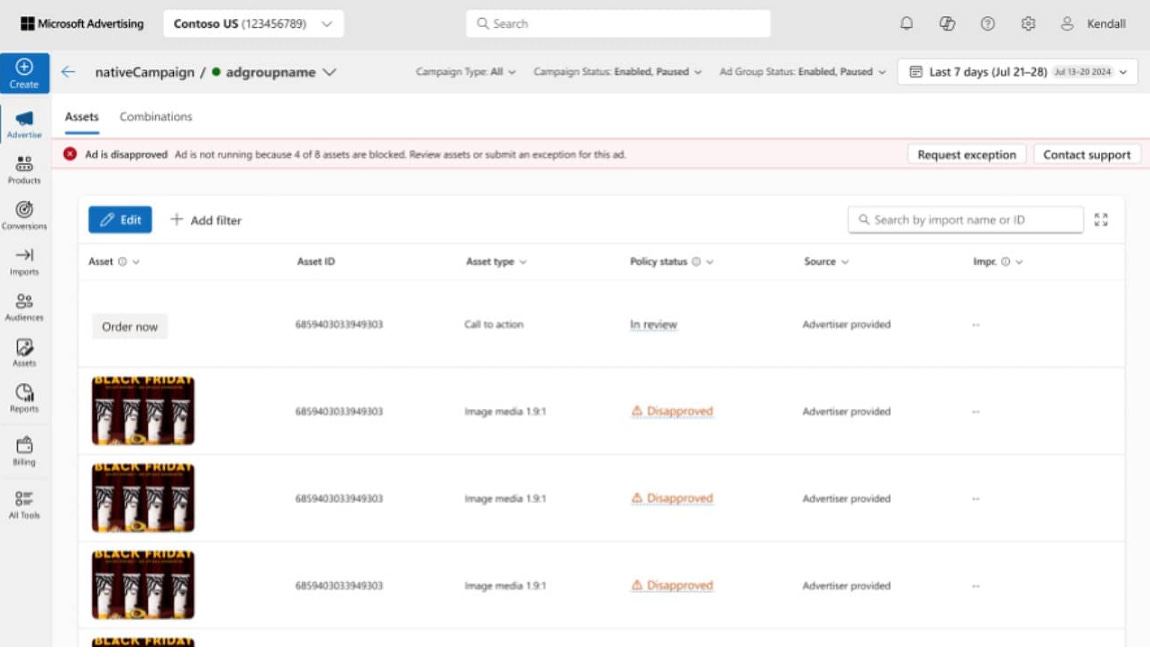
Microsoft Advertising and Shopify both rolled out updates focused on reducing friction and improving visibility. One targets ad approvals at the asset level, while the other surfaces detailed, AI-driven insights across the customer journey.
The Breakdown:
🔹 Microsoft Unbundles Ad Reviews - Microsoft Advertising now reviews headlines, descriptions, and images separately. If one asset is disapproved, compliant components can still run, preventing entire ads from being paused.
🔹 Faster Fixes, Less Downtime - Disapproved assets are flagged directly in the dashboard, with warning banners showing when components are blocked. Clear asset-level status appears alongside campaign details, making it easy to identify issues and fix only what’s holding ads back.
🔹 Shopify Exposes Real User Behavior - Shopify’s Contentsquare integration adds session replays, heatmaps, and zoning to show how shoppers actually interact with pages. Teams can see where users hesitate, drop off, or get frustrated.
🔹 AI Flags Revenue Friction - AI-driven insights surface technical issues, slow steps, and high-friction elements. The goal is to prioritize fixes that directly improve conversion and reduce checkout drop-off.
These updates reduce operational drag across ads and commerce. Microsoft cuts approval delays by isolating non-compliant assets instead of blocking entire ads, while Shopify extends AI-driven experience analytics across the storefront, helping teams identify friction, understand customer behavior, and improve performance faster.
🏆 Ad of the Day

What Works:
1. Problem Underfoot - The camera angle forces you to look at the sole first, not the athlete. That subtly reframes performance as something engineered below you, where injuries, fatigue, and discomfort actually start.
2. Technical Proof, Quietly - The callouts don’t scream innovation; they calmly point. This makes the tech feel matter-of-fact, like a given, which reduces skepticism and makes the shoe feel already validated.
3. Terrain Credibility - The rocky desert isn’t aspirational; it’s unforgiving. If the shoe works here, it probably works anywhere, which shortcuts the need for testimonials or exaggerated claims.
This ad works because it sells reassurance through motion, terrain, and engineering clarity. It doesn’t promise peak performance; it promises stability when things get rough, which is what most buyers actually want.
Advertise with Us
Wanna put out your message in front of over 50,000 best marketers and decision makers?
We are concerned about everything DTC and its winning strategies. If you liked what you read, why not join the 50k+ marketers from 13k+ DTC brands who have already subscribed? Just follow this.
At ScaleUP, we care about our readers and want to provide the best possible experience. That's why we always look for ways to improve our content and connect with our audience. If you'd like to stay in touch, be sure to follow us EVERYWHERE🥰
Thanks for your support :) We'll be back again with more such content 🥳