
Howdy Readers 🥰

In this newsletter, you’ll find:
🧐 The Customer Who Spent $80 May Be Worth More Than the Customer Who Spent $800
📈 ChatGPT Ads Expand as AI Search Evolves
🏆 Ad of the Day
If you’re new to ScaleUP then a hearty welcome to you. You’ve reached the right place along with 50k+ CEOs, CMOS, and marketers. Let’s get into it, shall we? Oh! Before you forget, if someone forwarded this newsletter to you, don't forget to subscribe to our newsletter so you never miss out!
🧐 The Customer Who Spent $80 May Be Worth More Than the Customer Who Spent $800
Lifetime value records the money a customer sends to the brand. It misses the money that arrives because the customer privately recommended the brand to someone else.
That omission matters because personal recommendations remain one of the most trusted forms of marketing. Nielsen found that 88% of global respondents trust recommendations from people they know more than any other channel.
Yet purchases influenced through forwarded emails, screenshots, WhatsApp groups, and private messages frequently appear as direct traffic or an unattributed sale.
The practical opportunity is not “track more forwards.” It is to identify customers who repeatedly create demand, estimate their economic value, and give them better material to share.
1. Create a measurable forwarding path without replacing organic sharing
Add a secondary link beneath the main email CTA:
“Know someone who would appreciate this? Send it to them.”
The link should open a lightweight sharing page with email, WhatsApp, and copy-link options. Give every original subscriber a unique share identifier, but never expose personal data in the URL.
Track four events: share-link click, recipient visit, recipient purchase, and time from share to purchase. This creates a clean attribution path while leaving ordinary email forwarding untouched.
The output is not a forwarding rate. It is a list of customers whose recommendations generated identifiable commercial activity.
2. Separate accidental sharing from repeat demand creation
One forwarded launch email can reflect a good offer. Three forwarded campaigns across different product categories indicate a customer habit.
Qualify a customer as a potential demand creator only after they produce at least two recipient visits across separate campaigns. Promote them to confirmed status after one recipient purchases or several recipients return.
That distinction prevents a viral campaign from filling the segment with one-time sharers who never influence another decision.
3. Calculate value beyond the customer’s personal purchases
Use a separate field beside lifetime value:

Rank customers by demand value, then compare the result with the existing VIP list. The ranking will often change because high spend and high influence are different behaviours.
4. Test whether recognition increases or corrupts the behaviour
Split confirmed demand creators into three groups. Give one early access, another a modest sharing benefit, and the third no intervention. Compare recipient purchases, sharing frequency, and gross profit over 60 days.
This reveals whether recognition compounds advocacy or turns an organic recommendation into discount-seeking behaviour. The winning treatment becomes the basis of a demand-creator program rather than another generic loyalty tier.
Omnisend can support the workflow through trackable links, customer segmentation, and automated follow-ups. It is used by more than 150,000 brands, and Omnisend reports an average return of $79 for every $1 spent. You can get started with a ready-made prompt.
Your highest-value customer may not be the person placing the largest orders. It may be the person quietly sending the next customer your way.
📈 ChatGPT Ads Expand as AI Search Evolves
OpenAI continues expanding ChatGPT Ads with new measurement tools and campaign features, even as new research highlights the gap between the company’s revenue ambitions and the current size of the chatbot advertising market.
The Breakdown:
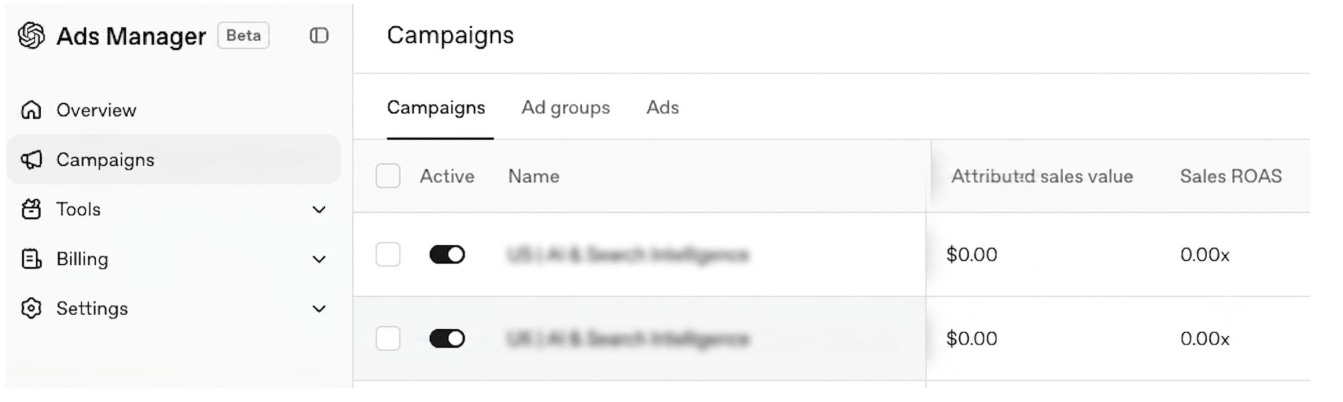
ChatGPT Ads Add New Tools - OpenAI added Sales ROAS, Attributed Sales Value, product reporting, and audience targeting, while introducing campaign dashboards and suggested ad drafts to improve campaign management.
$100B Target Faces Reality - OpenAI wants $100B in ChatGPT ad revenue by 2030, but eMarketer projects the entire U.S. chatbot ad market will reach just $5.41B, putting OpenAI’s target on pace to miss by roughly 90%.
Search Habits Are Changing - A Bocconi University study found wider ChatGPT access reduced traditional search queries by 9.4%, though ChatGPT still sends users to external websites in just 5.2% of sessions versus 31.1% for Google.
AI Trust Still Trails Search - A YouGov survey found only 28% of Americans trust AI assistants for search, compared with 70% who trust traditional search engines, with many users still verifying AI answers through external sources.
OpenAI is rapidly building out ChatGPT Ads while AI search adoption continues to grow. However, advertiser expectations, consumer trust, and the overall chatbot ad market still have considerable room to mature before AI advertising reaches the scale of traditional search.
🏆 Ad of the Day

What Works:
Clarity Builds Confidence - The oversized “Microdose” headline simplifies a complex medical offer, while the supporting line keeps the message approachable and lowers cognitive load for curious first-time prospects.
Product Feels Clinical - The isolated vial and syringe create immediate product communication, while the clean composition and restrained green palette make the treatment feel controlled, modern, and professionally positioned.
Branding Feels Native - The “hers” label and “weight loss by hers” lock the product to a recognizable brand system, strengthening branding recall while the safety disclosure supports credibility.
For unfamiliar health products, lead with one plain-language concept, show the delivery format clearly, and use clinical restraint to reduce confusion while preserving premium appeal.
Advertise with Us
Wanna put out your message in front of over 50,000 best marketers and decision makers?
We are concerned about everything DTC and its winning strategies. If you liked what you read, why not join the 50k+ marketers from 13k+ DTC brands who have already subscribed? Just follow this.
At ScaleUP, we care about our readers and want to provide the best possible experience. That's why we always look for ways to improve our content and connect with our audience. If you'd like to stay in touch, be sure to follow us EVERYWHERE🥰
Thanks for your support :) We'll be back again with more such content 🥳