
Howdy Readers 🥰
In this newsletter, you’ll find:
🧐Why Creators Ignore Affiliate Offers
🔄 Google and ChatGPT are becoming one discovery loop
🏆 Ad of the day
If you’re new to ScaleUP then a hearty welcome to you. You’ve reached the right place along with 50k+ CEOs, CMOS, and marketers. Let’s get into it, shall we? Oh! Before you forget, if someone forwarded this newsletter to you, don't forget to subscribe to our newsletter so you never miss out!
🧐Why Creators Ignore Affiliate Offers
For years, creator recruitment has been built around one question: “What’s your commission rate?” Recent research suggests many creators are asking a different one instead: “Is this relationship going anywhere?” Nearly 45% of creators now say they prefer long-term brand partnerships over one-off campaigns, while affiliate commissions and product sales already account for more than a fifth of creator income.
That means many recruitment messages aren’t being rejected because the commission is too low. They’re being rejected because the opportunity feels too temporary.
Make the future visible from the first conversation
A creator can’t commit to a long-term relationship if they can’t see one.
Instead of offering a flat commission with vague promises of future growth, build every outreach message around four questions a creator is silently asking before they ever reply.
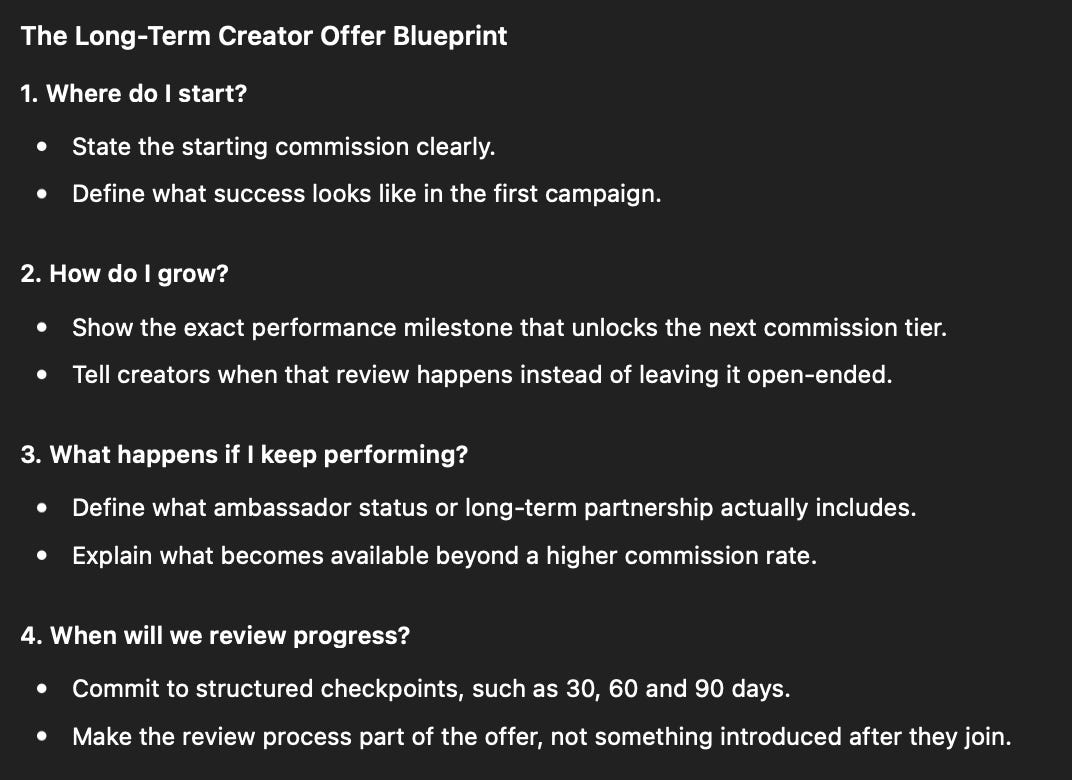
A creator should be able to read the offer and immediately understand how the relationship grows over time instead of wondering whether there is one at all.
Let acceptance data choose your recruiting strategy
Not every creator segment responds to the same message.
Run one recruitment cycle comparing relationship-focused outreach against traditional commission-first outreach, then compare both acceptance rate and long-term performance.
The winning template shouldn’t be decided by opinion.
It should be decided by the creators you’re actually trying to recruit.
That’s exactly the philosophy behind Levanta’s 90-Day Holiday Sprint, which uses structured 30, 60 and 90-day checkpoints to identify high-potential creator relationships early and grow them before holiday budgets become more competitive. You can download the free playbook.
The best creators aren’t just comparing commission percentages anymore. They’re comparing which brands have already shown them what the next six months will look like.
🔄 Google and ChatGPT are becoming one discovery loop
Search and AI are increasingly feeding each other. New data shows users moving from Google to ChatGPT, then from ChatGPT to external websites.
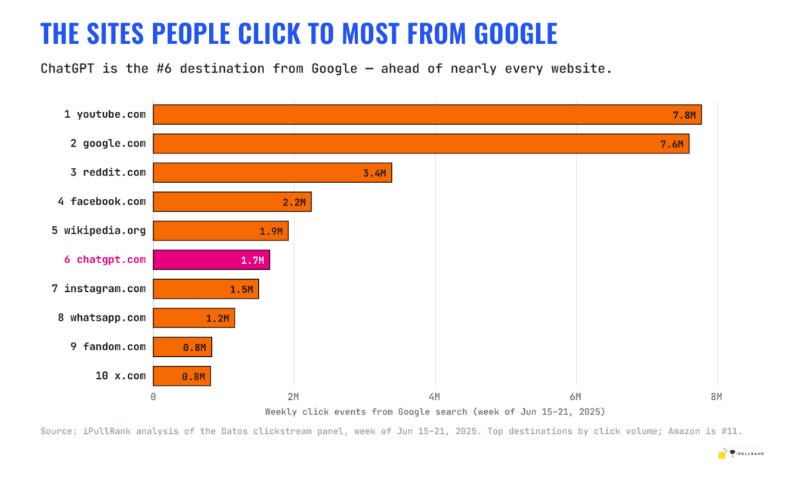
The Breakdown:
1. Google Feeds ChatGPT - ChatGPT became Google’s sixth-most-clicked destination in iPullRank’s study and had the highest paid-click share among leading destinations, showing Google can actively funnel users toward AI.
2. Scale Still Small - Despite rapid growth, ChatGPT referrals remain tiny compared with overall web traffic. The 303% increase also comes from a relatively small base of 645,000 monthly visits.
3. Crawling Gets Complicated - OpenAI says ChatGPT-User may bypass robots.txt when users request pages. OAI-SearchBot separately controls ChatGPT search visibility, creating different decisions around AI access and discoverability.
4. ChatGPT Referrals Surge - Demandbase recorded 303% YoY growth in ChatGPT referrals to B2B sites, reaching 2.6 million monthly visits, while Perplexity declined and Gemini and Claude stayed flat.
Search is becoming a loop rather than a replacement story. Google sends users to ChatGPT, ChatGPT sends users to websites, and AI agents increasingly access those sites directly.
🏆 Ad of the Day
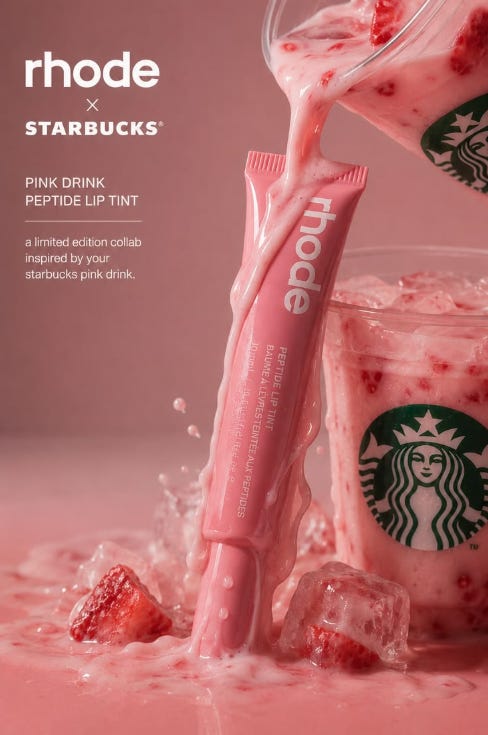
What Works:
Collab Creates Desire - Rhode and Starbucks combine two highly recognizable brand worlds, using cultural familiarity and limited-edition framing to create instant novelty, stronger thumb-stop potential and higher perceived collectibility.
Texture Sells Sensation - The dripping pink drink visually mirrors the lip tint’s glossy texture, turning product communication into a sensory cue that makes the formula feel juicy, indulgent and memorable.
Color Owns Attention - The monochromatic pink palette creates immediate branding recall, while the central product placement and Starbucks cup guide attention cleanly without adding unnecessary cognitive load.
For collaborations, do more than place two logos together. Blend a familiar ritual from one brand into the product experience of the other so the partnership feels inevitable
Advertise with Us
Wanna put out your message in front of over 50,000 best marketers and decision makers?
We are concerned about everything DTC and its winning strategies. If you liked what you read, why not join the 50k+ marketers from 13k+ DTC brands who have already subscribed? Just follow this.
At ScaleUP, we care about our readers and want to provide the best possible experience. That's why we always look for ways to improve our content and connect with our audience. If you'd like to stay in touch, be sure to follow us EVERYWHERE🥰
Thanks for your support :) We'll be back again with more such content 🥳