
Howdy Readers 🥰
In this newsletter, you’ll find:
🤖 When the buyer is not a person, who gets the commission
📊 Google gives advertisers more control over testing and tracking
🏆 Ad of the day
If you’re new to ScaleUP then a hearty welcome to you. You’ve reached the right place along with 50k+ CEOs, CMOS, and marketers. Let’s get into it, shall we? Oh! Before you forget, if someone forwarded this newsletter to you, don't forget to subscribe to our newsletter so you never miss out!
Together with Tatari
The brands winning BFCM start optimizing early.

Tatari surveyed TV advertisers about their 2026 holiday plans, and brands are moving early.
Nearly 6 in 10 are increasing their BFCM TV budgets, and 54% plan to launch holiday messaging before mid-November
Launching earlier gives brands time to find what converts before TV inventory gets more competitive and expensive.
That’s how Knix approached TV. After testing ahead of peak season, one spot drove 9,000 site visits within five minutes at a 70% lower CPA. Creative testing also doubled response rates and cut CPV by 45%.
The extra runway helped Knix identify what deserved more budget before purchase intent peaked.
By Black Friday, you don’t want to still be testing. You want to be scaling.
See how Tatari can help you scale TV for BFCM.
P.S. In NYC Oct. 29? Join Tatari at Forward for an afternoon on what’s next in advertising with Reddit CEO Steve Huffman, and marketers from Liquid IV, MANSCAPED, and more.
🤖 When the buyer is not a person, who gets the commission
Accountability questions around AI buying agents surfaced again this month, and the conversation has been mostly about liability. There is a quieter problem sitting underneath it that will hit affiliate programs first.
Affiliate attribution assumes a human clicked a link, browsed, and bought. An agent researching on a buyer’s behalf reads, compares, and arrives at checkout carrying whatever session state its architecture happened to preserve.
Creator-influenced demand still exists. The tracking parameter proving it frequently does not survive the trip.
Test what actually persists through an agent-mediated purchase
Run your own affiliate links through an agent-assisted purchase flow before Q4, not after.
Place a test order using your standard creator link, then check whether the referral parameter appears in the order record. Repeat with a shortener in the path, then with a redirect through your own domain. Programs routinely find the shortener drops the parameter and the direct redirect keeps it. Ten minutes, real commission consequence.
If the parameter dies, your creator sees a click and no conversion, and the assumption they will reach is that your product does not convert.
\That conclusion is very hard to reverse once a creator has drawn it, and it is the sort of thing worth heading off during recruiting rather than explaining in December.
Building that runway is exactly what Levanta’s 90-Day Holiday Sprint is structured around, with Day 30, 60, and 90 checkpoints that surface problems while there is still time to fix them. You can download the free playbook.
Add a fallback credit rule to your terms now
Waiting until a dispute arrives means negotiating a rule with someone who already believes they were shorted.
Write the fallback before peak. A workable version: where a conversion occurs within a defined window of a tracked creator click, and no competing tracked source exists, credit defaults to that creator at the standard rate.
Define the window using your own observed click-to-purchase lag rather than an industry default. Publish the rule to your roster in writing.
Instrument the questions, not just the clicks
Agents surface products by matching stated requirements against readable product facts.
Ask three things about your top ten SKUs:
Are the attributes a shopper would specify present as structured text on the page
Does the page answer the comparison question directly, or imply the answer
Would a creator’s own description match what the page says
Where a creator’s framing and your page disagree, the agent resolves it by trusting the page. Align them, and the creator’s work stops being invisible at the point it matters most.
📊 Google gives advertisers more control over testing and tracking
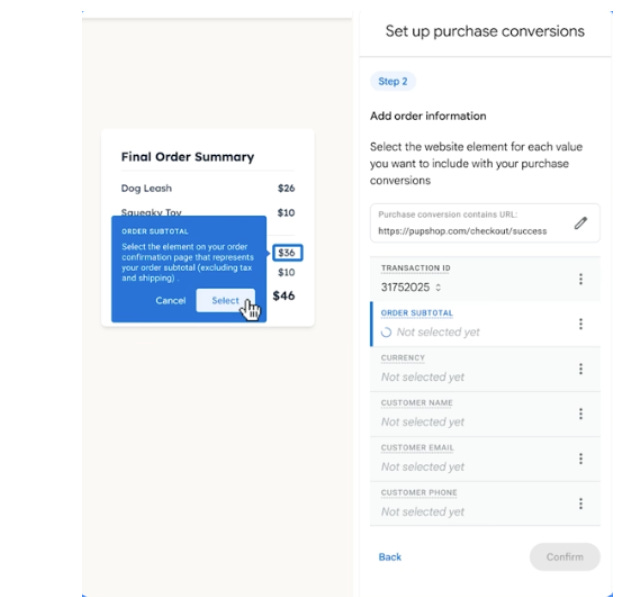
Google is making two parts of advertising easier to manage: testing bigger campaign changes before committing to them, and setting up accurate conversion tracking without relying as heavily on developers.
The Breakdown:
Test changes across multiple campaigns - Starting in September, advertisers can A/B test different budgets and ROI targets across several Search campaigns at once, giving them a broader view of how scaling could affect performance.
AI Max tests keep their guardrails - Advertisers can now test AI Max while keeping brand and location controls enabled, making experiments closer to how campaigns would actually run.
Conversion tracking is going no-code - Google’s new visual tagging lets advertisers navigate their website, select actions such as purchases and create events without manually configuring selectors or writing code.
Google tag and Tag Manager are coming together - Existing Google tags will gain Tag Manager capabilities including debugging and version control, while optimized containers can transmit data more directly and show where measurement data is flowing.
Google is automating more of advertising while also making that automation easier to test and measure. That combination matters. Advertisers can give Google’s systems more freedom without having to blindly trust the result, because experimentation and measurement are getting stronger alongside the automation.
🏆 Ad of the Day
What Works:
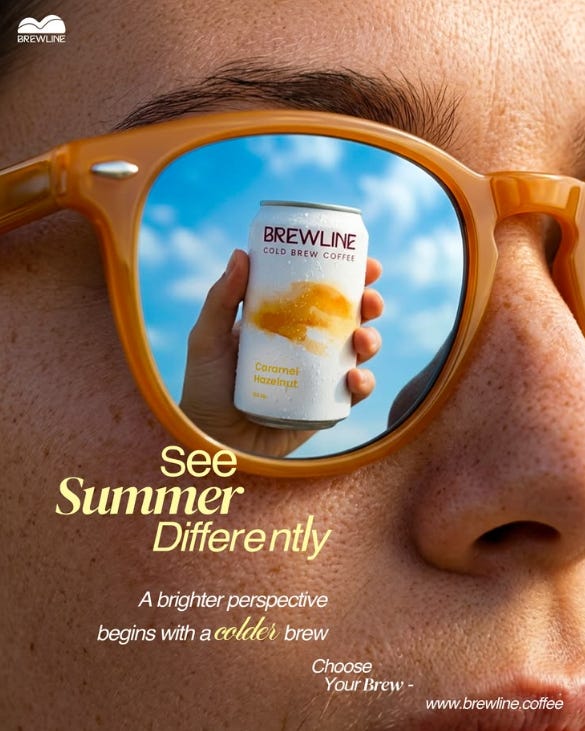
Reflection Creates Focus - Using the sunglass lens as a frame isolates the can and creates an immediate pattern interrupt, giving the product strong thumb-stop power without cluttering the composition.
Seasonal Context Works - The bright sky, warm orange frames and “See Summer Differently” hook build a clear seasonal mood, helping the cold brew feel naturally tied to hot-weather consumption.
Product Feels Premium - The close-up photography, restrained typography and centered pack shot make the drink feel editorial and elevated, while the flavor remains readable enough to support branding recall.
Place the hero SKU inside a reflective surface, window or object already relevant to the campaign theme. It creates visual novelty while keeping attention tightly controlled.
Advertise with Us
Wanna put out your message in front of over 50,000 best marketers and decision makers?
We are concerned about everything DTC and its winning strategies. If you liked what you read, why not join the 50k+ marketers from 13k+ DTC brands who have already subscribed? Just follow this.
At ScaleUP, we care about our readers and want to provide the best possible experience. That's why we always look for ways to improve our content and connect with our audience. If you'd like to stay in touch, be sure to follow us EVERYWHERE🥰
Thanks for your support :) We'll be back again with more such content 🥳