
Howdy Readers 🥰

In this newsletter, you’ll find:
🫣 This is why your funnel is broken
🔍 Google expands AI Search reporting and testing
🏆 Ad of the Day
If you’re new to ScaleUP then a hearty welcome to you. You’ve reached the right place along with 50k+ CEOs, CMOS, and marketers. Let’s get into it, shall we? Oh! Before you forget, if someone forwarded this newsletter to you, don't forget to subscribe to our newsletter so you never miss out!
🫣 This is why your funnel is broken
Seven-day click, one-day engage-through, one-day view, set once at ad set level and never revisited. Every campaign in the account gets measured against the same math regardless of what it was built to do.
A retargeting campaign converting buyers who already know the product. A net-new-reach campaign introducing the brand to a cold audience for the first time. Same window. Same judgment. Completely different jobs.
The net-new campaign looks weak. It gets cut. The efficiency campaigns that were cashing in on its upstream work start declining three weeks later, and nobody connects the two events.
The Window Should Follow The Job
Attribution windows are not account settings. They are goal settings. The window should be decided when the campaign objective is decided, not inherited from whatever was configured at launch.
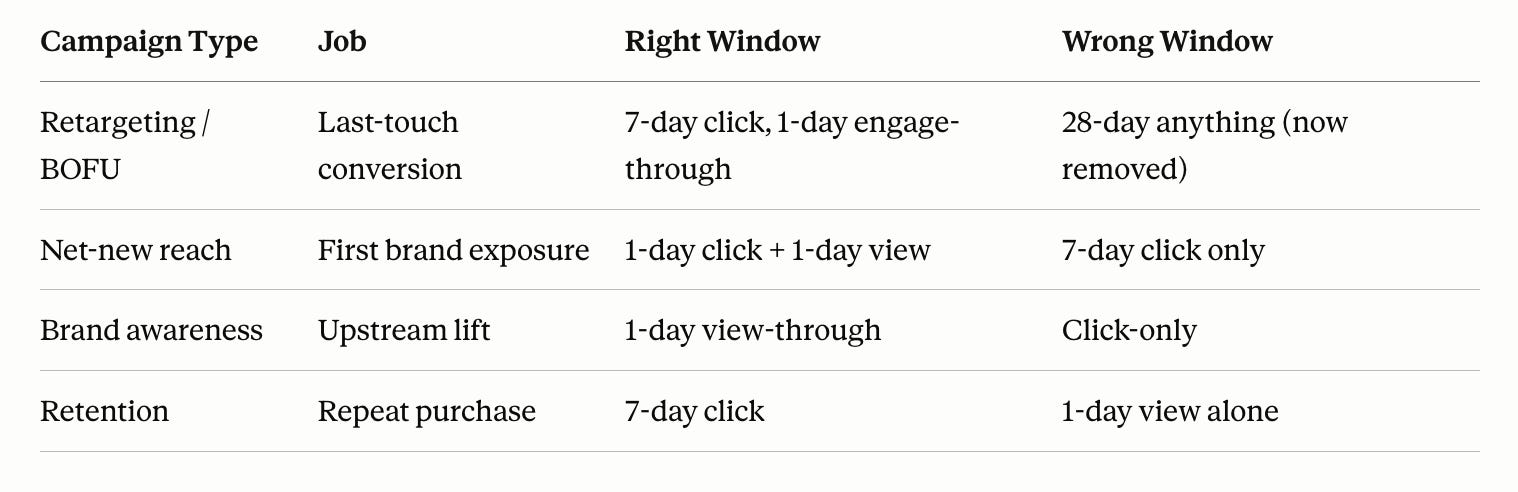
Under a tight window, net-new campaigns will always look like they are failing. They are not failing. They are being measured by the wrong instrument.
Run The Mismatch Audit Now
Pull every active campaign. Tag each one by its primary job: efficiency, net-new reach, brand data gathering, or retention. Then check what attribution window each is actually being measured against.
The pattern in most accounts is the same: campaigns doing top-of-funnel work being judged on bottom-of-funnel math, producing weak numbers, getting cut, and quietly starving the efficiency campaigns that depended on them. The account compounds on BOFU. The top dries up. CAC rises, and the team blames creative.
The creative was not the problem.
Make The Window A Brief Decision, Not An Account Default
The structural fix takes one change to your campaign brief template.
Add one field: attribution window, matched to objective. Every new campaign gets briefed with three things: objective, success metric, and attribution window. The decision gets made upfront instead of inherited from a setting nobody remembers configuring.
It also forces the conversation about what each campaign is actually for, which is the conversation the account-wide default has been letting everyone avoid.
The window was always a goal setting. Most accounts have been running it as an account default since the day it was opened.
🔍 Google expands AI Search reporting and testing
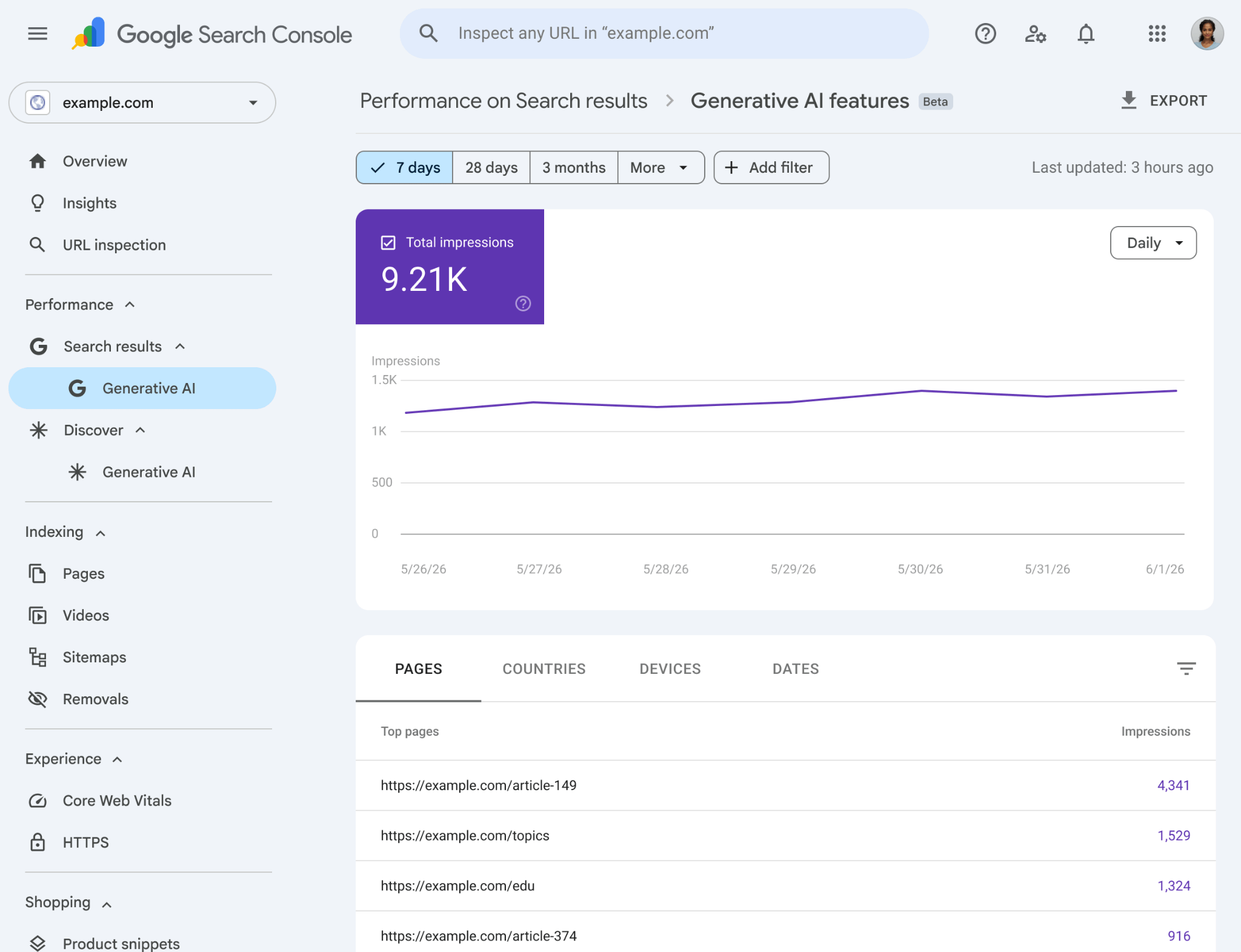
Google announced new Search Console reporting for AI-powered search experiences while also beginning to test healthcare advertising inside AI Mode. Together, the updates offer publishers and advertisers a clearer view of how Google plans to measure and monetize AI Search.
The Breakdown:
Search Console adds AI data - Google launched new Search Generative AI performance reports showing impressions, pages, countries, devices, and date-based visibility data for AI Overviews, AI Mode, and AI-powered Discover features.
Testing begins with select sites - The new reports are currently available to a subset of websites as Google gathers feedback before expanding access to more publishers and site owners.
Google starts ad testing - Google confirmed a limited U.S. test allowing healthcare advertisers to appear inside AI Mode, marking one of the first advertising experiments within its AI-powered search experience.
Existing ad formats are eligible - Performance Max, AI Max with search term matching, Shopping campaigns, and broad match campaigns can participate, though the initial test includes creative restrictions.
Google is simultaneously building the measurement tools and monetization systems needed for AI Search. Publishers are getting their first dedicated AI visibility reports, while advertisers are getting an early look at how paid placements may eventually work inside AI-generated search results.
🏆 Ad of the Day
What Works:
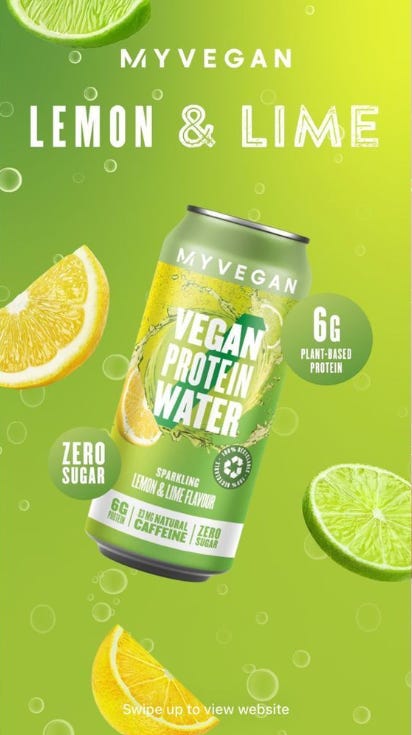
Category Hacking - “Protein Water” creates immediate curiosity because it combines two categories consumers don’t naturally associate. Novel combinations earn attention without needing aggressive creative tactics.
Refreshment First - The lemon and lime visuals dominate before the protein claim. Taste and refreshment are sold first, functionality second, reducing resistance from non-fitness consumers.
Benefit Compression - Zero sugar, caffeine, and plant-based protein sit alongside each other. Consumers instantly understand the product’s value without reading detailed nutritional information.
If your product contains a functional ingredient consumers associate with effort or sacrifice, lead with the experience people actually want. Sell refreshment, taste, convenience, or enjoyment first, then let the functional benefit justify the purchase.
Advertise with Us
Wanna put out your message in front of over 50,000 best marketers and decision makers?
We are concerned about everything DTC and its winning strategies. If you liked what you read, why not join the 50k+ marketers from 13k+ DTC brands who have already subscribed? Just follow this.
At ScaleUP, we care about our readers and want to provide the best possible experience. That's why we always look for ways to improve our content and connect with our audience. If you'd like to stay in touch, be sure to follow us EVERYWHERE🥰
Thanks for your support :) We'll be back again with more such content 🥳