
Howdy Readers 🥰
In this newsletter, you’ll find:
🛒This is killing your recovery rates
📱 Social platforms are becoming the new search engine
🏆 Ad of the Day
If you’re new to ScaleUP then a hearty welcome to you. You’ve reached the right place along with 50k+ CEOs, CMOS, and marketers. Let’s get into it, shall we? Oh! Before you forget, if someone forwarded this newsletter to you, don't forget to subscribe to our newsletter so you never miss out!
Together with Insense
You don’t need another agency. You need a better system.

More DTC brands are pulling creator marketing in-house because agency models are too slow, too rigid, and too expensive to test at the speed that paid social demands.
Insense is the self-serve platform built for that transition.
Source from 80,000+ vetted creators, interactive brief templates and approvals in one place, automated contracts and payments, and lifetime usage rights included on every piece of content.
Trusted by over 3500 brands like Quince, Paysend, SmileSet, and Monster Energy,
No retainer. No middleman. Full visibility and control from day one. Brands save 40+ hours a month and get first creator applications within 48 hours.
P.S. If you need occasional assistance with influencer scouting, post-production, or platform management, they offer customizable and hybrid managed services.
Book a free strategy call by May 31st and get a $200 platform credit towards your first campaign.
🛒This is killing your recovery rates
Most retention teams build cart and checkout recovery as a single sequence with branching logic, because templates ship that way, and the abandonment events feel like steps in the same journey. They are not. The cart abandoner is still deciding and needs convincing. The checkout abandoner has already decided and hit a barrier.
Strategy 1: Stop Branching The Two Flows And Separate Them At The Architecture Level
Open your ESP and check how cart and checkout recovery are configured. If they live inside one flow with conditional logic deciding which message fires, you have a branched architecture, not a separated one. Branched flows blur reporting, share creative inventory, and force one owner to think about two audiences at once.
The fix:
Build two independent flows in your ESP
Trigger off different events (cart vs initiate checkout)
Give each its own naming convention, owner, and reporting view
Delete the branching logic in the old flow
Separation forces every downstream decision to reckon with two different audiences.
Strategy 2: Define Different Success Metrics For Each Funnel, Tracked Separately
A blended recovery rate hides what matters. The cart funnel should be measured against decision-to-purchase rate, because the question is whether the recipient eventually decides to buy.
The checkout funnel should be measured against barrier-clear rate, because the question is whether the obstacle that stopped them got removed. Combining them into one percentage tells you nothing about which is broken.
Tracking them separately requires data flowing between your ecommerce platform, ESP, and analytics layer. HubSpot's 2026 Essential Apps for Marketers collection brings together 14 apps across creative, ads, events, and more, so the context you need travels with every campaign, decision, and handoff. You can browse apps here!
Strategy 3: Build Separate Content Libraries That Never Share Creative
Never reuse creative between the two flows. Not subject lines, body copy, or CTAs.
Cart-flow creative uses social proof, comparison anchors, and benefit reinforcement because the recipient is still deciding. Checkout-flow creative uses acknowledgment, friction removal, and return-to-checkout language because the recipient already decided.
The psychological state required for each is incompatible with the other, so modular blocks corrupt both flows quietly.
Brands compounding recovery revenue treat their two funnels like acquisition and retention: same brand, different audiences, different libraries.
📱 Social platforms are becoming the new search engine
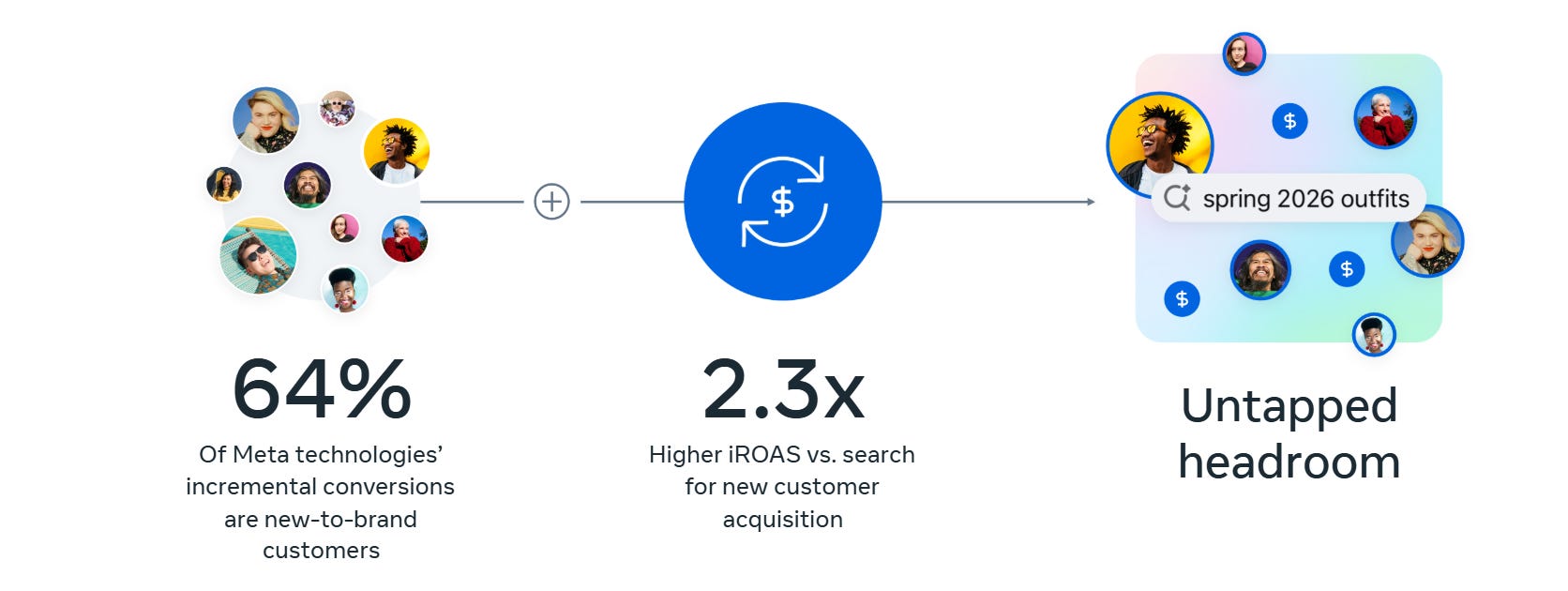
Meta and Snapchat released new reports showing how discovery, shopping, and product research are rapidly moving toward social feeds, creators, short-form video, and AI-driven recommendations instead of traditional search behavior.
The Breakdown:
Meta highlights behavior shift - Meta reported that 92% of users now use social and discovery platforms for product information, while 58% find social discovery more enjoyable than traditional search experiences.
Social content speeds decisions - Meta said 63% of consumers buy faster when social influences purchases, while short-form videos and Reels ranked as the most effective format for moving purchase intent forward.
Discovery becomes conversational - Meta reported 49% of consumers already use AI assistants for product discovery, while 70% expect to increase AI-assisted shopping usage within the next six months.
Snapchat highlights creator influence - Snapchat said creator ads generate stronger trust and engagement because users interact more personally with creators, with authentic sponsored creator content increasing excitement toward brands by 66%.
Native content performs better - Snapchat reported creator ads are watched 25% longer and generate 16% more active attention than standard branding ads because they feel more natural inside conversations and Stories.
Discovery is increasingly shifting from keyword search toward feeds, creators, recommendations, and AI-assisted conversations. Platforms are now competing to become the place where consumers discover, validate, and purchase products all in one experience.
🏆 Ad of the Day
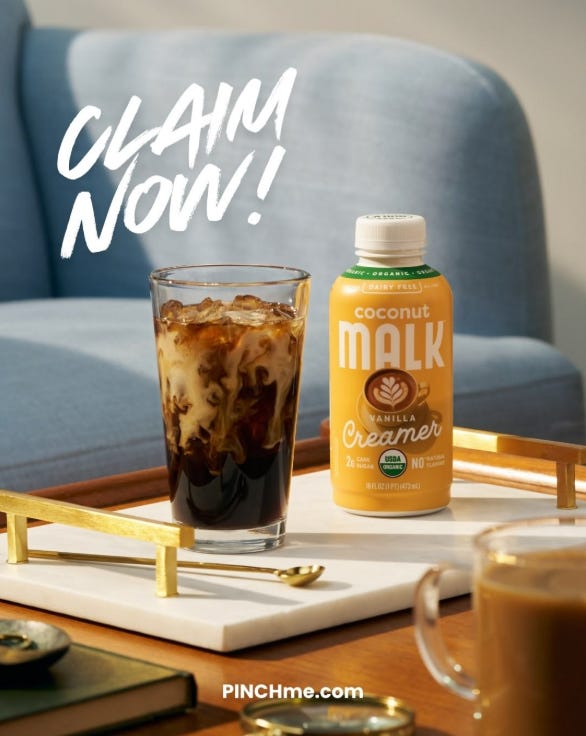
What Works:
Ritual Engineering - The swirling creamer shot mimics luxury coffee-shop visuals, transferring “barista-quality” perception onto a packaged grocery product without needing explicit claims.
Reward Framing - “Claim Now!” reframes sampling as winning, triggering reward psychology instead of purchase consideration. Consumers mentally process it closer to a giveaway than an ad.
Friction Collapse - The ad reduces decision fatigue by visually demonstrating usage instantly. No recipe thinking, no preparation ambiguity, just “pour this into your iced coffee.”
Design your ad so the product visually completes a lifestyle ritual already happening. Don’t introduce a new behavior. Attach your product to an existing emotional habit consumers already romanticize.
Advertise with Us
Wanna put out your message in front of over 50,000 best marketers and decision makers?
We are concerned about everything DTC and its winning strategies. If you liked what you read, why not join the 50k+ marketers from 13k+ DTC brands who have already subscribed? Just follow this.
At ScaleUP, we care about our readers and want to provide the best possible experience. That's why we always look for ways to improve our content and connect with our audience. If you'd like to stay in touch, be sure to follow us EVERYWHERE🥰
Thanks for your support :) We'll be back again with more such content 🥳