
Howdy Readers 🥰

In this newsletter, you’ll find:
🔀 The segment that doesn’t survive the move
🔎 Google is giving marketers more AI visibility and control
🏆 Ad of the day
If you’re new to ScaleUP then a hearty welcome to you. You’ve reached the right place along with 50k+ CEOs, CMOS, and marketers. Let’s get into it, shall we? Oh! Before you forget, if someone forwarded this newsletter to you, don't forget to subscribe to our newsletter so you never miss out!
🔀 The segment that doesn’t survive the move
A contact list migrates cleanly in most platform switches: name, email, phone number, purchase history, all of it transfers without much drama.
What doesn’t migrate cleanly nearly as often is the segmentation logic built on top of that data, the custom tags, the behavioral triggers, the “purchased in the last 60 days but hasn’t opened an email in 30” style compound segments that took months of tweaking to get right and exist nowhere except inside the old platform’s segment builder.
A segment defined by a single property, like “VIP tier,” usually transfers fine. A segment defined by three or four combined conditions, especially ones referencing custom events or calculated fields specific to how the old platform tracked behavior, is exactly the kind of thing that can silently fail to reconstruct, sending a campaign to the wrong audience or, worse, to nobody at all, without triggering any error.
Export every segment’s actual logic before migrating, not just its name
Before the migration starts, document every active segment’s full definition, every condition, every threshold, every combined rule, not just the segment’s name and current member count.
Most teams can list their segment names from memory. Almost nobody can recite the exact logic behind a segment built eighteen months ago by someone who’s since left the team, and that’s precisely the segment most likely to break silently during a migration.
Rebuild and verify membership count before trusting any segment post-migration
A rebuilt segment that looks correctly configured can still return the wrong member count if even one condition was translated slightly differently between platforms.
Compare the rebuilt segment’s member count against what it showed on the old platform immediately before migration.
A meaningful discrepancy, even a small one, means the logic didn’t translate exactly, and it’s worth tracing down before that segment gets used in a live send.
This is part of what let one agency’s migration to Omnisend hold through Black Friday without incident, landing $113K in holiday revenue matching the year before.
Run your highest-stakes segment through a real send before BFCM depends on it
The segment most worth verifying first is the one with the highest revenue per send, since a silent failure costs the most and gets noticed the least until the results come in low. Jocelyn A., COO at Ecom2Win, walks through exactly what got verified before her own switch. You can read the full story here.
Contacts migrating is the easy check. Whether the logic built on top of them survived is what determines whether your next send reaches the right people.
🔎 Google is giving marketers more AI visibility and control
Google is expanding AI across content creation, advertising, and Search, while publishers and marketers are finally getting more insight into how these systems use and surface their content.
The Breakdown:
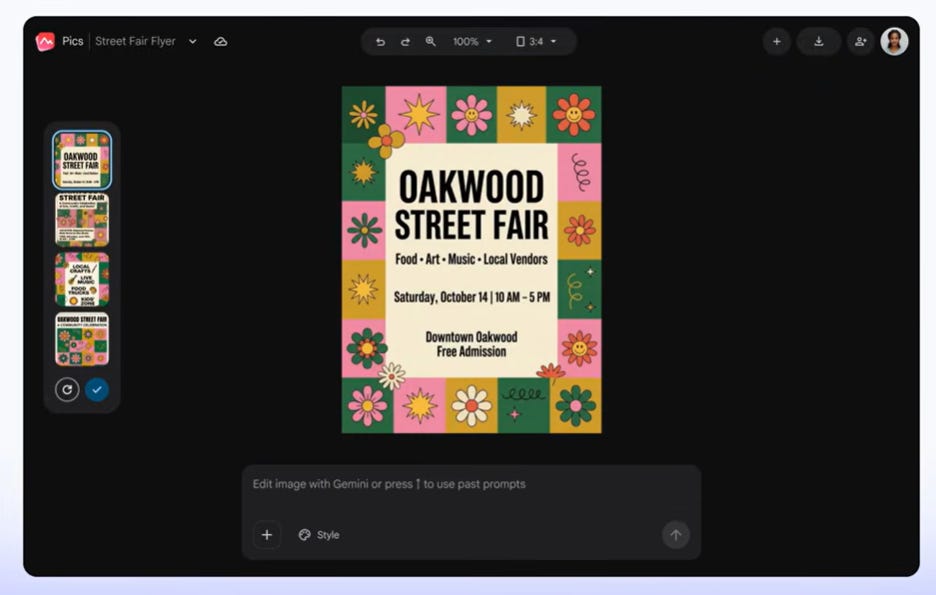
Google Pics moves into Workspace: AI Pro, Ultra, and most Workspace business customers can create and edit images directly inside Docs and Slides, with Drive support coming next.
Customer reviews are becoming ad copy: Google Ads now labels its “What customers love” section as AI-generated from store-rating reviews, turning existing customer feedback into automatically generated advertising messages.
AI Search finally gets performance reporting: Search Console now provides worldwide reporting for AI Overviews and AI Mode, including impressions, pages, countries, devices, and dates.
Markdown files may not help AI crawlers: Google’s John Mueller found only SEO tools requesting Markdown files in his test, recommending publishers inspect crawler requests before creating AI-specific files.
Google’s AI expansion is giving marketers more creation and measurement tools, but also less direct control over how content gets reused. Meanwhile, EU regulators are examining Google’s AI Search opt-out and its impact on publishers.
🏆 Ad of the day

What Works:
Luxury Signals Lead - The oversized lipstick texture, restrained typography and monochrome palette create instant premium perception, making the product feel collectible rather than promotional while strengthening brand desirability.
Scarcity Adds Desire - “Limited Edition” introduces scarcity without discounting, while the clearly stated satin and matte shade counts make the launch feel curated, exclusive and worth exploring.
Texture Sells Product - The macro crop makes the lipstick finish almost tactile, helping shoppers imagine application quality while the embossed Hermès logo reinforces craftsmanship and branding recall.
For premium products, magnify one tactile detail like texture, stitching or material finish. Pair it with restrained copy so craftsmanship becomes the conversion argument.
Advertise with Us
Wanna put out your message in front of over 50,000 best marketers and decision makers?
We are concerned about everything DTC and its winning strategies. If you liked what you read, why not join the 50k+ marketers from 13k+ DTC brands who have already subscribed? Just follow this.
At ScaleUP, we care about our readers and want to provide the best possible experience. That's why we always look for ways to improve our content and connect with our audience. If you'd like to stay in touch, be sure to follow us EVERYWHERE🥰
Thanks for your support :) We'll be back again with more such content 🥳