
Howdy Readers 🥰
In this newsletter, you’ll find:
🥺The Quiet Misuse of Maximize Clicks
🛡️ Google Ads Gives Advertisers More Control
🏆 Ad of the Day
If you’re new to ScaleUP then a hearty welcome to you, you’ve reached the right place along with 50k+ CEOs, CMOS, and marketers. Let’s get into it, shall we? Oh! Before you forget, if someone forwarded this newsletter to you, don't forget to subscribe to our newsletter so you never miss out!
Together with The Shift
The AI Newsletter That Solves Problems, Not Creates Them

AI can do a lot, but most newsletters leave you wondering what’s actually worth trying.
That’s where The Shift comes in. They don’t just tell you “what’s new” in AI.
Every edition answers one question: What can you do with AI today that saves you time, money, or effort?
You’ll see real-world examples, step-by-step mini-guides, and instantly usable prompts, plus free access to 3,000+ AI tools and top free AI courses so you can apply what you learn right away.
No hype, no wasted time, and no “just in case” news. If it’s in The Shift, it’s because it can make your work better today.
Subscribe to The Shift now - it’s free!
🥺The Quiet Misuse of Maximize Clicks
There’s a pattern that shows up again and again inside Google Ads accounts.
Someone launches a campaign, chooses Maximize Clicks, and a week later decides it “doesn’t work anymore.” The traffic feels soft. People bounce. Nothing obvious converts. The conclusion is easy to reach, and Google’s interface nudges you toward it anyway.
Switch to Smart Bidding. Let the system handle it.
What rarely gets questioned is whether Maximize Clicks was ever meant to do the job it was assigned in the first place.
The strategy didn’t get worse. The auction did.
Today, the people who are ready to buy immediately are expensive. Everyone wants them. Google knows that.
Those users are increasingly funneled into environments where automation has the most leverage, because that’s where bids can float freely and efficiency is defined by outcomes, not intent.
Expecting Maximize Clicks to win that fight is like showing up late and complaining there are no good seats left.
Where it still works is earlier, when the decision hasn’t formed yet.
There’s a huge difference between someone who knows they have a problem and someone who knows they’re ready to purchase.
Maximize Clicks is good at finding the first group. It always has been. Broad-but-relevant searches. Early comparisons. People circling the idea, not committing to it.
Those clicks don’t look impressive on day one. They aren’t supposed to.
The mistake is treating them like failures instead of raw material.
Once those users exist, that’s when automation earns its place. Retargeting campaigns. Conversion-focused objectives. Situations where intent is already visible and the system has enough signal to optimize without guessing.
Trying to collapse discovery and conversion into a single campaign is what breaks performance. One tool ends up doing two jobs badly instead of one job well.
Google’s recommendations push toward simplification because it’s easier to manage. Fewer campaigns. Fewer decisions. Cleaner dashboards. But cleaner dashboards don’t always mean healthier economics.
Especially for brands that need explanation, repetition, or trust before a purchase makes sense.
Maximize Clicks still belongs in the stack if you let it do what it’s good at.
Let it introduce the problem. Let it start the relationship. Let it identify who’s worth spending more on later. Then bring automation in to finish the job. The edge isn’t rejecting Google’s tools. It’s knowing which ones shouldn’t be asked to close the sale.
🛡️ Google Ads Gives Advertisers More Control
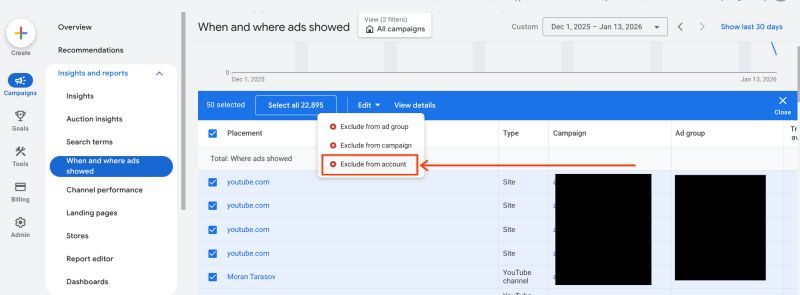
Google just shipped two updates that make day-to-day account management cleaner. One lets you block bad placements once, instead of chasing exclusions across campaigns. The other lets you decide what data still flows when users do not give consent.
The Breakdown:
1. One Placement Exclusion List for the Whole Account - You can now apply a single exclusion list at the account level, blocking spend across Performance Max, Demand Gen, YouTube, and Display automatically.
2. Brand Safety Gets Easier at Scale - This reduces wasted spend on low-quality sites and irrelevant apps, also keeping brand safety rules consistent across a messy account. Watch out for over-blocking; one bad list can cut reach everywhere.
3. New Data Transmission Control Setting - Google added a new control on top of Advanced Consent Mode. You can separately manage advertising data, behavioral analytics, and diagnostic data.
4. Clear Choices When Consent Is Denied - If ad_storage is denied, you can still allow limited ad data with identifiers removed and keep conversion modeling. Or you can block ad data fully until consent is granted. Analytics can be allowed or blocked separately.
These changes remove a lot of manual cleanup work for performance teams. They also make it easier to stay compliant without blindly losing measurement. Takeaway: Review your exclusion lists and consent setup before rolling changes account-wide.
🏆 Ad of the Day
What Works:
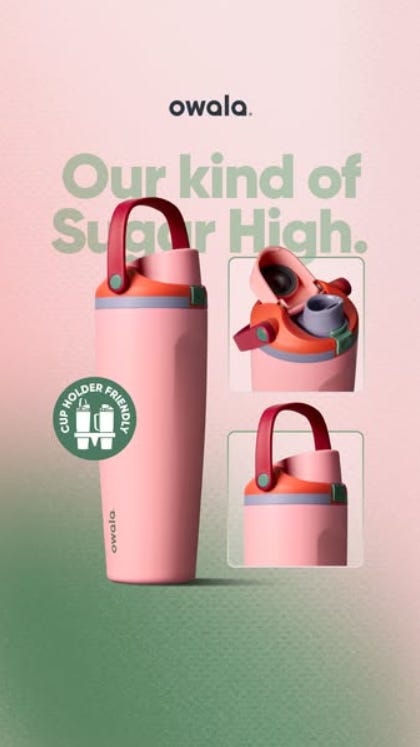
1. The Big Idea - This is a “boring product” made desirable through personality. It turns a water bottle into a mood, so the buyer feels like they’re picking a vibe, not shopping utility.
2. What Makes You Stop - The line is playful and slightly unexpected. “Our kind of sugar high” feels like an inside joke, and anything that feels like a joke gets more attention than specs.
3. The Hidden Conversion Move - The “cup holder friendly” badge is the quiet closer. It removes the most annoying objection before it even forms, which makes the purchase feel safer.
When your product is simple, sell the feeling first. Then add one practical detail that kills friction, so people can justify the impulse instantly.
Advertise with Us
Wanna put out your message in front of over 50,000 best marketers and decision makers?
We are concerned about everything DTC and its winning strategies. If you liked what you read, why not join the 50k+ marketers from 13k+ DTC brands who have already subscribed? Just follow this.
At ScaleUP, we care about our readers and want to provide the best possible experience. That's why we always look for ways to improve our content and connect with our audience. If you'd like to stay in touch, be sure to follow us EVERYWHERE🥰
Thanks for your support :) We'll be back again with more such content 🥳