
Howdy Readers 🥰
In this newsletter, you’ll find:
🧠 The Reason Your Ads Worked at $5K and Died at $20K
🔎 Search and AI Shopping Are Quietly Converging
🏆 Ad of the Day
If you’re new to ScaleUP then a hearty welcome to you. You’ve reached the right place along with 50k+ CEOs, CMOS, and marketers. Let’s get into it, shall we? Oh! Before you forget, if someone forwarded this newsletter to you, don't forget to subscribe to our newsletter so you never miss out!
🧠 The Reason Your Ads Worked at $5K and Died at $20K
There’s a moment every scaling brand hits where the math stops working, and nobody can explain why. The product hasn’t changed. The targeting hasn’t changed. The creative is the same stuff that was converting three months ago.
That’s exactly the problem.
Bigger budgets don’t reach more ready buyers. They reach less ready ones.
High-intent buyers exhaust first; they’re cheap, easy to find, and the platform hoovers them up at lower spend levels. Every dollar after that reaches someone further from convinced. Curious but skeptical. Aware but not sold. Barely connecting the problem to your product at all.
The auction didn’t change. The audience temperature did. And most teams find out months after the damage is done.
The conviction stack your creative needs to match.
Layer 1 is already shopping. Proof and a nudge close them. Layer 2 is comparing, they need direct contrast, not enthusiasm. Layer 3 doesn’t believe the category solves their problem yet. Layer 4 doesn’t see the problem as theirs.
Running Layer 1 creative against Layer 3 audiences is why CPA curves upward non-linearly as spend scales. The mismatch compounds with every dollar added.
Hook refreshes don’t fix this. Angle architecture does.
The reflex when CPA climbs is to test new hooks on the same underlying angle. It doesn’t work because the angle was written for an audience three conviction layers warmer than the one now seeing it.
What actually moves the needle:
Longer narrative arcs that build belief before asking for the sale
Sharper objection sequencing tailored to colder psychological temperatures
Category reframes that do the convincing before the product pitch starts
Mechanism explanations for audiences who don’t yet trust the solution exist
The brands winning in 2026 built the creative ladder before the budget forced the question.
They knew what Layer 3 needed before Layer 3 became the majority of their traffic. They didn’t react to rising CPA; they engineered against it upstream.
This is exactly what [Motion’s free 8-week Creative Strategy Bootcamp] is built around, creative as a system that adapts as audiences cool, not a random iteration loop that burns budget chasing yesterday’s buyer. 70% hands-on execution: hooks, concepts, launches, live reviews, full iteration cycles. Tuesdays at 1 PM EST, recordings within 24 hours. Starts tomorrow. Reserve your free spot.
Scaling spend is the easy part. Scaling conviction is the work.
Everyone skips work. Then wonders why the numbers stopped making sense.
Together with Grapevine
📉 Consumers Are More Media-Savvy Than Ever. Here’s What Still Converts.

Today’s buyer knows the difference between a brand speaking for itself and a credible voice speaking independently. Ads from branded handles are easy to discount.
A clinical pharmacist reviewing scrubs. A veterinarian recommending a supplement. A makeup artist breaking down an ingredient. That’s harder to scroll past.
Grapevine works across some of the most trust-dependent categories - GLP-1s (Futurhealth), telehealth (Alloy), finserve (Better), and DTC (Fabletics, Particle for Men, Arrae) precisely because expert creator voice and publisher advertorial move audiences that branded creative can’t.
Just Food for Dogs scaled Grapevine assets from 15% to 45% of paid media in 6 months
Madison Reed unlocked 20% efficiencies over Target CPA and 50% higher LTV
Mathnasium cut Meta CPL by 33% in under 30 days
The brands winning right now are running both creator whitelisting and publisher advertorial whitelisting at the same shop, as one fully managed service.
No platform juggling. No separate agency relationships. Brief to launch, handled.
👉 Book a free strategy call for your first campaign strategy session - no commitment required.
🔎 Search and AI Shopping Are Quietly Converging
Two new developments reveal how search visibility and AI discovery are becoming increasingly connected. Google added new brand visibility reporting in Search Console, while research shows ChatGPT shopping results depend heavily on Google’s product ecosystem.
The Breakdown
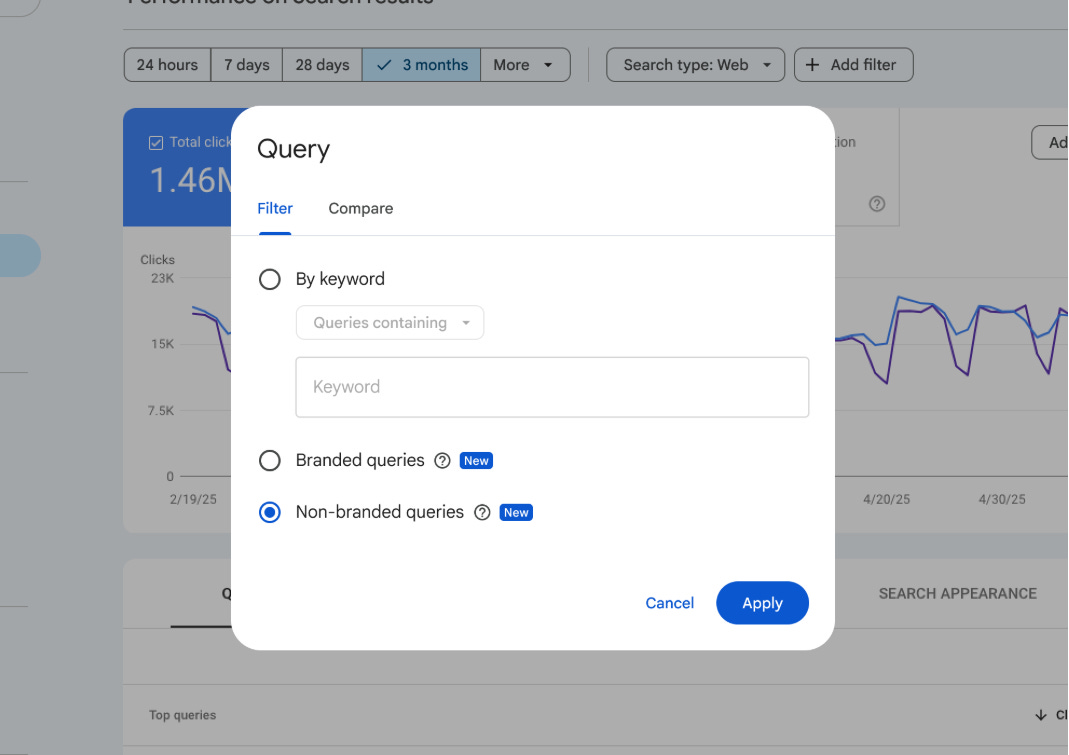
1. Search Console Adds Branded Query Filter - Google Search Console now lets sites automatically separate branded and non-branded search queries in the Performance report. The filter measures clicks, impressions, CTR, and ranking for brand demand versus discovery traffic.
2. Measuring Brand Demand Gets Easier - The new filter uses AI-assisted classification to detect brand names, misspellings, and brand products. A new Insights card also shows how much traffic comes from brand recognition versus first-time discovery.
3. ChatGPT Product Carousels Depend on Google Shopping - A study analyzing 43,000 carousel products found over 83% matched Google Shopping results, compared with roughly 11% from Bing, indicating ChatGPT primarily sources products from Google’s shopping index.
4. Google Rankings Influence ChatGPT Visibility - The data also shows strong positional bias. 60% of matching products came from the top 10 Google Shopping results, and roughly 84% from the top 20, meaning higher rankings increase AI carousel visibility.
For brands, traditional search visibility is now influencing AI shopping discovery. Ranking well in Google Shopping may increasingly determine whether products appear in AI assistants like ChatGPT.
🏆 Ad of the Day
What Works:
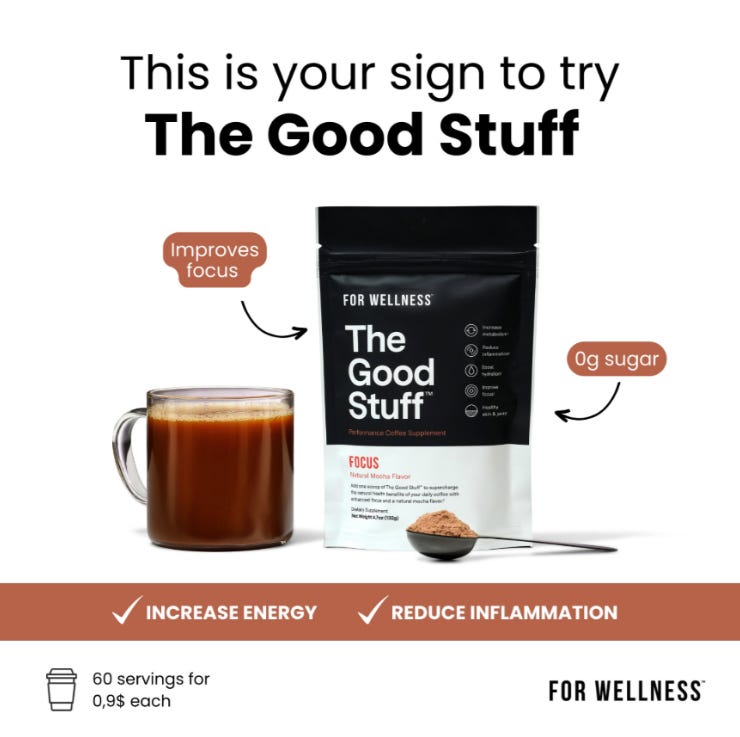
“Your Sign” Is a Psychological Shortcut - “This is your sign” is not just a hook. It frames the purchase as destiny instead of a decision. That subtle shift reduces hesitation because people feel like they are responding to a signal, not evaluating another supplement.
The Coffee Trojan Horse - They don’t lead with “supplement.” They lead with coffee behavior. The mug is the real hero of the ad because it anchors the product inside an existing daily ritual. That’s a massive friction reducer.
Two Claims, Zero Cognitive Load “Improves focus.” “0g sugar.” Only two bubbles. That’s intentional. Instead of overwhelming the viewer with ingredient science, the ad distills the entire value prop into one performance benefit and one guilt remover.
If your product requires a new behavior, you’ll fight friction forever. Position it as an upgrade to something people already do daily, and the conversion battle gets dramatically easier.
🎊 Events
🔥 Dara Denney Managed $100M in Ad Spend. She’s Teaching Live Inside This Free Bootcamp.
Starts tomorrow | 8 Weeks Live | Free
Most brands are producing more ads than ever and still can’t explain why two worked and twenty didn’t. Motion’s Creative Strategy Bootcamp teaches you hook writing, concept testing, AI workflows, and how to film ads that actually convert. Dara Denney has managed over $100M in ad spend. Daniel Rivera is Creative Director at Harry’s, the #2 shave brand globally. Both teaching live.
✅ Reserve Your Free Spot
Can’t attend every session live? Register anyway, you’ll get the recordings within 24hours.
Advertise with Us
Wanna put out your message in front of over 50,000 best marketers and decision makers?
We are concerned about everything DTC and its winning strategies. If you liked what you read, why not join the 50k+ marketers from 13k+ DTC brands who have already subscribed? Just follow this.
At ScaleUP, we care about our readers and want to provide the best possible experience. That's why we always look for ways to improve our content and connect with our audience. If you'd like to stay in touch, be sure to follow us EVERYWHERE🥰
Thanks for your support :) We'll be back again with more such content 🥳