
Howdy Readers 🥰

In this newsletter, you’ll find:
🌐 You might not exist in the language your customers actually search in
📣 Ad platforms are pushing beyond traditional ads
🏆 Ad of the day
If you’re new to ScaleUP then a hearty welcome to you. You’ve reached the right place along with 50k+ CEOs, CMOS, and marketers. Let’s get into it, shall we? Oh! Before you forget, if someone forwarded this newsletter to you, don't forget to subscribe to our newsletter so you never miss out!
🌐 You might not exist in the language your customers actually search in
Google confirmed this month that campaign-level language targeting disappears from Search and AI Max for Search in late September, with matching moving to inference: what language a user is judged to understand, not which setting a campaign was built around.
An English-language query can now serve a French ad if Google’s systems decide the user understands French.
That’s a paid-media mechanic. It also describes something already true on the organic AI-answer side that almost nobody checks, because most visibility tracking only runs in one language: whichever one the team building it happens to speak.
This is different from whether your Spanish or French pages read well. It’s whether your brand exists at all in the answer a model gives when the same question arrives in a different language.
Run the test before assuming the answer
Take your ten most category-defining prompts, the ones a customer would type when comparing options, and run each in English and in whichever second language a meaningful share of your customers speak.
Compare which brands get named. A brand cited confidently in English often disappears entirely from the same category question asked in another language, not because it did anything wrong there, but because the sources an AI system draws from in that language are a different set of publishers, forums, and retailers than the ones feeding its English answers.
Trace the gap to its actual source before building anything
A brand invisible in a second language is usually invisible for one of two different reasons, and the fix depends entirely on which one it is.
Sometimes the brand has real coverage in that language, reviews, local press, retailer listings, and the AI system just isn’t drawing from those sources yet.
Other times the coverage genuinely doesn’t exist, and no amount of waiting fixes that. Checking which case you’re in before investing in localization or citation-building saves months of the wrong work.
That diagnostic, running the same prompt across languages and mapping which sources cite you in each, is what *Semrush’s AI Visibility Toolkit is built to surface in one pass. You can try it free for 7 days.
Recheck after the September change lands
Once language matching moves fully to inference in late September, the crossover between what a query is written in and what gets served back may shift again, on both the paid and organic side.
Rerun the same ten-prompt test after the change takes effect, not just before it. A gap that exists today because of stale source coverage could shrink or widen depending on how aggressively AI systems start serving cross-language answers once the setting stops constraining anything.
📣 Ad platforms are pushing beyond traditional ads
Meta, TikTok, and ChatGpt are all expanding how advertisers can reach, convert, and measure audiences, from automated Instagram DMs to TikTok ads appearing on physical screens.
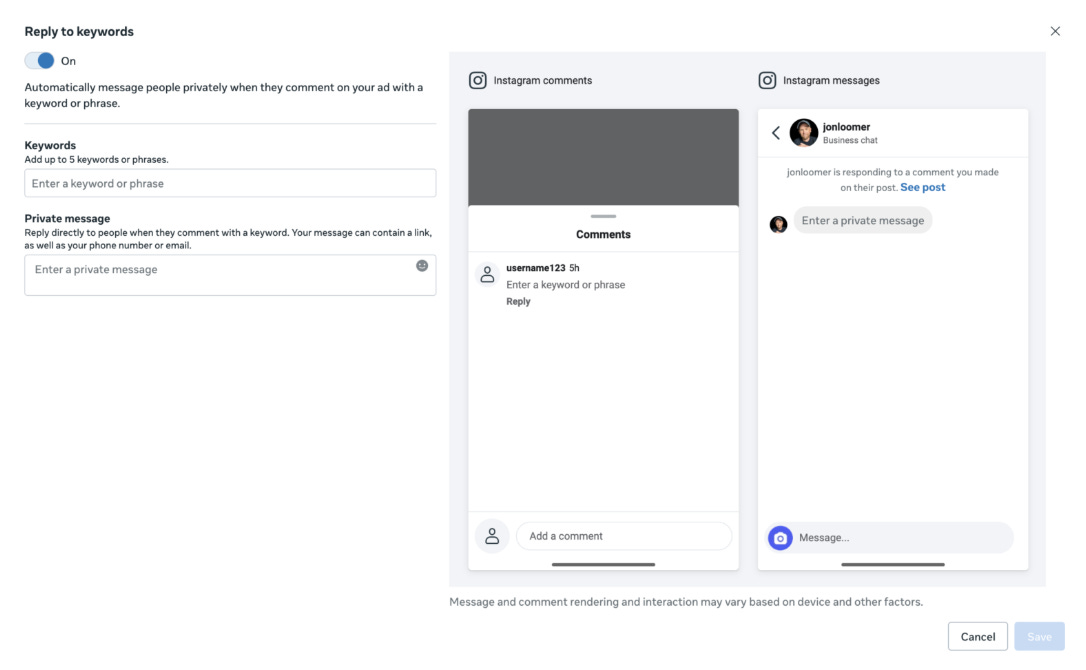
The Breakdown:
Meta is testing comment-to-DM ads - Advertisers can choose up to five keywords that automatically trigger a private Instagram message when someone comments one of them on a promoted post.
TikTok ads are moving into the physical world - Its Out of Phone program is expanding across Europe, putting TikTok content on billboards, shopping mall screens, supermarkets, universities, bars, and other public displays.
ChatGPT Ads gets automated bidding - A new Maximize results strategy automatically adjusts bids toward an advertiser’s selected campaign goal to generate as many results as possible within budget.
ChatGPT adds targeting and attribution controls - Advertisers can choose between iOS, Android, and Web placements, while one-day view-through conversions can now be measured at campaign, ad group, and ad level.
The ad itself is becoming only one piece of the system. Platforms increasingly want to automate what happens before and after someone sees it, from bidding and placement to DMs and attribution. For marketers, the advantage shifts toward designing better journeys and feeding these systems better inputs rather than manually controlling every step.
🏆 Ad of the day

What Works:
Scale Stops Scroll - The oversized jeans create an immediate pattern interrupt, turning a familiar product into something visually impossible to ignore while keeping the fashion category obvious at first glance.
Styling Shows Identity - The model’s relaxed pose and casual outfit give the jeans a clear lifestyle context, helping shoppers picture the fit and reinforcing an effortless, everyday positioning.
Copy Reinforces Choice - “Always the right choice” works as simple confidence framing, while the minimal layout and bold typography keep cognitive load low and branding recall strong.
Take one recognizable product detail and blow it out of proportion. The surreal scale creates thumb-stop power without sacrificing product communication or brand relevance.
*When you purchase through links in this article, we may earn an affiliate commission from Semrush.
Advertise with Us
Wanna put out your message in front of over 50,000 best marketers and decision makers?
We are concerned about everything DTC and its winning strategies. If you liked what you read, why not join the 50k+ marketers from 13k+ DTC brands who have already subscribed? Just follow this.
At ScaleUP, we care about our readers and want to provide the best possible experience. That's why we always look for ways to improve our content and connect with our audience. If you'd like to stay in touch, be sure to follow us EVERYWHERE🥰
Thanks for your support :) We'll be back again with more such content 🥳