
Howdy Readers 🥰
In this newsletter, you’ll find:
🫣The creator well is drying up?
🤖 Google and Meta add more AI automation and ad controls
🏆 Ad of the day
If you’re new to ScaleUP then a hearty welcome to you. You’ve reached the right place along with 50k+ CEOs, CMOS, and marketers. Let’s get into it, shall we? Oh! Before you forget, if someone forwarded this newsletter to you, don't forget to subscribe to our newsletter so you never miss out!
Together with AirOps
Why your AI visibility keeps disappearing overnight

Only 30% of brands stay visible in an AI answer from one run to the next. Run the same prompt five times and just 20% show up in all five. That’s not a ranking problem.
Rankings barely move day to day. AI visibility does, and most teams are still measuring it with a dashboard built for the old game.
AirOps broke down what’s actually driving citations in 2026:
Freshness compounds. Pages updated in the last 3 months are 3x more likely to get cited.
Structure matters more than design. Clean heading hierarchy alone lifts citation odds 2.8x.
Most of it happens off your site. 85% of brand mentions in AI search come from third-party sources, not your domain.
Five metrics replace the old scorecard: citation rate, mention rate, share of voice, sentiment, and source attribution. They need a weekly review, not a quarterly one.
If your GEO (Generative Engine Optimization) strategy still lives inside your SEO report, you’re measuring last quarter’s game.
Want the full breakdown on where citations come from and how to track them weekly?
🫣The creator well is drying up?
When creator response rates start falling, the first instinct is usually to rewrite the outreach. Teams tweak subject lines, shorten DMs, adjust briefs and assume the problem sits somewhere inside the message.
That explanation feels logical, but recent creator economy data points to another possibility. More than half of Americans are posting less than they were five years ago, while demand for creator content continues to rise. Sometimes the outreach hasn’t become less effective. The market has simply become more competitive.
Start by checking whether the market changed
Before rewriting your process, compare the last six to twelve months.
Hold budget, outreach style and briefing quality as constant as possible, then review two metrics:
Creator response rate
Time to first content
If response rates have steadily declined while time to first content has increased, despite the process staying largely the same, you’re probably looking at a supply problem rather than an execution problem.
That’s an important distinction because each diagnosis leads to a different solution.
Different causes require different fixes

Many brands keep optimizing the first while quietly experiencing the second.
No amount of copywriting can create creators who aren’t available.
Manual sourcing becomes less effective as supply tightens
Cold outreach worked well when the creator pool was growing faster than demand.
Today, the same process often means searching profiles, sending dozens of messages, following up repeatedly and waiting weeks for enough responses to begin a campaign. The process hasn’t suddenly become inefficient. It’s operating in a market where more brands are competing for a smaller group of active creators.
That’s exactly where marketplaces begin changing the economics. Insense gives brands access to a vetted network of 100,000+ creators across 57 countries, with applications for new campaigns typically arriving within 48 hours instead of relying on weeks of one-to-one outreach. You can book a free strategy call by August 28 and receive $200 in platform credit toward your first campaign.
Before rewriting another outreach template, run the six-month audit first.
If the numbers point to shrinking creator supply rather than weaker outreach, the solution isn’t finding better words.
It’s finding a bigger pond.
🤖 Google and Meta add more AI automation and ad controls
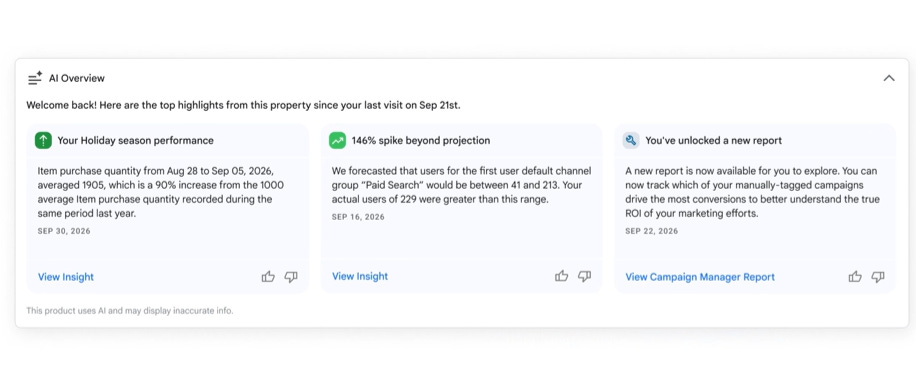
Google and Meta are upgrading different parts of the advertising workflow. Google wants AI to handle more campaign analysis, while Meta is giving advertisers tighter control over who automation should never reach.
The Breakdown:
1. Google turns reporting conversational - Ask Advisor can now investigate campaign changes and answer natural-language questions about performance, competitors, and impression share, reducing the need to manually navigate multiple reports.
2. AI can build dashboards - Google Ads marketers can generate visual dashboards using text prompts, complete with real-time AI summaries explaining underlying trends. Similar dashboard capabilities are coming to Google Analytics.
3. Meta strengthens audience exclusions - Meta’s new exclusion-only audiences permanently prevent selected customer lists from receiving ads, helping businesses exclude opt-outs, legally restricted audiences, employees, or other unwanted recipients.
4. Automation gets clearer boundaries - Google is making AI more active in interpreting advertising data, while Meta is creating stronger targeting guardrails. Together, the updates show automation expanding alongside advertiser controls.
Advertising platforms are increasingly automating analysis, optimization, and targeting. The next advantage may come from using AI to reduce manual work while defining precise boundaries around where that automation should operate.
🏆 Ad of the Day

What Works:
Pairing Feels Memorable - Turning the two products into characters holding hands makes the routine instantly more memorable, while the “perfect match” hook simplifies complementary product positioning into one visual idea.
Hierarchy Stays Clean - The headline lands first, then the eye drops directly to the paired products, creating a simple visual hierarchy that keeps cognitive load low and supports mobile-first readability.
Playfulness Builds Recall - The illustrated arms, legs and heart motif add personality without hiding the packaging, creating a light pattern interrupt while keeping both SKUs highly recognizable.
When two products work better together, give them a relationship visually. Pairing, teamwork or character-based interaction can make bundle logic easier to understand and remember.
Advertise with Us
Wanna put out your message in front of over 50,000 best marketers and decision makers?
We are concerned about everything DTC and its winning strategies. If you liked what you read, why not join the 50k+ marketers from 13k+ DTC brands who have already subscribed? Just follow this.
At ScaleUP, we care about our readers and want to provide the best possible experience. That's why we always look for ways to improve our content and connect with our audience. If you'd like to stay in touch, be sure to follow us EVERYWHERE🥰
Thanks for your support :) We'll be back again with more such content 🥳