
Howdy Readers 🥰
In this newsletter, you’ll find:
🤦♂️The Send-Time Slide Every Client Report Has Been Showing Wrong
📊 Summer Ad Costs Ease As Brands Prepare For BFCM
🎥 Ad of the Day
If you’re new to ScaleUP then a hearty welcome to you. You’ve reached the right place along with 50k+ CEOs, CMOS, and marketers. Let’s get into it, shall we? Oh! Before you forget, if someone forwarded this newsletter to you, don't forget to subscribe to our newsletter so you never miss out!
🤦♂️The Send-Time Slide Every Client Report Has Been Showing Wrong
Before: an apparel brand’s flows fire at 7 am because that’s when the STO model, trained on open data, says the audience engages most. Click-through on that 7 am send has been quietly mediocre for months. Nobody questioned it because opens looked strong.
After: pulling click and conversion timestamps separately reveals the real pattern. The audience actually converts closer to 8 pm.
The 7 am number was Apple Mail Privacy Protection triggering an artificial open the instant the email hit the inbox, hours before anyone was awake to read anything, and the STO model had been quietly learning that fake signal as gospel.
This matters more for DTC brands with a heavily iOS-skewed audience than the deliverability world generally acknowledges.
A beauty or apparel brand running 60%+ Apple Mail opens is training its entire send-time strategy on a privacy feature’s pre-fetch behavior, not on when real humans engage, and every campaign scheduled against that model is quietly firing at the wrong hour.
The fix is checking open-to-click ratio split by client. A dramatically higher open rate on Apple Mail relative to its own click rate, compared against non-Apple clients in the same account, is the fingerprint of MPP inflation specifically. Rebuild send-time logic on click and conversion timestamps alone, since neither can be artificially triggered the way an open can.
For an agency running this check across a full client roster, doing it by hand means re-running historical data through a corrected model, account by account, before anyone signs off on the next quarterly report.
An AI connected to a live Omnisend account does the recalculation directly from click and conversion history, correcting the send-time recommendation before it goes into the next client report instead of after a quarter of underperformance gets quietly explained away as seasonality.
Omnisend already runs this for 150,000+ brands, migration-free within five days, pricing typically 35% below Klaviyo. You can get started with ready-made prompts and rerun the split before the next report ships.
📊 Summer Ad Costs Ease As Brands Prepare For BFCM
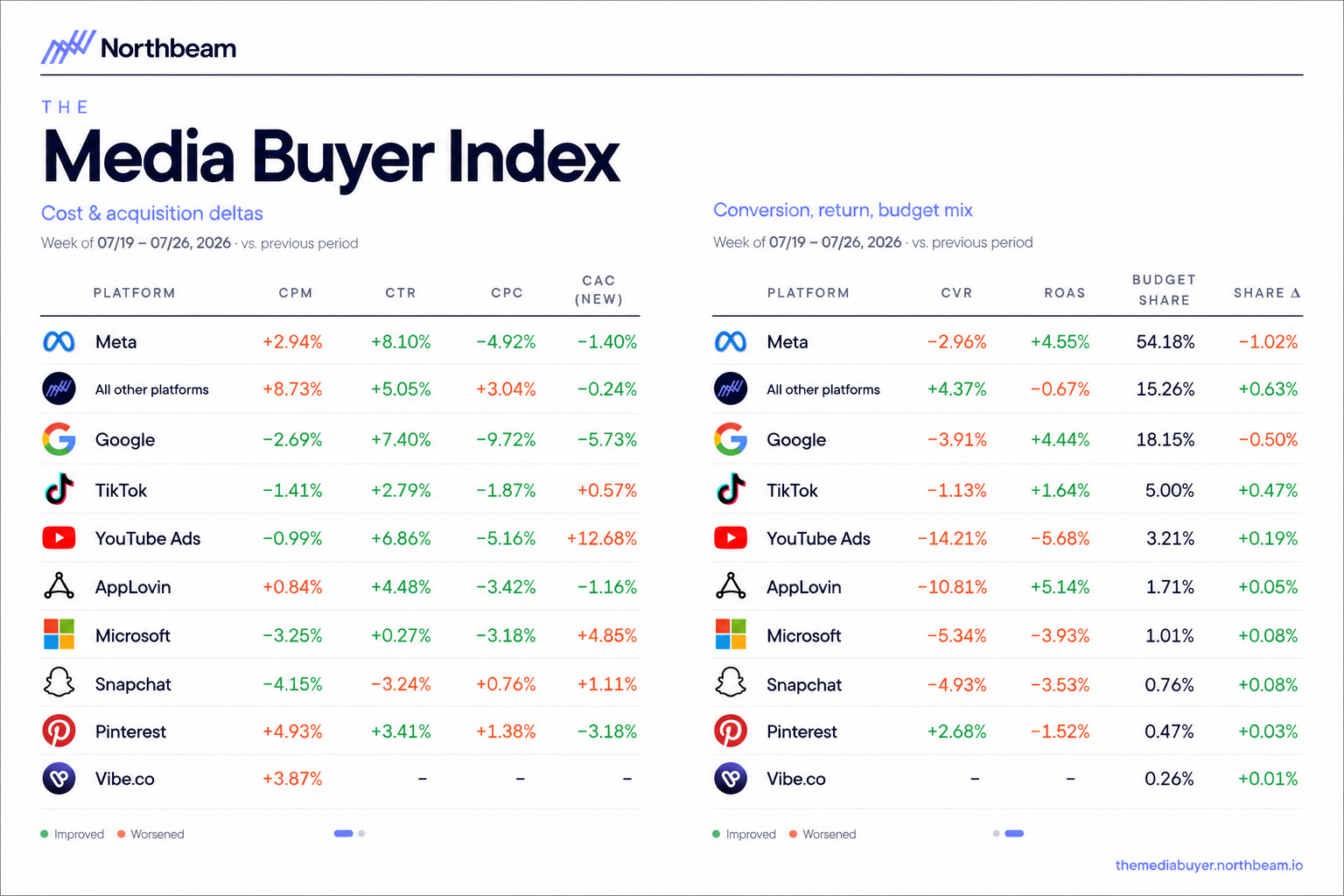
The latest platform data suggests advertisers are benefiting from softer auction pressure while using the summer slowdown to test new channels before holiday competition intensifies.
Auction efficiency improved: Most platforms recorded higher click-through rates and lower cost per click, pointing to less competitive auctions as advertisers reduced spending during the seasonal slowdown.
Returns held up despite weaker conversions: Conversion rates declined across most platforms, but Meta improved ROAS by 4.55% and Google by 4.44%. Google also posted the strongest reduction in new customer acquisition costs.
Smaller channels gained ground: TikTok, YouTube, AppLovin, Microsoft, Snapchat, Pinterest, and other smaller platforms all increased their share of advertiser budgets, suggesting more brands are diversifying spend before Black Friday and Cyber Monday.
Why It Matters
Summer gives advertisers a lower-cost window to test creative, audiences, and new channels. The brands that use this period well can enter the holiday season with stronger data and fewer expensive assumptions.
🏆 Ad of the Day
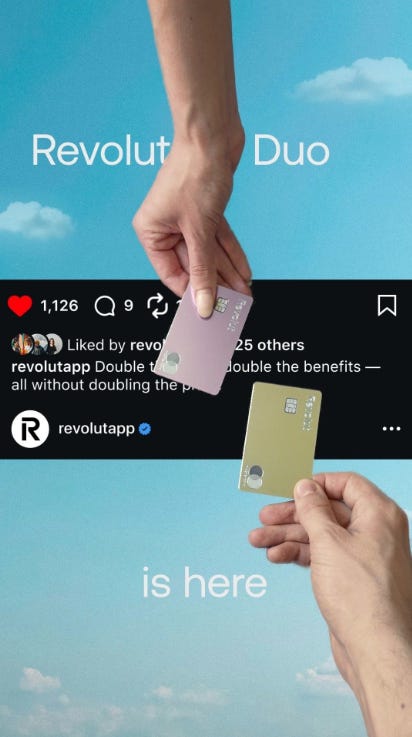
What Works:
Native Feed Disruption - The Instagram interface becomes part of the creative itself, creating a strong pattern interrupt that feels platform-native while naturally pulling attention toward the product reveal.
Benefit Framing Lands - “Double the benefits without doubling the price” communicates value instantly, using simple comparison psychology to make the Duo proposition feel financially smart and easy to understand.
Hands Guide Attention - The two hands create directional movement through the layout, guiding the viewer from one card to the next while reinforcing the idea of a paired product.
Turn familiar social interface elements into the visual concept, then connect them directly to the offer. This raises thumb-stop potential without making the ad feel overly polished.
Advertise with Us
Wanna put out your message in front of over 50,000 best marketers and decision makers?
We are concerned about everything DTC and its winning strategies. If you liked what you read, why not join the 50k+ marketers from 13k+ DTC brands who have already subscribed? Just follow this.
At ScaleUP, we care about our readers and want to provide the best possible experience. That's why we always look for ways to improve our content and connect with our audience. If you'd like to stay in touch, be sure to follow us EVERYWHERE🥰
Thanks for your support :) We'll be back again with more such content 🥳