
Howdy Readers 🥰

In this newsletter, you’ll find:
🫣 Targeting Is Lagging Reality
📈 Search Got Cheaper Scale, Shopping Got Safer Testing
🏆 Ad of the Day
If you’re new to ScaleUP then a hearty welcome to you, you’ve reached the right place along with 50k+ CEOs, CMOS, and marketers. Let’s get into it, shall we? Oh! Before you forget, if someone forwarded this newsletter to you, don't forget to subscribe to our newsletter so you never miss out!
Together with Insense
1 UGC creator = 20+ ad variations to scale your Q1 ad creatives

Insense makes UGC ads insanely cost-effective - and Andromeda-approved!
From one brief, get numerous raw footage clips to mix, match, and turn into multiple scroll-stopping creatives for your paid social ads.
Source 20+ pieces of raw content (per creator) with lifetime usage rights, all delivered in 14 days or less.
That’s how over 20000+ brands like Beauty Pie, Bones Coffee, Flo Health, and Aceable scale UGC without killing team bandwidth.
Cost-effective UGC with lifetime usage rights? Yes please!!
Book a free strategy call by Jan 30th and get $200 for your first campaign.
🫣 Targeting is Lagging Reality
Audience targeting feels comforting because it looks precise. You can point to segments, explain why they exist, and defend them in a meeting. That sense of control is exactly what makes them fragile once buying behavior speeds up.
The problem shows up when intent compresses. A user reads an explainer, compares two products, and checks pricing on the same day. That shift happens faster than most audience rules can update.
Manual segments rely on historical conditions, not live momentum, so they often activate after the decision window has already moved.
This creates a subtle failure mode. Campaigns appear well-structured, but performance lags because targeting is anchored to who someone was yesterday rather than what they’re doing right now. When spend scales, that delay compounds into wasted impressions at the exact moment urgency peaks.
Predictive audiences were designed to close this timing gap. GA4’s likelihood-based segments are built from observed behavior across Search, YouTube, Chrome, and on-site activity, compared against millions of prior paths that ended in conversion.
These models refresh continuously, which allows them to respond to tightening behavior rather than waiting for a rule to be met.
That speed cuts both ways. Predictive audiences don’t create intent. They magnify whatever signal you feed them. If your primary conversion is too early in the funnel, the model learns curiosity instead of commitment.
If browsing and buying share the same goal, the system can’t distinguish momentum from noise.
When these audiences underperform, teams often revert to manual segments because they feel safer. That move treats the symptom, not the cause. The real issue is signal quality, not modeling strength.
Intent rarely lives in one dataset. It shows up when search terms become more specific, when content consumption shifts from education to comparison, and when users move faster through decision pages.
If those signals are scattered across tools, diagnosis becomes guesswork.
This is where *Semrush One becomes practically useful. By combining search demand patterns, competitive movement, and content-level intent signals in one place, it helps teams spot acceleration before paid platforms fully reflect it.
That upstream clarity produces cleaner conversion signals downstream. You can start a 7-day free trial here.
Making predictive audiences work requires upstream discipline. Define conversions that represent real decisions. Separate exploration paths from purchase paths. Reduce ambiguity so behavior has shape.
Manual audiences explain the past. Predictive audiences react to the present. Performance follows the system that moves at the same speed as intent.
The advantage now isn’t tighter definitions. It’s building systems that surface urgency early enough to act on it.
📈 Search Got Cheaper Scale, Shopping Got Safer Testing
Q4 gave Google advertisers a weirdly good combo, more demand, more clicks, and no major cost blowout. Part of that came from shifts in who showed up to bid in Shopping auctions. Now Google is also making it easier to improve Shopping performance without touching your whole feed.
The Breakdown:
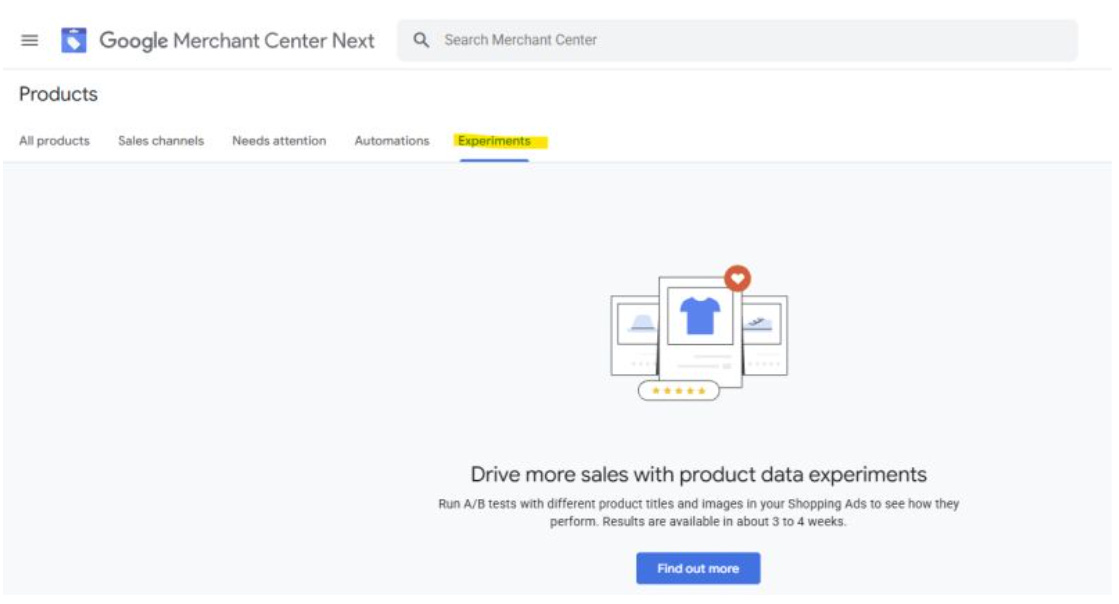
1. Shopping Feed A/B Tests Are Finally Here - Google is testing a new “product data experiments” feature for Shopping Ads. It lets you test different product titles and images against each other. Right now it is limited access, but wider rollout is expected.
2. You Get Answers in 3 to 4 Weeks - Google says results should land in three to four weeks, which is fast enough to act on. The big win is you can test without rolling risky edits across your live feed. That matters because titles and images decide the click.
3. Search Volume Surged in Q4 - Google search spend climbed 13% year over year in Q4 2025, and click growth hit its fastest pace since early 2021. That means more people were actively searching and clicking ads. It is real scale, not just inflation.
4. Costs Stayed Calm for Once - Despite higher volume, CPCs barely moved and even softened slightly. Amazon pulling back from U.S. Shopping auctions likely reduced bidding pressure. AI-driven search experiences also created more commercial queries to capture.
This is one of those rare windows where you can scale search without immediately paying the penalty. And if you run Shopping, you can finally test the highest-impact feed changes without guessing. Takeaway, push spend while CPCs behave, then iterate feed assets with discipline.
🏆 Ad of the Day
What Works:
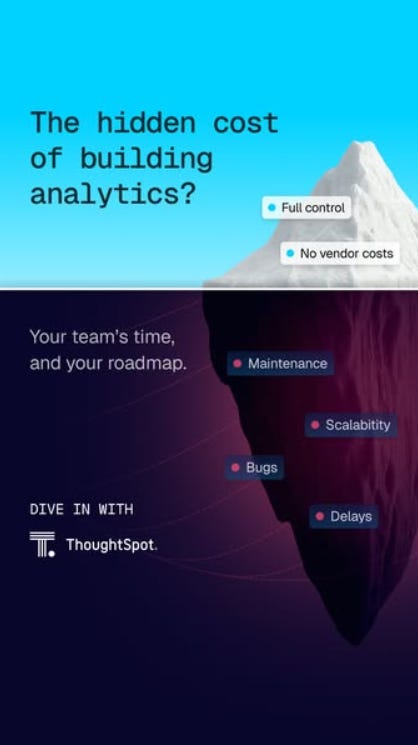
The Trap It Calls Out - It flips the build vs buy debate. Everyone counts vendor cost, nobody counts the slow bleed of engineering time, maintenance, and roadmap derailment.
How The Visual Does The Persuading - The iceberg is perfect. Top is the “clean story” you tell leadership. Bottom is the messy reality you live in, and the ad makes that gap impossible to ignore.
Where This Wins In The Funnel - This is mid-funnel pressure. It’s built for buyers already considering a custom build, and it gives them ammo to justify buying internally.
If your competitor is “we’ll build it ourselves,” sell the hidden tax. Make the invisible costs visible, then your price starts looking cheap.
*When you purchase through links in this article, we may earn an affiliate commission from Semrush.
Advertise with Us
Wanna put out your message in front of over 50,000 best marketers and decision makers?
We are concerned about everything DTC and its winning strategies. If you liked what you read, why not join the 50k+ marketers from 13k+ DTC brands who have already subscribed? Just follow this.
At ScaleUP, we care about our readers and want to provide the best possible experience. That's why we always look for ways to improve our content and connect with our audience. If you'd like to stay in touch, be sure to follow us EVERYWHERE🥰
Thanks for your support :) We'll be back again with more such content 🥳