
Howdy Readers 🥰
In this newsletter, you’ll find:
🧐Spot the blind spot in your testing
📢 Google and Microsoft expand advertiser controls
🏆 Ad of the Day
If you’re new to scaleUP then a hearty welcome to you. You’ve reached the right place along with 50k+ CEOs, CMOS, and marketers. Let’s get into it, shall we? Oh! Before you forget, if someone forwarded this newsletter to you, don't forget to subscribe to our newsletter so you never miss out!
Together with AirOps
Your Rankings Hide a Bigger Visibility Problem

A top-20 position can look reassuring while AI Overviews recommends somebody else.
AirOps found that 59.6% of AI Overview citations come from URLs outside the top 20 organic results. Your rankings can look healthy while your brand is absent from the answers shaping discovery.
The State of AEO 2026 shows you how to find and close that gap:
Find which pages to refresh first and the right cadence for your industry and search intent.
Learn which structural elements improve citations, from heading hierarchy to schema and lists.
See which third-party sources shape AI discovery and where your brand needs to appear.
Searches ending without a click have increased 2.5x since AI Overviews launched. More buying journeys are now being influenced before someone reaches your site.
If AI visibility is becoming part of your growth target, this report gives you the benchmarks and signals to audit against your own performance.
🧐Spot the blind spot in your testing
Replacing a quota for total creatives with a quota for new concepts is a genuine improvement. It discourages teams from inflating output by producing endless variations of the same ad and shifts attention toward generating fresh thinking instead of simply increasing volume.
The problem is that every measurement system eventually develops a blind spot.
Once a metric becomes the number everyone is judged against each week, people naturally become better at achieving the metric itself. If the definition behind that metric isn’t protected, it slowly begins to change.
The quota isn’t the problem. The definition is.
Unlike counting how many creatives shipped, “new concept” isn’t an objective measurement.
Someone has to decide whether an idea is genuinely different or simply a variation of one that already exists.
That decision tends to drift over time.
Week one: A new headline on the same concept doesn’t count.
Week twelve: The same headline change suddenly qualifies because the team needs to hit the weekly target.
Nobody sets out to lower the standard. The standard simply moves because the quota never stopped moving.
Protect the definition before you measure the number
A quota only works if everyone agrees what qualifies. Document the definition before tracking begins.
For example, require meaningful change in at least two out of the below:
Messenger
Hook Mechanism
Formant
Core Angle
Changing only a headline, CTA, or visual treatment shouldn’t qualify on its own.
Then add one more safeguard.
Every month, have someone outside the weekly reporting process review a sample of concepts against the written definition. Independence matters because the people accountable for the target shouldn’t also be the only people deciding whether it has been achieved.
Watch the metric behind the metric
There’s an easier way to spot definition drift before a formal audit.
Track win rate per unique concept, not just the number of concepts produced.
If the quota remains perfectly on target while the percentage of winning concepts steadily declines, that’s usually a sign that the definition has become more generous rather than the team becoming less creative.
The dashboard might still show success. The output is quietly saying something different.
A quota built to eliminate low-value creative can eventually reward it if the definition isn’t protected with the same discipline as the target itself.
The number hitting its goal was never the strongest evidence the system was working.
The quality of the ideas it continued to uncover always was.
📢 Google and Microsoft expand advertiser controls
Google and Microsoft are rolling out new advertising updates focused on better campaign control, lead generation, and higher engagement. Together, the changes give advertisers more flexibility over where ads appear, how leads are generated, and how users interact with search ads.
The Breakdown:
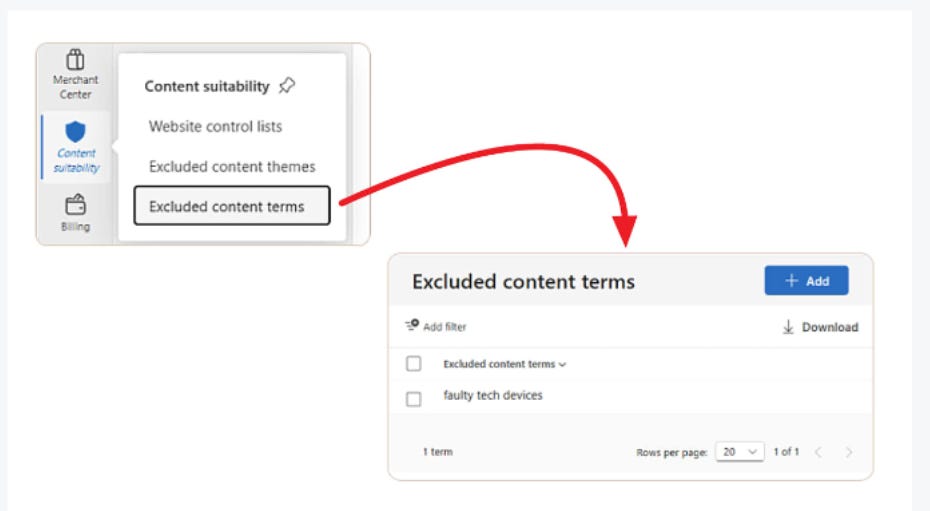
Stronger Brand Safety - Microsoft introduced Excluded Content Terms, allowing advertisers to block Audience Ads from appearing beside specific page titles. Brands can add up to 1,000 terms, creating more precise brand safety controls than website or category exclusions.
Better Lead Campaigns - Google published official guidance for Performance Max pay-per-lead campaigns, covering setup, targeting, service areas, and optimization. The documentation supports Google’s broader rollout of Local Services Ads into the Performance Max ecosystem.
Search Ads Evolve - Google is testing clickable hyperlinks inside Search ad descriptions, turning selected phrases into additional clickable elements. The links lead to the same landing page and could improve CTR by drawing attention to relevant messaging.
Advertising platforms are shifting beyond simple campaign management toward intelligent optimization and finer controls. Brands that adapt early will gain greater control over placement, more efficient lead generation, and new opportunities to improve campaign performance.
🏆 Ad of the Day
What Works:
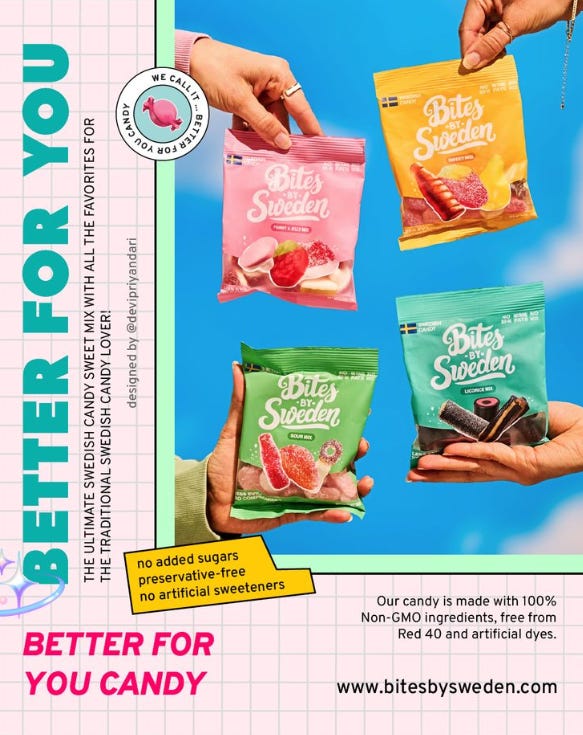
Packaging Creates Variety - Four brightly colored packs communicate the assortment instantly, improving the thumb-stop ratio while helping shoppers understand that the brand offers multiple flavors without increasing cognitive load.
Hands Add Energy - The surrounding hands create movement and social context, making the products feel actively chosen while guiding attention across each SKU and strengthening branding recall.
Health Claims Reassure - “No added sugars,” “preservative-free,” and “no artificial sweeteners” provide fast trust signals, balancing indulgence with better-for-you positioning and reducing conversion friction.
Show multiple variants together, assign each one a distinct color, and frame them with simple hands or gestures so variety feels exciting rather than visually overwhelming.
Advertise with Us
Wanna put out your message in front of over 50,000 best marketers and decision makers?
We are concerned about everything DTC and its winning strategies. If you liked what you read, why not join the 50k+ marketers from 13k+ DTC brands who have already subscribed? Just follow this.
At ScaleUP, we care about our readers and want to provide the best possible experience. That's why we always look for ways to improve our content and connect with our audience. If you'd like to stay in touch, be sure to follow us EVERYWHERE🥰
Thanks for your support :) We'll be back again with more such content 🥳