
Howdy Readers 🥰
In this newsletter, you’ll find:
🧾 The Page Memory Reset Effect: Why Ads “Magically” Work Again
🛒 AI Commerce Is Splitting Into Two Powerful Paths
🏆 Ad of the Day
If you’re new to ScaleUP then a hearty welcome to you, you’ve reached the right place along with 50k+ CEOs, CMOS, and marketers. Let’s get into it, shall we? Oh! Before you forget, if someone forwarded this newsletter to you, don't forget to subscribe to our newsletter so you never miss out!
🧾 The Page Memory Reset Effect: Why Ads “Magically” Work Again
Most advertisers believe Meta learns ads. It doesn’t. Meta learns relationships.
Every impression trains a mental model that links three things together: the creative, the page delivering it, and the type of person who responds. Over time, that relationship hardens. Performance doesn’t decline because the ad got worse.
It declines because the system has already learned exactly who this message works for under that identity. Once that happens, exploration shrinks.
This is the part most operators miss. Learning is not ad-bound. It’s stored at the page–creative pair level. When you change the page, you don’t just change branding. You reset the system’s confidence. And when confidence drops, Meta explores again.
That’s why the same ad can suddenly work without a single edit.
Not because it’s “new.”
Because the relationship is.
Strategy 1: Identity Rotation, Not Creative Rotation
Instead of endlessly refreshing ads, rotate who delivers them.
Run the same top-performing creative through multiple pages that carry different identity signals: educational, lifestyle, expert-led, community-style. Each page creates a new prediction surface, allowing the algorithm to re-test the message against new pockets of users.
This spreads learning horizontally instead of forcing one identity to carry all the spend.
Strategy 2: Use Pages to Control Exploration Budget
Meta allocates exploration where uncertainty exists. Mature page–creative pairs get less of it.
New page = lower certainty = higher exploration tolerance.
Operators can intentionally deploy fresh pages to reopen exploration windows without burning budget on unproven creatives. This is especially effective when scaling proven offers that stall due to over-learning, not lack of demand.
Strategy 3: Segment Trust, Not Just Audiences
Different buyers trust different messengers.
A brand page carries a single trust profile. Multiple pages allow parallel trust archetypes to coexist: authority, peer, deal-driven, aspirational. The same creative lands differently depending on which trust lane delivers it.
This expands reach without diluting the core message.
Strategy 4: De-risk Fatigue at High Spend
At scale, fatigue is rarely creative exhaustion. It’s identity saturation.
Instead of letting frequency pile onto one page, distribute delivery across pages to reduce perceived repetition. Users don’t experience frequency globally. They experience it per source.
Same story. New source. Reset attention.
Why This Changes How You Scale
The ceiling most brands hit isn’t creative. It’s relational memory.
Once you understand that Meta optimizes relationships, not assets, page strategy stops being a branding detail and becomes a growth lever.
The ad didn’t come back to life. The system just got permission to explore again.
🛒 AI Commerce Is Splitting Into Two Powerful Paths
The future of shopping is shifting fast, with Shopify and WooCommerce pushing toward two different AI-driven commerce models. One expands discovery across merchant networks, while the other enables AI agents to shop autonomously.
The Breakdown:
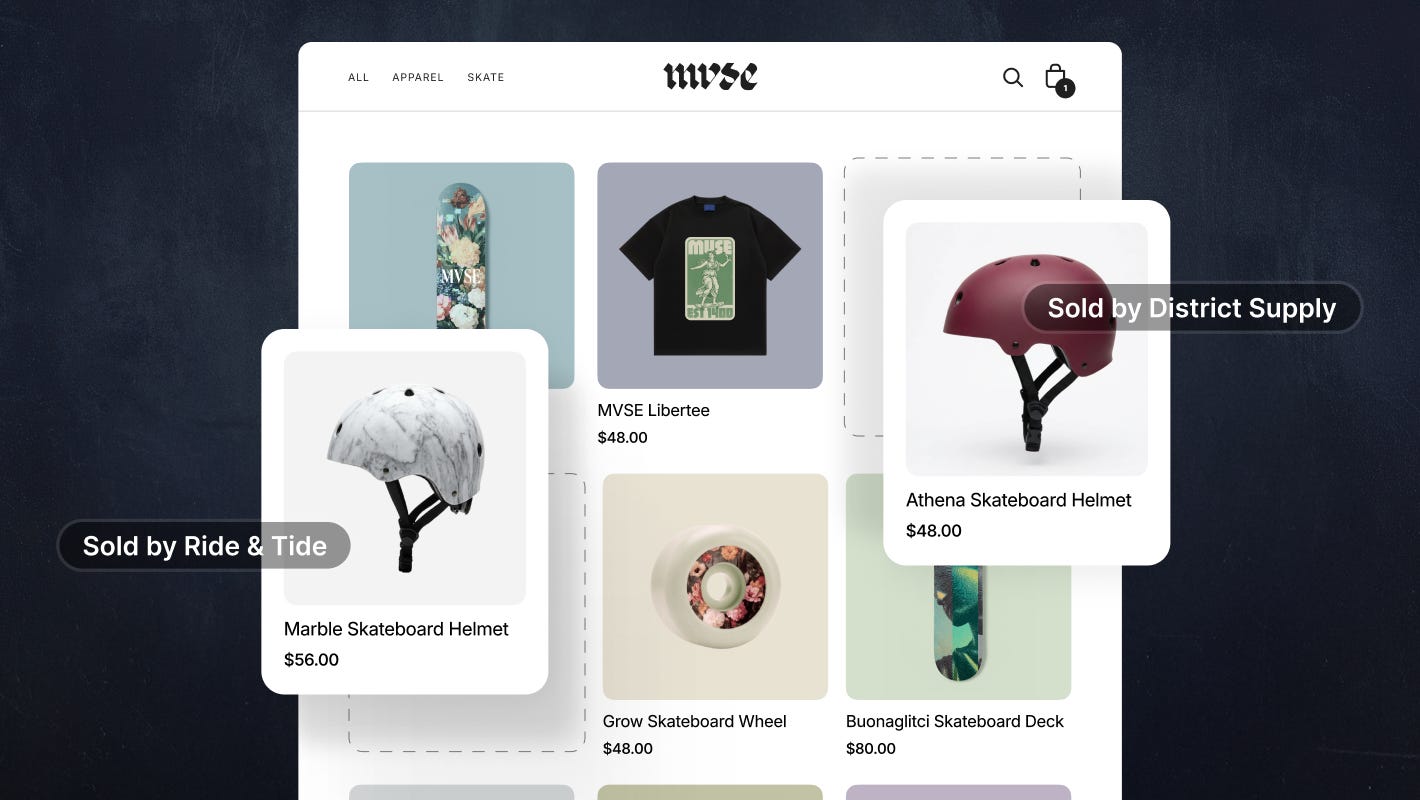
1) Cross-Merchant Discovery - Shopify’s Product Network lets shoppers see items from other stores automatically, blending products into search results or homepages and unifying checkout while merchants earn commissions.
It mirrors PMax, but prioritizes contextual relevance over ads, giving advertisers reach without requiring inventory. Unlike traditional ad networks, Shopify only places products when they are contextually relevant, optimizing for purchase likelihood rather than filling inventory.
Early versions avoid heavy monetization, reinforcing Shopify’s ecosystem strategy to keep shoppers browsing.
2) Agentic AI Shopping - WooCommerce’s new Stripe-powered Agentic Commerce Suite enables AI agents to browse, compare, and purchase products for users end-to-end.
Built on ACP and fully model-agnostic, it extends AI shopping access to 4M+ Woo stores through a single integration, reshaping commerce infrastructure.
With ACP and MCP enabling models to call APIs, retrieve data, and execute transactions, WooCommerce merchants can automatically reach customers across any AI assistant, handling checkout, payments, and fraud.
The next wave of commerce is no longer “search → click → buy.” Shopify is redefining product discovery inside merchant ecosystems, while WooCommerce is embracing agent-led shopping where AI handles the journey.
🏆 Ad of the Day
What Works:
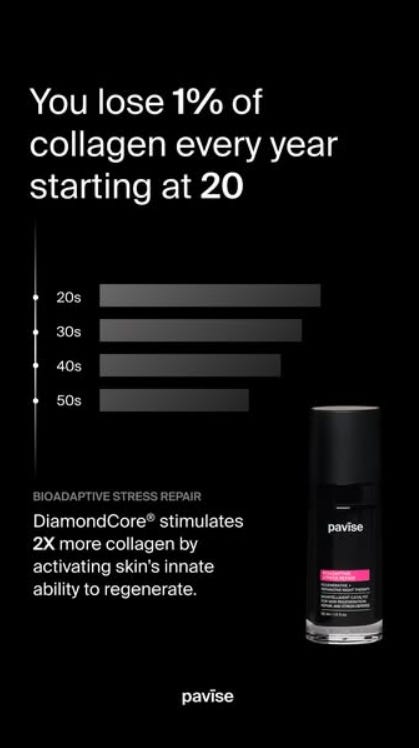
1. Time as Threat - “You lose 1% every year” turns aging into a quiet countdown. It’s not panic, it’s inevitability, which is far more motivating. People act faster when loss feels gradual but unavoidable.
2. Data You Can Feel - The simple age bars make the decline visual, not abstract. You don’t need to understand collagen science to feel the drop. When numbers become pictures, belief happens without argument.
3. Authority, Not Hope - “DiamondCore stimulates 2x more collagen” sounds engineered, not aspirational. The language borrows from biotech, signaling intervention rather than promises. It positions the product as a countermeasure, not a cosmetic.
This ad works because it turns skincare into risk management. It doesn’t sell beauty; it sells control over time, making action feel rational, urgent, and smart rather than emotional.
Advertise with Us
Wanna put out your message in front of over 50,000 best marketers and decision makers?
We are concerned about everything DTC and its winning strategies. If you liked what you read, why not join the 50k+ marketers from 13k+ DTC brands who have already subscribed? Just follow this.
At ScaleUP, we care about our readers and want to provide the best possible experience. That's why we always look for ways to improve our content and connect with our audience. If you'd like to stay in touch, be sure to follow us EVERYWHERE🥰
Thanks for your support :) We'll be back again with more such content 🥳
Exceptional breakdown of how Meta's learning actually works at the relationship level. The insight about identity rotation over creative rotation flips conventional wisdom on its head. I've burned so much budget refreshing creatives when the issue was saturation at the page level, not the ad itself. The strategy of using new pages to reopen exploration windows is someting I'm testing this week and the early data looks promising.