
Howdy Readers 🥰
In this newsletter, you’ll find:
🥹 Meta Is Smarter Than Your Spreadsheet
🤖 ChatGPT Cites Only Half the Pages It Reads. Here Is Why.
🏆 Ad of the Day
If you’re new to ScaleUP then a hearty welcome to you. You’ve reached the right place along with 50k+ CEOs, CMOS, and marketers. Let’s get into it, shall we? Oh! Before you forget, if someone forwarded this newsletter to you, don't forget to subscribe to our newsletter so you never miss out!
🥹 Meta Is Smarter Than Your Spreadsheet
Most media buyers kill their best ads. Not because they’re reckless. Because they’re using the wrong scorecard.
The logic seems airtight: Ad A has a $50 CPA, Ad B has a $40 CPA. Turn off Ad A, push budget to Ad B, and watch efficiency improve. Clean. Simple. Wrong.
Why the math breaks at scale
Every additional dollar pushed into an audience costs more than the last. You’re moving up weight classes. The fighter who dominates at 145lbs gets exposed at 155lbs. A $40 CPA at $10K spend would likely be a $60 CPA at $100K spend because you’ve exhausted the easy conversions and you’re now bidding premium CPMs to reach the edges of your audience.
If Meta had more confidence in the lower-CPA ad at scale, it would have sent more budget there. It didn’t. That’s the algorithm calculating, across billions of auction signals, that the cheaper ad cannot hold its efficiency at volume. Spend allocation reflects that. CPA in isolation doesn’t.
When spend signal breaks down
Spend isn’t a perfect signal. It fails in three specific scenarios:
Creative fatigue: Meta keeps allocating to a decaying ad on historical confidence, not current performance. Flag it when CTR drops 30%+ week-over-week while spend holds steady.
Structural issues: Budget caps, audience overlap, or campaign architecture that forces allocation rather than earns it.
Seasonal auction shifts: External CPM pressure is inflating spend on ads that aren’t actually winning on efficiency.
When none of those conditions are present, spend is your most honest performance signal. The working rule: if an ad is pulling 3x or more spend than its sibling and the CPA gap is under 25%, the higher-CPA ad is almost certainly the stronger performer at scale.
What your job actually is
Your job isn’t to hit a clean number on every line item. It’s to improve the output of the whole account. Sometimes that means leaving a $50 CPA ad running while you build something that can beat it at the same weight class.
Stop grading individual ads. Start reading what the algorithm is telling you with its wallet.
🤖 ChatGPT Cites Only Half the Pages It Reads. Here Is Why.
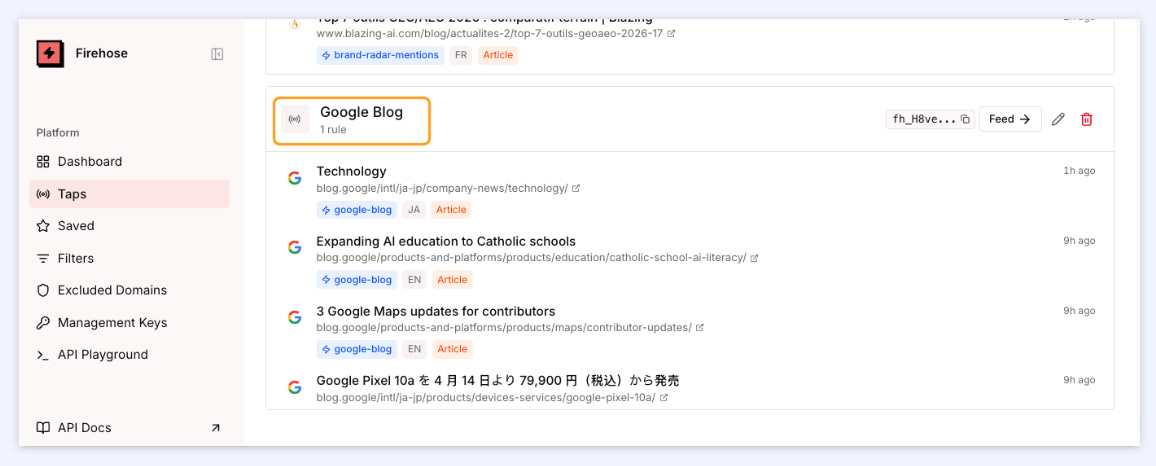
Ahrefs ran a study of 1.4 million ChatGPT prompts to find out what separates a cited page from an ignored one, and the answer is not what most people assume.
The Breakdown:
Your Title Is the Gatekeeper - Before ChatGPT opens any page, it screens results using just the title, snippet, and URL. Pages that do not pass this filter never get read at all, let alone cited. Your content does not matter if the title does not clear the first cut.
Where Your Content Lives Matters More Than the Content Itself - 88% of all cited URLs come from the search index, with an 88.46% citation rate. News sits at 12%. YouTube at 0.51%. Academia at 0.40%. If your content does not rank in search, ChatGPT will not cite it, regardless of quality.
ChatGPT Reads Reddit. It Just Never Admits It - Reddit has over 16 million data points in the dataset but a 1.93% citation rate. ChatGPT pulls Reddit at scale to understand context and gauge consensus, then quietly credits a different source. 67.8% of all non-cited URLs are from Reddit.
Fanout Queries Are the Real Algorithm - ChatGPT breaks every user prompt into internal sub-questions called fanout queries. Cited pages scored 0.656 cosine similarity against these queries versus 0.484 for non-cited pages. Write titles that answer the questions behind the question.
The median cited page is 500 days old, freshness alone does not win. For news queries it does, with cited news pages averaging 200 days old versus 300 for non-cited. Natural language URL slugs also help, 89.78% citation rate versus 81.11% for opaque ones.
🏆 Ad of the Day
What Works:
The Hidden Conversion Mechanism
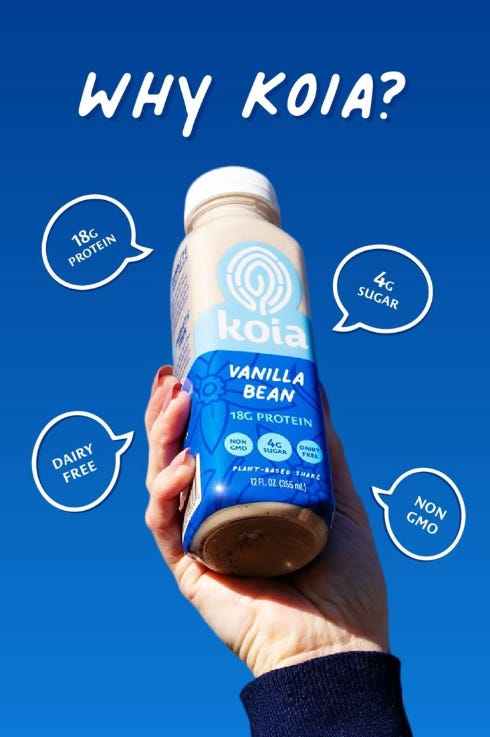
This ad turns benefits into a conversation, not a claim. The speech bubbles make each feature feel like it’s being “said” in response to the question, which mimics social validation instead of brand messaging. It feels like reasons coming from people, not a label.
“Why Koia?” positions the viewer as already considering it, creating a mid-decision entry point instead of cold discovery.
The upward hand angle subtly signals presentation and approval, like it’s being recommended.
Frame your benefits as answers in a conversation, not statements. It feels less like selling, more like confirming.
Advertise with Us
Wanna put out your message in front of over 50,000 best marketers and decision makers?
We are concerned about everything DTC and its winning strategies. If you liked what you read, why not join the 50k+ marketers from 13k+ DTC brands who have already subscribed? Just follow this.
At ScaleUP, we care about our readers and want to provide the best possible experience. That's why we always look for ways to improve our content and connect with our audience. If you'd like to stay in touch, be sure to follow us EVERYWHERE🥰
Thanks for your support :) We'll be back again with more such content 🥳