
Howdy Readers 🥰

In this newsletter, you’ll find:
🧹 How to stop last week’s black friday deal from showing up in Google’s Answers
📊 Meta introduces creative performance breakdowns and new ad optimization guidelines
🏆 Ad of the day
If you’re new to ScaleUP then a hearty welcome to you. You’ve reached the right place along with 50k+ CEOs, CMOS, and marketers. Let’s get into it, shall we? Oh! Before you forget, if someone forwarded this newsletter to you, don't forget to subscribe to our newsletter so you never miss out!
🧹 How to stop last week’s black friday deal from showing up in Google’s Answers
Picture a shopper on December 3 asking Google about your brand and reading that you’re offering 40% off. The sale ended on Cyber Monday. Your support inbox fills up with angry messages.
On October 21, Google updated its documentation on controlling what you share with Google Search. The page lists seven methods, including the robots meta tag, data-nosnippet and X-Robots-Tag, plus the site-wide Search generative AI control in Search Console.
For time-limited promotions, the page-level tools are the useful ones.
The blunt option
The Search generative AI control works at the property level. According to coverage of the update, excluding a site means its content is no longer used as input for AI Overviews, AI Mode and related features, and the site gets no traffic from them. Google says it isn’t a ranking signal elsewhere in Search.
That’s a big trade for a promo problem. In my judgment, few stores should use it for this.
The precise option: data-nosnippet
The data-nosnippet attribute marks a specific section of a page as off-limits for snippets. According to the same coverage, it also keeps that text out of AI inputs.
Wrap your promotional banner like this:
<div data-nosnippet>Black Friday: 40% off everything through December 1</div>
The rest of the page stays eligible for snippets and AI answers.
Where to use it
Sitewide promo bars. They repeat on every page and go stale fast.
Countdown copy. Phrases like “ends tonight” age badly.
Discount codes. Codes in page text can be quoted long after they expire.
Where to leave it off
Your dedicated sale page should stay visible while the sale runs. That’s where you want shoppers to land. After the sale, update the page to say the event has ended and when the next one is, instead of deleting it.
Clean up fast
Snippets update on Google’s schedule. Remove expired promo text from your pages as soon as the sale ends, and keep your product prices and structured data current.
Test it first
Apply data-nosnippet to the promo bar on a few pages, then check that the rest of each page still appears normally in search results.
Track
Search results showing expired offers, checked the week after each sale
Support tickets about expired discounts
Today: Find every place your Black Friday copy will appear sitewide, and add data-nosnippet to the banner template before it goes live.
📊 Meta introduces creative performance breakdowns and new ad optimization guidelines
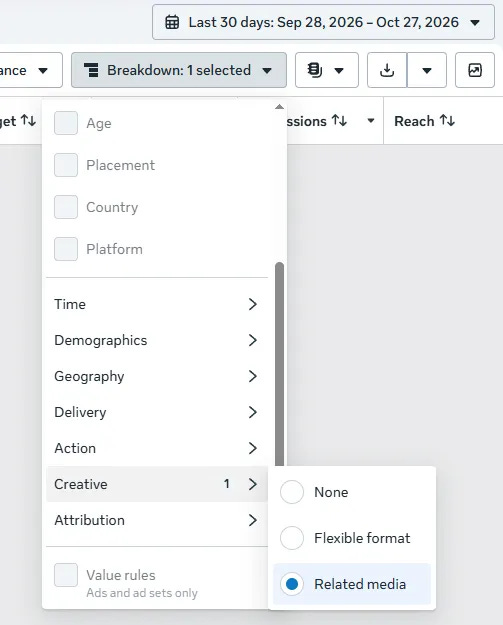
Meta has introduced individual creative performance reporting in Ads Manager, alongside new campaign optimization recommendations encouraging advertisers to establish clear goals and allow sufficient data collection before making changes.
The Breakdown:
Meta Adds Individual Creative Performance Insights - Advertisers can now view performance breakdowns for individual images, videos, and text variations in Ads Manager, helping identify which creative elements perform best across campaigns.
Creative Reporting Comes With Limitations - The new breakdowns exclude certain multi-post formats, including collection and carousel displays, and do not support some custom conversion actions, such as Donate and Subscribe.
Meta Recommends 50 Conversions Per Week - Meta advises advertisers to generate approximately 50 conversions per ad set weekly to support optimization. Its analysis found that ad sets below this threshold had roughly 28% higher costs per purchase.
Meta Warns Against Frequent Campaign Changes - Advertisers are encouraged to define clear optimization events, budgets, bid strategies, and attribution settings, then allow campaigns sufficient learning time before evaluating results through A/B tests or Conversion Lift studies.
Meta’s updates give advertisers more visibility into creative performance while reinforcing the importance of sufficient conversion data for automated optimization. Marketers can use individual creative insights to refine future campaigns, but frequent adjustments and fragmented ad sets may increase costs and make performance harder to evaluate reliably.
🏆 Ad of the day
What Works:
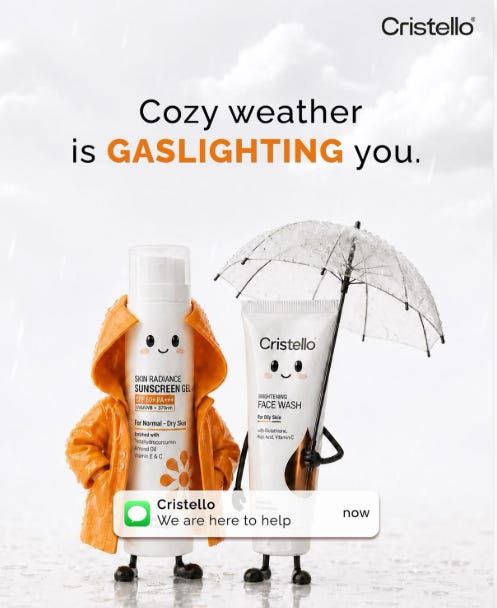
Humor Stops Scroll - “Cozy weather is gaslighting you” uses unexpected language to create a sharp pattern interrupt, making a seasonal skincare message feel culturally current instead of predictable.
Characters Build Recall - Turning the products into rain-ready characters gives the packaging personality, helping viewers remember both SKUs while making weather protection feel playful and easy to understand.
Context Supports Relevance - The raincoat, umbrella, and wet setting connect the products to a specific seasonal moment, strengthening message-market fit and giving the creative a clear reason to exist now.
Give products simple human traits, props or reactions tied to the customer situation. That makes functional messaging more memorable without sacrificing product visibility.
Advertise with Us
Wanna put out your message in front of over 50,000 best marketers and decision makers?
We are concerned about everything DTC and its winning strategies. If you liked what you read, why not join the 50k+ marketers from 13k+ DTC brands who have already subscribed? Just follow this.
At ScaleUP, we care about our readers and want to provide the best possible experience. That's why we always look for ways to improve our content and connect with our audience. If you'd like to stay in touch, be sure to follow us EVERYWHERE🥰
Thanks for your support :) We'll be back again with more such content 🥳