
Howdy Readers 🥰

In this newsletter, you’ll find:
💪 The Number That Decides Whether Meta Actually Tests Every Creator
🎬 AI Is Rewriting The Creative Playbook
🏆 Ad of the Day
If you’re new to ScaleUP then a hearty welcome to you. You’ve reached the right place along with 50k+ CEOs, CMOS, and marketers. Let’s get into it, shall we? Oh! Before you forget, if someone forwarded this newsletter to you, don't forget to subscribe to our newsletter so you never miss out!
💪 The Number That Decides Whether Meta Actually Tests Every Creator
Most partnership ad campaigns are designed to find a winner. The minimum spend floor is designed to make sure every creator gets a fair shot before that decision is made, because without it, Meta’s algorithm makes the call for you in the first 48 hours, and it is almost never right.
The formula is simple.
Account CPA × 3 ÷ 7 = Daily minimum per creator ad set
A $10 CPA produces a $4.30 daily floor. A $50 CPA produces $21.43. A $100 CPA produces $42.86. Run the number before you build the campaign.
The floor is not a soft guideline, it is the mechanism that prevents Meta from defaulting to one signal and starving the rest.
Here is what happens without it. Inside a CBO campaign, the algorithm scans for early conversion signals and weights delivery toward whatever produces them first.
The creator who gets the first click or add-to-cart captures an increasing share of budget. Partners who did not generate that early signal receive diminishing delivery until they are effectively invisible.
You end up with one creator funded and nine creators present in the account but not actually running. That is not a ten-creator test. It is a one-creator campaign with nine passengers.
The three-times-CPA multiplier exists because partnership ads are structurally top-of-funnel.
They reach cold audiences through a creator’s established trust, not through direct brand advertising. Cold audiences produce higher CPAs than warm audiences in the rest of the account.
Judging a partnership ad set against account CPA in week one and cutting anything above it eliminates creators who never had enough delivery to show you what they can do.
The floor gives each creator enough weekly exposure to produce a genuine read.
After that window, the decision is straightforward: cut ad sets that received the full floor and produced no meaningful add-to-cart activity, and give ad sets that are generating results the room to keep running.
This week: take your current account CPA, run the formula, and check whether every active partnership ad set has a minimum spend rule matching the output. If it does not, the data you are reading from that campaign is not a performance read. It is an allocation read.
🎬 AI Is Rewriting The Creative Playbook
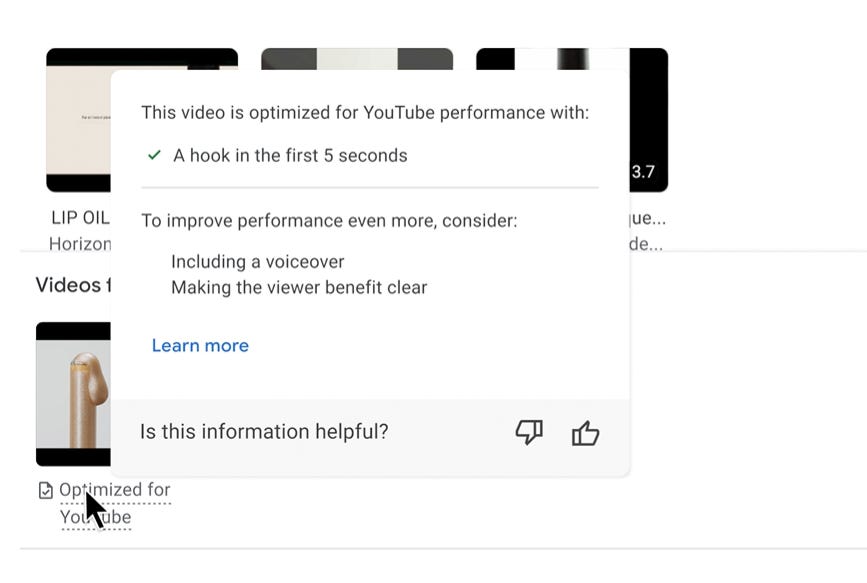
The biggest ad platforms used Cannes Lions 2026 to show that AI is no longer just creating ads. It’s increasingly helping marketers decide what to make, why it should work, and how to improve it after launch.
The Breakdown:
YouTube Starts With Trends - Google expanded Insights Finder with trending searches by topic, location, and audience, plus creator partnership insights and Gemini-powered Demand Gen recommendations to help campaigns start with real audience signals instead of assumptions.
Meta Closes The Loop - Meta’s new creative workflow learns from winning ads, generates new brand-consistent creative, and encourages continuous testing, helping marketers replace guesswork with performance-backed creative decisions.
TikTok Builds The Entire Ad - Symphony Agent analyzes trending content, accepts prompts, images, or reference videos, then generates complete campaigns or brand-new concepts using ByteDance’s Seedance 2.0 model.
The competitive advantage is shifting from producing more ads to producing better ones. The platforms are building AI systems that connect audience insights, creative generation, and performance optimization into one continuous feedback loop, helping marketers move faster with stronger creative decisions.
🏆 Ad of the Day
What Works:
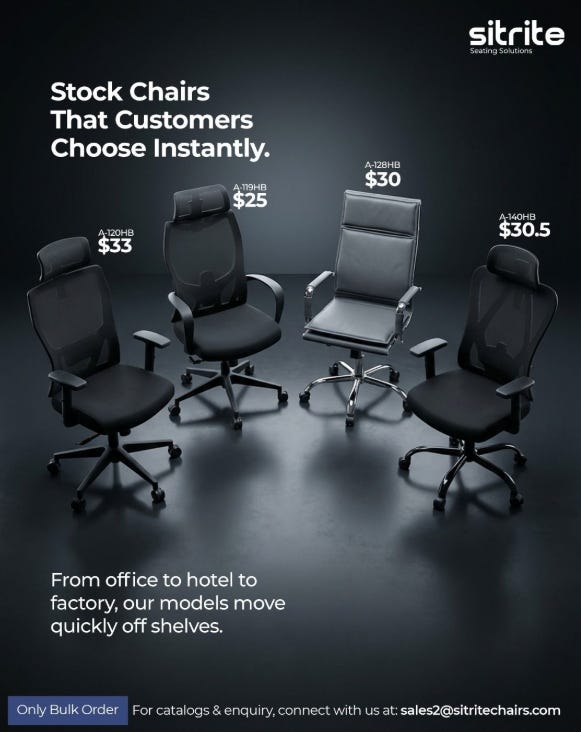
Choice Simplifies Decisions - Instead of showcasing one chair, the ad presents four ready-to-buy options. Buyers instantly compare styles and prices without leaving the creative, reducing decision friction.
Popularity Builds Trust - “Stock Chairs That Customers Choose Instantly” shifts attention from product specifications to market validation. People trust products that appear already preferred by other buyers.
Price Removes Guesswork - Displaying prices directly on each model filters qualified buyers immediately. Transparent pricing reduces inquiry friction and encourages faster purchase conversations.
If you sell multiple products, show them side by side with clear differences instead of forcing visitors onto a catalog. Let the ad become the comparison page and shorten the buying journey.
Advertise with Us
Wanna put out your message in front of over 50,000 best marketers and decision makers?
We are concerned about everything DTC and its winning strategies. If you liked what you read, why not join the 50k+ marketers from 13k+ DTC brands who have already subscribed? Just follow this.
At ScaleUP, we care about our readers and want to provide the best possible experience. That's why we always look for ways to improve our content and connect with our audience. If you'd like to stay in touch, be sure to follow us EVERYWHERE🥰
Thanks for your support :) We'll be back again with more such content 🥳