
Howdy Readers 🥰

In this newsletter, you’ll find:
❤️🩹 Identify and fix Ad account pattern
🔍 AI Knows Your Brand, But Won’t Recommend It
🏆 Ad of the Day
If you’re new to ScaleUP then a hearty welcome to you. You’ve reached the right place along with 50k+ CEOs, CMOS, and marketers. Let’s get into it, shall we? Oh! Before you forget, if someone forwarded this newsletter to you, don't forget to subscribe to our newsletter so you never miss out!
❤️🩹 Identify and fix Ad account pattern
Sort every ad in the account by frequency, low to high, then look at cost per purchase next to it. The pattern that shows up almost every time: ads under 1.5 frequency carry the highest CPA in the account. Ads above 2 carry the lowest. The instinct this produces is obvious and wrong: kill the expensive low-frequency ads, keep the cheap high-frequency ones.
The account isn’t one list of ads competing on the same job. It’s two roles wearing the same dashboard.
A low-frequency ad reaching genuinely new people isn’t failing to convert efficiently; it’s doing a different job entirely, supplying fresh cold traffic that the high-frequency ad then converts at a low CPA because the audience hasn’t been hit ten times already.
Kill the feeder and the closer starves. Frequency on the survivors climbs past 4, CPA follows it up, and the account lands right back at the spend ceiling it’s been stuck under for months, with no obvious cause in the dashboard.
Correlation between frequency bands isn’t proof of the feeding relationship. It’s just the pattern that would exist either way.
The actual test: pick a suspected feeder, pause it alone, and watch the top-frequency ads’ CPA over the following several days. If their cost per purchase climbs once the feeder stops running, the relationship is confirmed, not assumed.
If nothing changes, that ad wasn’t feeding anything and the original instinct to cut it was right.
Once confirmed, a feeder needs its own scorecard.
Its job is marginal contribution to the rest of the account’s CPA curve, not its own ROAS, and grading it on the wrong number is exactly what gets it killed by a media buyer scanning for the worst-performing line.
The harder part is keeping a feeder role actually fed. Reaching genuinely new cold audiences requires footage that hasn’t already been shown to them, and a feeder running the same clip on repeat stops being cold reach the moment its own frequency climbs.
Insense delivers fresh raw footage on a 14-day cycle, fast enough to keep the feeder role supplied with genuinely new material instead of the same clip aging into its own frequency problem. You can book a free strategy call and get $200 toward your first campaign.
🔍 AI Knows Your Brand, But Won’t Recommend It
Two new reports reveal how AI platforms choose which brands to recommend and how Google’s AI Search changes could impact publishers.
Recognition Doesn’t Mean Visibility
A study of 175 brands found AI accurately recognized 96% of them, yet 89% never appeared in AI-generated recommendations, showing that being known doesn’t guarantee being suggested.
Third-Party Trust Matters Most
Brands were more likely to be recommended when they had strong third-party mentions, backlinks, directories, and comparison site coverage, rather than relying only on their own websites.
Google’s AI Search Is Changing News
New research suggests Google is placing Top Stories directly inside AI Overviews. If confirmed, publishers opting out of AI features could also lose visibility in those embedded news carousels.
Why It Matters
AI search is shifting from rewarding website optimization alone to rewarding overall web authority, while publishers must balance AI opt-outs against the potential loss of search visibility.
🏆 Ad of the Day
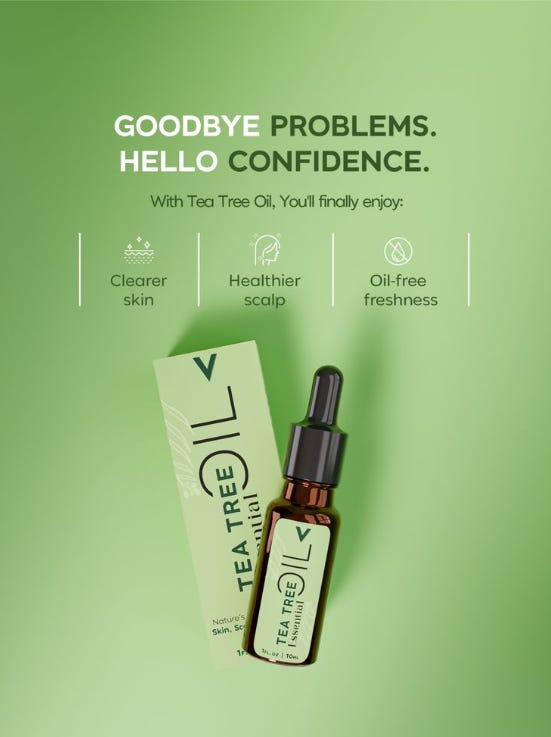
What Works:
Confidence Frames Outcome - The “goodbye problems, hello confidence” hook shifts attention from product features to emotional transformation, strengthening message-market fit while making the benefit feel immediately relevant.
Benefits Scan Fast - Three concise benefit pillars create a clean visual hierarchy, reducing cognitive load and helping mobile viewers understand clearer skin, scalp support and freshness within seconds.
Green Signals Purity - The monochromatic green palette reinforces natural ingredients and freshness, while the angled product composition adds depth, improves thumb-stop potential and keeps branding recall strong.
Pair one emotional promise with three concrete outcomes, then use category-relevant color cues. This balances aspiration and proof without overcrowding the creative or weakening attention retention.
Advertise with Us
Wanna put out your message in front of over 50,000 best marketers and decision makers?
We are concerned about everything DTC and its winning strategies. If you liked what you read, why not join the 50k+ marketers from 13k+ DTC brands who have already subscribed? Just follow this.
At ScaleUP, we care about our readers and want to provide the best possible experience. That's why we always look for ways to improve our content and connect with our audience. If you'd like to stay in touch, be sure to follow us EVERYWHERE🥰
Thanks for your support :) We'll be back again with more such content 🥳