
Howdy Readers 🥰

In this newsletter, you’ll find:
📊 Five steps to measure how much of your Meta budget buys the same people twice
💃 Microsoft and Google roll out major AI search and advertising updates
🏆 Ad of the day
If you’re new to ScaleUP then a hearty welcome to you. You’ve reached the right place along with 50k+ CEOs, CMOS, and marketers. Let’s get into it, shall we? Oh! Before you forget, if someone forwarded this newsletter to you, don't forget to subscribe to our newsletter so you never miss out!
Together with Omnisend
Your next customer already follows you. Stay in touch.

Someone follows your brand on Instagram because they like what you’re selling. But when your next launch or sale comes around, they might never see it.
Omnisend’s Instagram integration helps you capture that interest while it’s fresh. Social Capture automatically DMs anyone who comments or messages a keyword you’ve chosen, asking for their email.
Offer a discount to give them a reason to subscribe. Their email goes straight into your Omnisend list, ready for a welcome series that helps bring them closer to their first order.
No copying contacts or manually chasing replies. Social Capture is available on all paid plans.
New to Omnisend? Its ecommerce email and SMS platform is trusted by 150,000+ brands. Migration is free and takes up to five business days.
Give today’s interested followers a way to hear about tomorrow’s offer.
📊 Five steps to measure how much of your Meta budget buys the same people twice
When a scaled Meta account stops growing, the cause usually hides in one number: frequency rising while reach stalls. Meta’s October 7 white paper shows how narrow a single brand handle can be. Across 684 ad sets from 10 advertisers, 63% of the people reached by partnership ads had no exposure to the brand’s usual ads in the same ad set, audience and period. Your own ads were circling a smaller crowd.
Here’s how to price it. Numbers are illustrative.
Step 1: Pull eight weeks of reach
In Ads Manager, set the view to campaign level for your prospecting campaigns, break down by week, and export reach, frequency and amount spent. Use campaign-level reach. Adding ad-set reach together double-counts people.
Step 2: Price the new people
Compare a normal week with a week you spent more:
Week A: $20,000, 400,000 reached, frequency 2.5.
Week B: $30,000, 450,000 reached, frequency 3.3.
The extra $10,000 found 50,000 new people. That’s $200 per thousand new people, against a $50 blended cost per thousand reached in week A. New people cost four times more.
Step 3: Set your ceiling
My judgment: once the marginal cost per thousand new people passes twice your blended figure, more budget on the same ads mostly buys repeat views. Hold spend and change what’s running.
Step 4: Check who’s buying
Tag first orders in your store and compare the new-customer share of Meta-attributed orders by month. MMM work cited in Meta’s paper found 48% of partnership-ad orders came from new customers, against 32% for standard ads. If your share is falling while spend climbs, Step 2 is confirmed.
Step 5: Add a new identity, then remeasure
Ads from a different handle reach people your page’s ads miss. Put 20% of next week’s prospecting budget behind partnership ads from creator or publisher handles, then rerun Step 2. If the cost per thousand new people drops, scale it.
Where to get the new identity
Grapevine, runs whitelisted ads from its own publisher handles across beauty, wellness, men’s, parenting, finance and pets. It handles creator sourcing, briefs and payments, produces distinct statics and UGC, and posts them through its handles. You keep control of spend while it supports testing.
Just Food for Dogs grew Grapevine’s share of its paid media from 15% to 45% in six months. Kick off by November 30 and your first campaign is free, including 8 statics and 1 article worth a combined $1,500. You can book your free demo here.
This week
Run Steps 1 and 2 before Black Friday budgets go up.
📊 Microsoft and Google roll out major AI search and advertising updates
Microsoft and Google have introduced new updates to conversion tracking, AI search and automated advertising campaigns, giving marketers more control over campaign performance, attribution and AI search visibility ahead of the holiday shopping season.
The Breakdown:
Microsoft’s Conversions API is now generally available and accepts conversion events up to 90 days old, up from seven days, helping advertisers track longer sales cycles within their attribution windows.
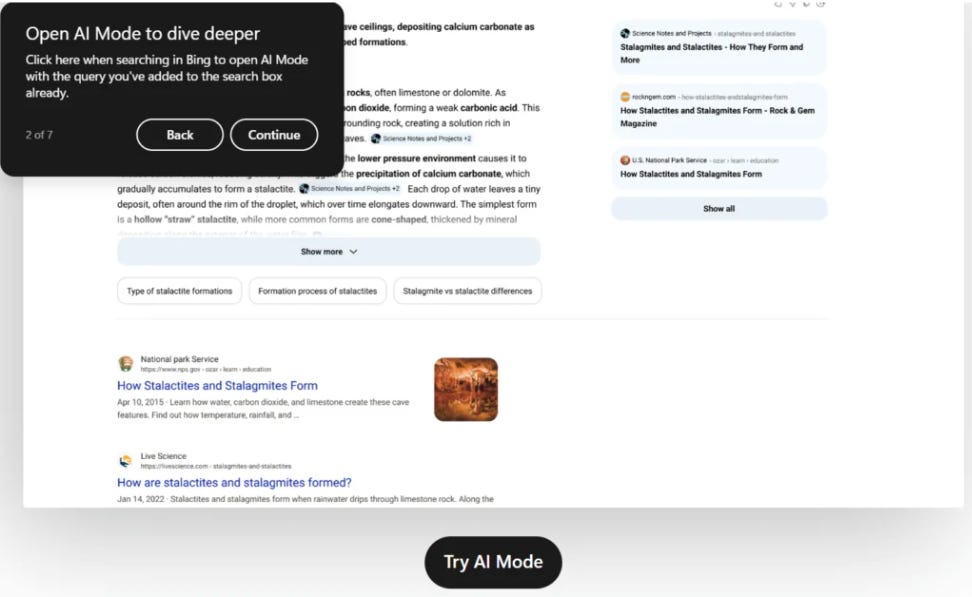
Bing has officially introduced AI Mode and AI Overview, separating conversational AI research from AI-generated search summaries, with source links creating another opportunity for publisher visibility.
Microsoft Performance Max now supports age and gender targeting, search term reports and auction insights, with device targeting expected to become available to all advertisers in the coming weeks.
Google now recommends at least 15 conversions over 30 days for stable Performance Max performance, suggesting advertisers consolidate low-volume campaigns to improve optimization.
Google clarified that changing budgets, target CPA or target ROAS on established campaigns does not automatically restart Learning, although major conversion-goal changes or new bidding strategies can still trigger recalibration.
These updates give advertisers greater flexibility to optimize campaigns without unnecessarily disrupting performance. Microsoft’s expanded conversion tracking and Google’s bidding clarifications are particularly relevant ahead of BFCM, while Bing’s AI search changes introduce another channel for monitoring brand visibility.
🏆 Ad of the Day
What Works:
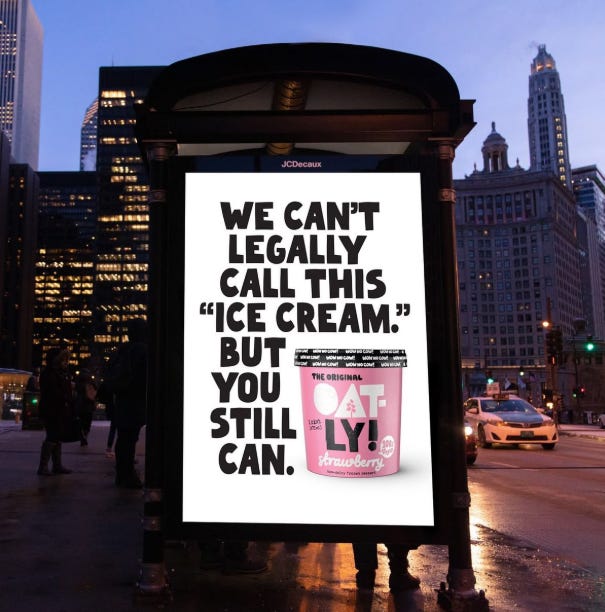
Contrarian Hook Wins - “We can’t legally call this ice cream, but you still can” creates an immediate curiosity gap, making the plant-based positioning feel rebellious instead of restrictive.
Copy Does Selling - The oversized black typography carries nearly the entire ad, proving strong copy can create thumb-stop power even with minimal design and low visual complexity.
Product Gets Spotlight - The bright pink Oatly tub contrasts sharply against the black-and-white layout, keeping the SKU highly recognizable while the headline builds intrigue around the category difference.
Take a category limitation, regulation or perceived drawback and flip it into the hook. Done well, the objection itself becomes the reason people remember the product.
Advertise with Us
Wanna put out your message in front of over 50,000 best marketers and decision makers?
We are concerned about everything DTC and its winning strategies. If you liked what you read, why not join the 50k+ marketers from 13k+ DTC brands who have already subscribed? Just follow this.
At ScaleUP, we care about our readers and want to provide the best possible experience. That's why we always look for ways to improve our content and connect with our audience. If you'd like to stay in touch, be sure to follow us EVERYWHERE🥰
Thanks for your support :) We'll be back again with more such content 🥳