
Howdy Readers 🥰

In this newsletter, you’ll find:
🥇Recognizing Winning Patterns
📢 Google Turns Ads Into AI Conversations While OpenAI Prepares to Compete for Performance Budgets
🏆 Ad of the Day
If you’re new to ScaleUP then a hearty welcome to you. You’ve reached the right place along with 50k+ CEOs, CMOS, and marketers. Let’s get into it, shall we? Oh! Before you forget, if someone forwarded this newsletter to you, don't forget to subscribe to our newsletter so you never miss out!
🥇Recognizing Winning Patterns
The highest-leverage learning activity in performance marketing is a structured study of one competitor doing 10-20x your revenue. Many of us are now using AI tools to do this at scale, which is the right instinct.
The problem is that generic AI mis-tags ads roughly 1 in 4 times, which means the patterns operators extract are partially noisy. The cost of that noise compounds across every brief written from the false pattern.
Audit Your Current Creative Analysis Tool’s Accuracy Before You Trust Its Outputs
Pull a sample of 20 competitor ads that your tool has tagged. Have a human reviewer who knows the category tag the same 20 from scratch. Compare the two.
For most generic AI tools, the agreement rate lies between 70% and 80%. That sounds high until you realize a 25% mis-tag rate means one in four insights your brief pipeline is built on is wrong. The error is invisible because nobody audits the tool that’s supposed to be auditing the creative.
Calculate The Compounding Cost Of Mis-Tagged Creative Across Your Brief Pipeline
A mis-tagged ad doesn’t stop being wrong when the analysis ends. It propagates into every brief written from the pattern it produced.
Most AI is wrong 1 in 4 times. Pounce is wrong 1 in 50. Creative analytics tools that run on off-the-shelf AI mis-tag ads nearly a quarter of the time.
Pounce hits 98.5% accuracy on the April 2026 Mobile Gaming Video Ads Understanding Benchmark, versus 76.9% for the best frontier model. You can get started for free with Pounce today.
The math compounds. A team writing 20 briefs a month from generic AI analysis is putting 5 of those briefs into production against false patterns. That’s a quarter of the creative spend running on a misread signal.
Decide Whether The Current Tool Is Worth Running On Or Worth Replacing
Once the accuracy gap is documented, the decision is concrete. A 25% mis-tag rate isn’t a tool problem you optimize around. It’s a foundation problem.
Either the tool gets replaced with one accurate enough to trust, or the human review layer that catches mis-tags gets built on top, which negates the speed advantage of using AI in the first place.
Accurate data is the foundation. Generic AI is making the foundation worse.
📢 Google Turns Ads Into AI Conversations While OpenAI Prepares to Compete for Performance Budgets
Google is embedding conversational AI directly into Search Ads and shifting toward intent prediction over click volume. OpenAI is building conversion-focused ad formats for ChatGPT with pay-for-results pricing aimed at small businesses.
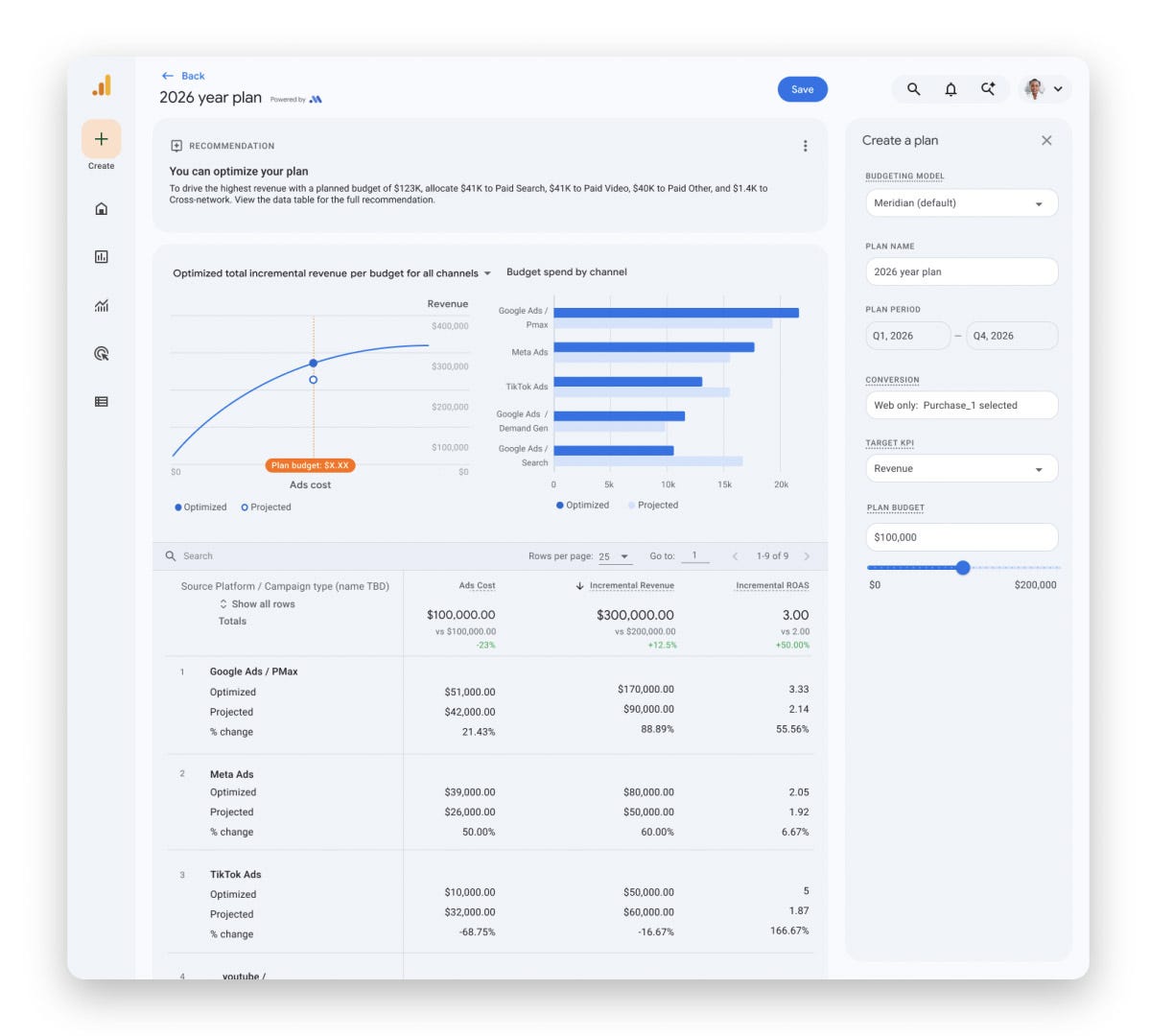
The Breakdown:
Google Wants Ads to Be Conversations - Business Agent for Leads lets users ask questions about services and pricing inside the ad itself, with AI responding from website content, changing lead gen from click-and-fill to qualify-through-conversation.
Intent Over Volume Is the New Default - Lead intent scores, journey-aware bidding, and qualified future conversions push advertisers toward predicted business outcomes over raw conversions, but the trade-off is less visibility into how Google’s AI decides.
OpenAI Is Coming for Performance Budgets - ChatGPT is preparing ads for purchases, bookings, and form submissions where advertisers only pay when actions happen, targeting local businesses like dry cleaners and appointment services that Google and Meta currently own.
OpenAI Is Building Tracking Infrastructure Too - An ad pixel tracks post-click activity and API integrations send conversion data back into OpenAI’s systems, building a measurement ecosystem that mirrors what Google and Meta have operated for years.
Both platforms now reward advertisers who feed back real business outcomes, not just form fills. Google is automating more of the ad journey. OpenAI is entering with performance pricing. Winners on either will be the ones with the richest data loops.
🏆 Ad of the Day

What Works:
Seasonal Conditioning - Snowflakes, pine branches, and hot cocoa trigger pre-built holiday memories instantly. The ad borrows emotional warmth from winter culture instead of manufacturing new desire.
Comfort Amplification - The oversized whipped cream and cocoa dusting exaggerate indulgence visually, making the drink feel emotionally restorative rather than simply hot.
Consumption Scaling - Multiple cup sizes subtly widen usage occasions. The product works for solo comfort, family sharing, or holiday hosting without explicitly saying it.
During seasonal campaigns, don’t over-optimize for originality. Familiar emotional cues often outperform cleverness because consumers already carry powerful emotional associations tied to holidays and weather rituals.
Advertise with Us
Wanna put out your message in front of over 50,000 best marketers and decision makers?
We are concerned about everything DTC and its winning strategies. If you liked what you read, why not join the 50k+ marketers from 13k+ DTC brands who have already subscribed? Just follow this.
At ScaleUP, we care about our readers and want to provide the best possible experience. That's why we always look for ways to improve our content and connect with our audience. If you'd like to stay in touch, be sure to follow us EVERYWHERE🥰
Thanks for your support :) We'll be back again with more such content 🥳