
Howdy Readers 🥰
In this newsletter, you’ll find:
✨ Rufus Is Where A Third Of Your Customers Start. Your Listing Isn’t Built For It.
🎯 Google Is Handing Advertisers More Control Over Where AI Spends Their Budget
🏆 Ad of the Day
If you’re new to ScaleUP then a hearty welcome to you. You’ve reached the right place along with 50k+ CEOs, CMOS, and marketers. Let’s get into it, shall we? Oh! Before you forget, if someone forwarded this newsletter to you, don't forget to subscribe to our newsletter so you never miss out!
✨ Rufus Is Where A Third Of Your Customers Start. Your Listing Isn’t Built For It.
In March 2026, Amazon’s Sponsored Products Prompts moved from beta to general availability. Rufus now fields product research queries for over 250 million monthly users and has graduated into agentic capabilities: adding to carts, setting price alerts, and executing multi-step purchases from a single conversational prompt.
By some estimates, 35 to 40% of purchases in 2026 involve Rufus before checkout. This is not a future concern.
The Mechanism Most Sellers Are Missing
Rufus does not pull answers from your PPC keyword bids. It pulls from your listing content: titles, bullets, descriptions, and A+ copy. Semantic relevance determines placement. Bid volume does not.
The sellers treating keyword optimisation and listing copy as separate problems are leaving Rufus placement on the table entirely.
Four Things To Do This Week
Rewrite bullets for use-case specificity, not feature stacking. Rufus Fielding’s “best hypoallergenic dog food for senior small breeds with sensitive stomachs” surfaces listings that explicitly answer that query in natural language.
“Premium quality ingredients for digestive health” loses. “Formulated for small breed dogs over 7 years old with sensitive digestive systems” wins. The specificity delta is the visibility delta.
Interrogate your own listing through Rufus. Open Rufus from a separate account and ask the category questions your buyers actually ask. Document that queries surface you and the surface competitors. Reverse-engineer the copy differentials.
Real purchase velocity from external content reinforces exactly this kind of AI recommendation. Stack Influence matches your brand to vetted creators from a network of 11M+, where every dollar ties to a real purchase and real content, generating the off-platform demand signal Rufus’s recommendation engine actually responds to. You can book a free strategy call here.
Pull the Sponsored Prompts Report weekly. It shows the exact prompt text that triggered your placement, the ASIN surfaced, and full performance metrics. Use it as a copy brief: what question was the buyer asking when they found you, and is your listing actually the best answer?
Treat listing quality as ad copy. Amazon generates Sponsored Prompts directly from your listing content. Every bullet now serves two functions: traditional keyword indexing and AI prompt generation.
The sellers who compound on Rufus in 2026 are not the ones with the biggest ad budgets. They are the ones whose listings are the most precise answers to the questions buyers are actually asking.
🎯 Google Is Handing Advertisers More Control Over Where AI Spends Their Budget
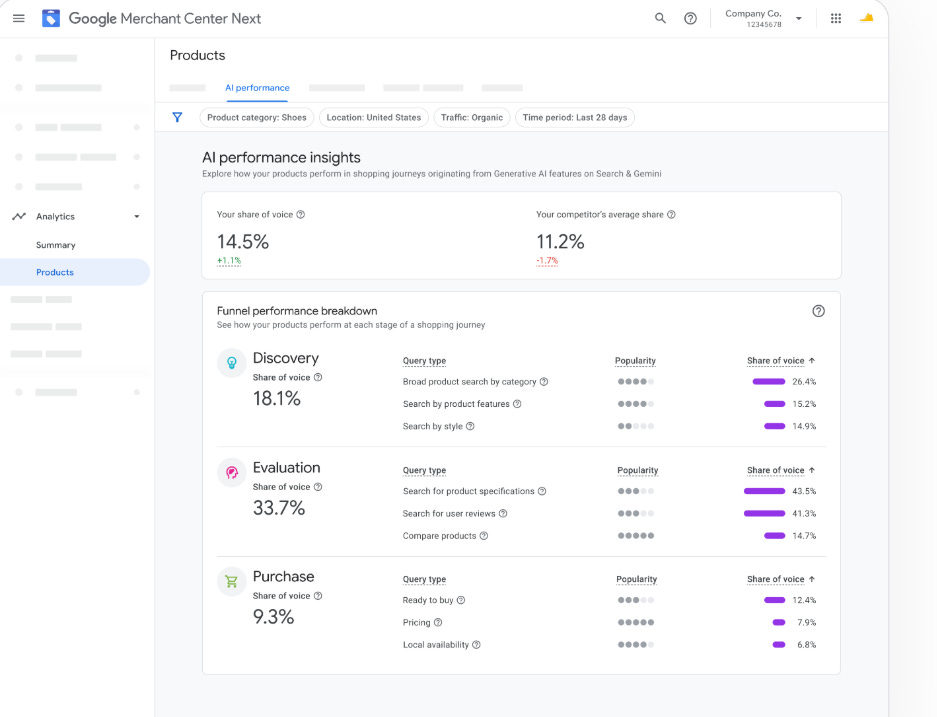
Google dropped three advertiser-facing updates this week. AI Max is testing branded search controls, a new prospects mode is targeting brand-unaware audiences, and Merchant Center is getting AI shopping visibility reports for the first time.
The Breakdown:
Merchant Center Shows How AI Surfaces Your Products - Four new reports cover share of voice, funnel performance, conversational queries, and missing product attributes, giving retailers their first window into how AI ranks and recommends their products.
AI Max Gets Branded Search Controls - A new setting lets advertisers run AI Max on unbranded searches only, directly addressing the campaign type’s biggest criticism since launch. Not confirmed as a global rollout yet.
No More Relying on Exclusion Lists - Previously, there was no native way to stop AI Max from cannibalizing branded campaigns. This control makes that separation cleaner and more transparent at the campaign level.
New Prospects Mode Finds Brand-Unaware Audiences - This mode excludes anyone who has purchased, searched your brand, visited your site, or engaged with your content across Google and YouTube, focusing spend entirely on cold audiences.
Brands valuing new customers at twice the average order value already saw a 9% ROAS improvement using New Customer Acquisition Value Mode. Google appears to be responding to advertiser pressure by pairing AI automation with better data and cleaner controls.
🏆 Ad of the Day
What Works:
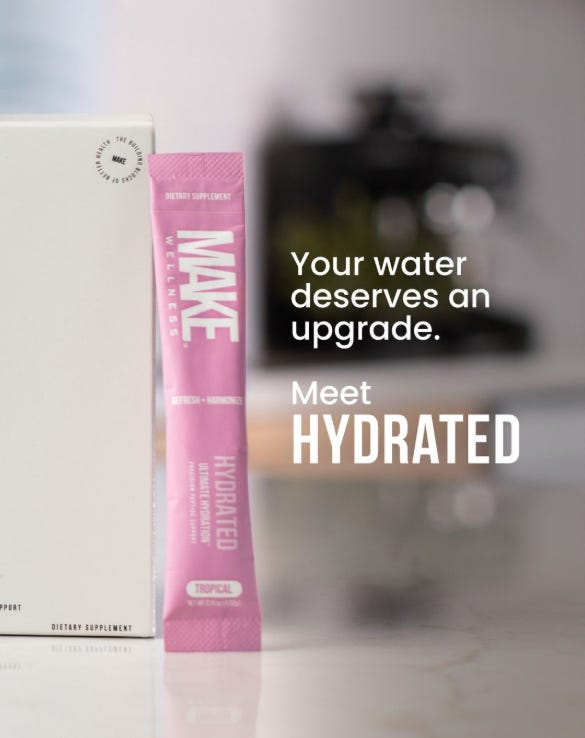
Category Reframing - “Your water deserves an upgrade” transforms hydration from a completed task into an unfinished one. The product creates a new problem that only it can solve.
Habit Attachment - Instead of asking consumers to adopt a new behavior, the brand attaches itself to an existing daily ritual. That’s significantly easier than building a new habit from scratch.
Status Signaling - The word “upgrade” carries subtle status psychology. Consumers aren’t buying hydration, they’re buying a smarter version of themselves.
Don’t compete inside your category. Reframe the category itself. When consumers start viewing the existing behavior as incomplete, your product becomes the natural next step rather than an optional add-on.
🥳Events
🔥 How the Creator Marketing Lead at Edelman Predicts Whether a Creator Will Drive Sales or Just Impressions
June 11 | Virtual Event | Free
Most brands only find out a creator was wrong for them after the budget is spent. Brooks Miller, EVP of Creator Marketing at Edelman, and Eric Ford, formerly Global Communications at L’Oréal, share the exact framework brand-side teams use to call that before the contract is signed.
✅ Reserve Your Free Spot
🔥 The AI System Chime Built That Runs Their Entire Search Workflow Without a Single Daily Prompt
June 11 | Virtual Event | Free
Most marketing teams are still manually running every AI task they have. Bridget Nelson built something different at Chime, and it runs without daily input. On June 11, she's on stage with Tyler Roehmholdt from Bitly, showing exactly what that system looks like inside a real org.
✅ Reserve Your Free Spot
Advertise with Us
Wanna put out your message in front of over 50,000 best marketers and decision makers?
We are concerned about everything DTC and its winning strategies. If you liked what you read, why not join the 50k+ marketers from 13k+ DTC brands who have already subscribed? Just follow this.
At ScaleUP, we care about our readers and want to provide the best possible experience. That's why we always look for ways to improve our content and connect with our audience. If you'd like to stay in touch, be sure to follow us EVERYWHERE🥰
Thanks for your support :) We'll be back again with more such content 🥳