
Howdy Readers 🥰
In this newsletter, you’ll find:
🗡️AI citation is a double edged sword
🔍 Search is putting up more walls
🏆 Ad of the day
If you’re new to ScaleUP then a hearty welcome to you. You’ve reached the right place along with 50k+ CEOs, CMOS, and marketers. Let’s get into it, shall we? Oh! Before you forget, if someone forwarded this newsletter to you, don't forget to subscribe to our newsletter so you never miss out!
Together with Insense
Save 40+ hours monthly on influencer sourcing

Manual influencer sourcing is the biggest time drain in creator marketing: scrolling profiles, cold DMing, chasing contracts, logging payments, all for a fraction of the creative volume your paid social demands.
Insense, built for DTC brands scaling past $2M, fixes the workflow:
Launch a brief and get creator applications within 48 hours from a vetted 100K+ creator marketplace with creators across 57+ countries
Receive UGC in 14 days with lifetime usage rights included
Run and manage multiple campaign types: UGC, seeding, TikTok Shop, Meta Partnership Ads & Spark Ads from one dashboard
Insense is trusted by over 3,500 brands, including Beauty Pie, Wellhub, and PetLab Co.
Book a free strategy call by August 28 and get $200 platform credits towards your first campaign!
🗡️AI Citation is a double edged sword
Run the same AI prompt five times and you’ll often get five slightly different answers. Recent research found that only 20% of brands appeared in all five responses. The explanation isn’t simply that AI is unpredictable.
The models tend to cite brands across a wide range of topics, but they consistently recommend brands only where they’ve repeatedly demonstrated authority on the same narrow subject.
That’s an important distinction because being mentioned and being the answer are two very different outcomes.
Repetition matters more than breadth
The instinct is usually to publish one comprehensive page that covers an entire topic.
That approach makes sense for traditional SEO.
It’s less effective for retrieval systems that surface individual passages instead of entire pages.
A more durable strategy is to break one broad topic into multiple focused pages, each answering a specific question within the same subject area and linking naturally to the others.

The objective isn’t creating more content. It’s creating more opportunities for the same topic to be reinforced.
Authority isn’t built only on your own website
The same pattern applies beyond owned content.
Research shows that 85% of brand mentions in AI answers come from third-party sources, not brand-owned websites.
That means repetition should extend across multiple independent sources.
The same topic appearing in a guest article, a forum discussion, a review and a podcast creates a much stronger signal than repeating it only on your own domain. Independent confirmation is one of the clearest indicators that the expertise exists outside the brand’s own marketing.
Measure concentration, not volume
Most teams review citations page by page. A more useful audit groups them by topic.
If one citation appears across twelve unrelated subjects, you’ve created visibility.
If the same three or four topics accumulate repeated citations across both your own content and third-party sources, you’ve started building the consistency AI models reward.
AirOps’ latest research supports the same direction. Pages refreshed within the previous three months were cited three times more often, while well-structured heading hierarchies increased citation likelihood by 2.8×.
Their playbook also recommends tracking citation rate, mention rate, share of voice, sentiment and source attribution on a weekly basis instead of relying on occasional snapshots. You can get the playbook
Twenty mentions spread across twenty topics can look impressive in a report.
Four topics that AI consistently associates with your brand are usually far more valuable because that’s the difference between being cited occasionally and becoming the answer repeatedly.
🔍 Search is putting up more walls
Google and Cloudflare are making automated access to search and websites harder, while new controls are emerging for AI visibility. At the same time, Google is experimenting with giving paid ads even more clickable space.
The Breakdown:
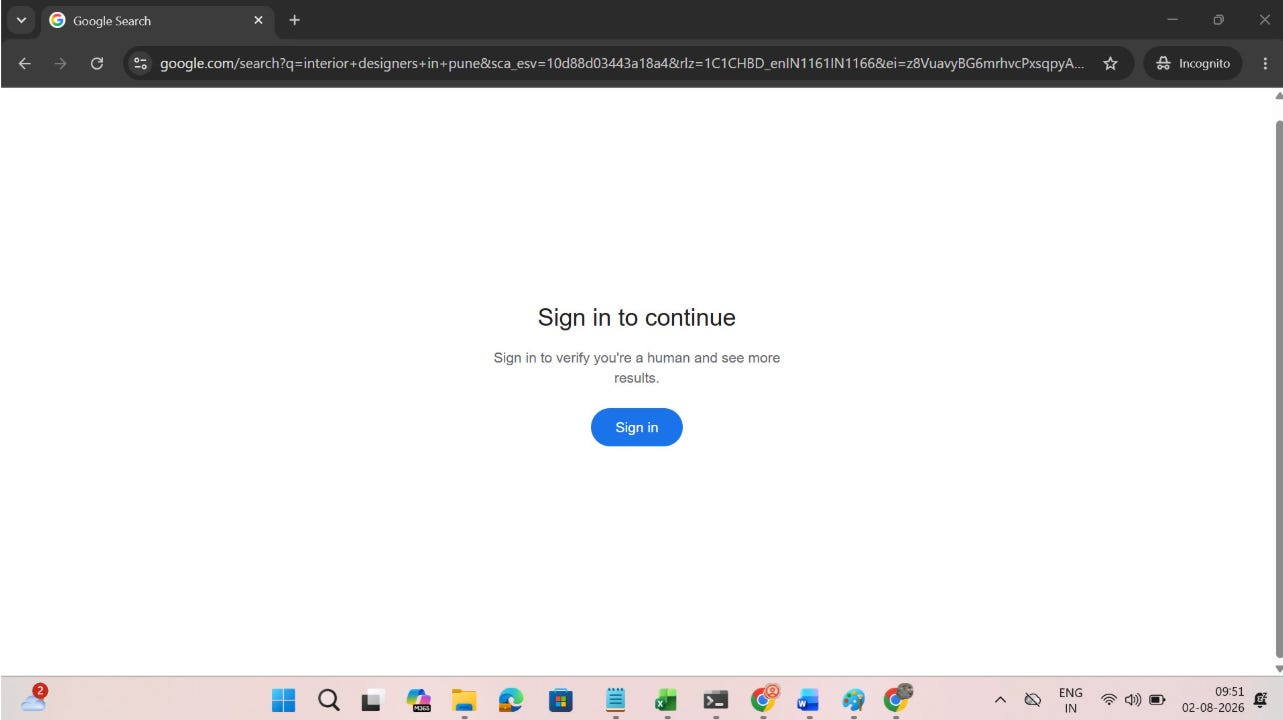
Google Adds Sign-In - Google is testing sign-ins instead of captchas for deeper searches. If expanded, SEO tools that scrape deeper rankings could have a much harder time collecting reliable SERP data.
Googlebot Could Get Blocked - From September 15, Cloudflare’s AI-training blocks will include mixed-purpose crawlers like Googlebot. Brands need to audit settings or risk accidentally preventing Google from crawling their websites.
AI Opt-Out Confusion - Google-Extended doesn’t block content from AI Overviews, where Top Stories appear on 15.5% of U.S. trending news queries. Publishers need Search Console’s generative AI exclusion instead.
Clarity Tracks AI Discovery - Microsoft Clarity now separates branded and non-branded AI queries. Marketers can see whether AI visibility comes from existing brand demand or people discovering them through broader searches.
Ads Get More Clickable - Google Ads is testing keyword-rich clickable text inside descriptions. The links lead to the same landing page, potentially giving searchers more ways to engage with sponsored results.
Search visibility is becoming harder to measure and easier to accidentally restrict. Audit Cloudflare bot settings before September 15, understand Google’s correct AI controls, and start tracking branded versus non-branded AI discovery separately.
🏆 Ad of the Day
What Works:
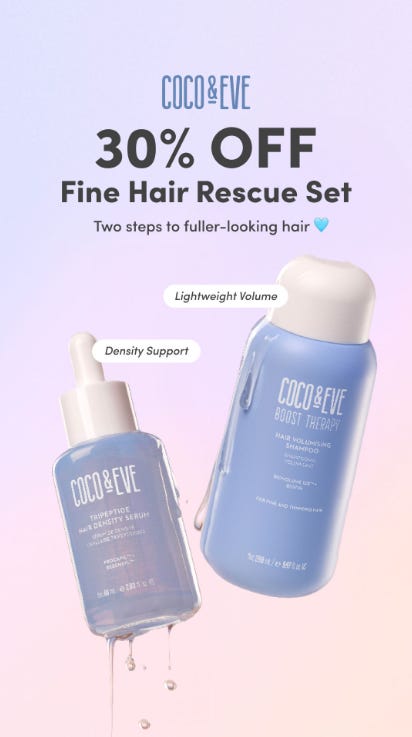
Offer Leads Instantly - The oversized “30% OFF” gives the creative immediate thumb-stop power, while “Fine Hair Rescue Set” quickly connects the promotion to a specific high-intent problem.
Benefits Feel Specific - “Density Support” and “Lightweight Volume” assign a clear job to each product, reducing cognitive load and making the two-step system feel purposeful rather than bundled arbitrarily.
Pastels Feel Premium - The soft blue and pink gradient creates a polished beauty aesthetic, while the oversized floating pack shots keep visual hierarchy focused on the products and strengthen branding recall.
Instead of discounting random SKUs together, group products around one customer problem and label each product’s role. That improves offer framing and makes bundles easier to justify.
Advertise with Us
Wanna put out your message in front of over 50,000 best marketers and decision makers?
We are concerned about everything DTC and its winning strategies. If you liked what you read, why not join the 50k+ marketers from 13k+ DTC brands who have already subscribed? Just follow this.
At ScaleUP, we care about our readers and want to provide the best possible experience. That's why we always look for ways to improve our content and connect with our audience. If you'd like to stay in touch, be sure to follow us EVERYWHERE🥰
Thanks for your support :) We'll be back again with more such content 🥳